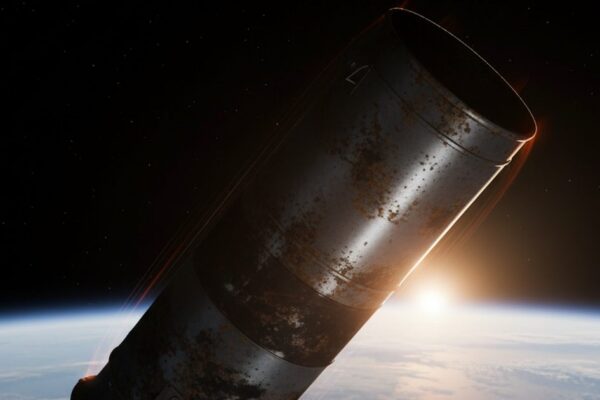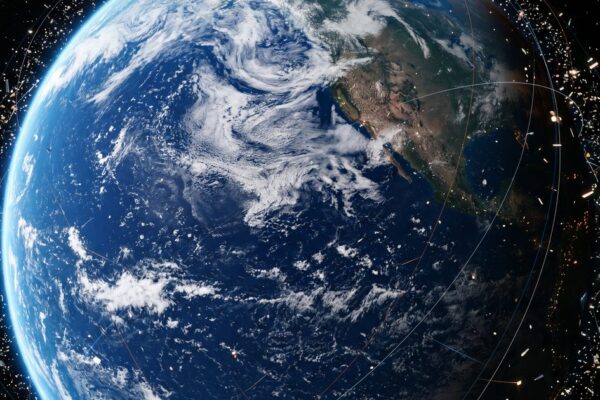
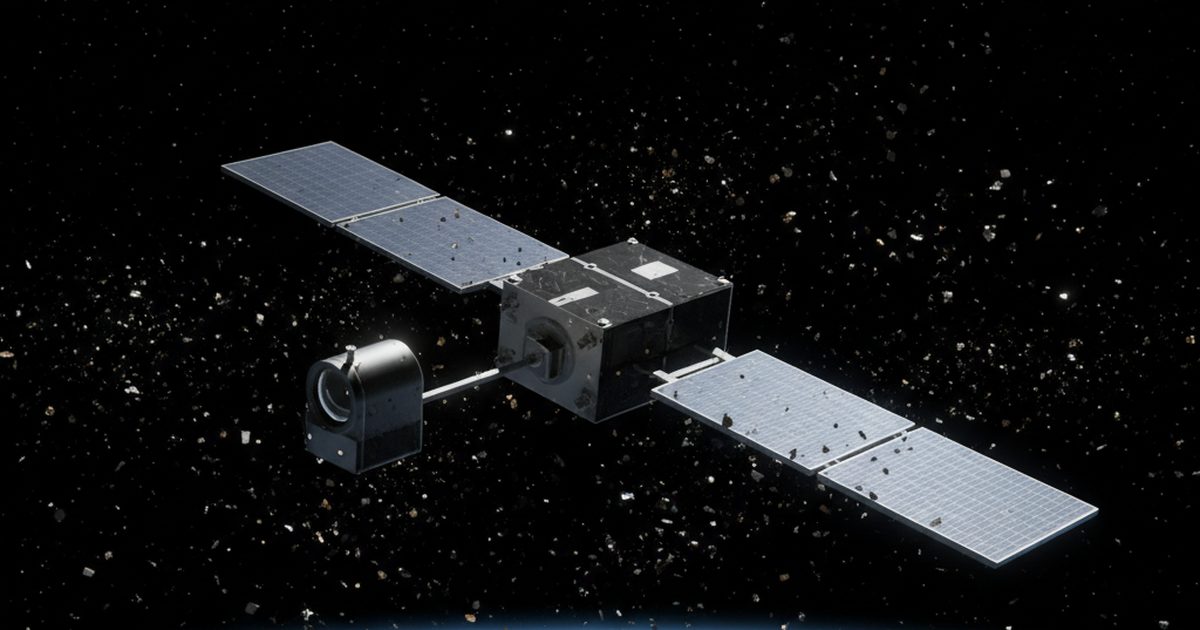
BOULDER, Colo. — June 9, 2026 — A University of Colorado Boulder researcher received $150,000 last week from Colorado’s Advanced Industries Accelerator to develop a satellite-mounted sensor designed to detect and characterize the vast population of orbital debris too small for ground-based radar to track reliably.
The grant, awarded June 2, funds work by Timothy Hellickson, a professional research assistant at CU Boulder’s Laboratory for Atmospheric and Space Physics, to build an onboard detection system targeting the millimeter-to-centimeter debris size class — fragments that remain effectively invisible to conventional collision-avoidance systems.
A Critical Gap in Space Situational Awareness
Existing ground-based radar networks can reliably catalog objects roughly 10 centimeters or larger in low Earth orbit. Below that threshold, the picture changes drastically. Direct measurements of the sub-10cm debris population have underscored just how much remains uncharacterized in the orbital environment satellite operators actually transit.
NASA’s Orbital Debris Program Office estimates roughly 500,000 or more fragments between 1 centimeter and 10 centimeters orbit Earth, along with more than 100 million pieces smaller than 1 centimeter. None of these are routinely tracked or cataloged. At orbital velocities exceeding 7 kilometers per second, even a 1-centimeter fragment carries enough kinetic energy to destroy a satellite.
Collision-avoidance systems today must rely on statistical models of this population rather than real-time knowledge of individual fragment locations. An onboard sensor that characterizes debris in the spacecraft’s immediate orbital neighborhood would give operators empirical data they currently lack — information built from inside the debris environment itself.
In-Situ Detection as a Complement to Ground Radar
Hellickson’s project explores in-situ, satellite-borne instrumentation as a direct complement to ground-based tracking infrastructure. Where radar views the debris environment from a distance, an onboard sensor would measure what the spacecraft actually encounters along its orbit — building granular, real-time data on the sub-centimeter and centimeter-class population.
The work was funded under the Advanced Industries Accelerator’s 2026 funding round, which directed awards to eight CU Boulder researchers and four startups through Colorado’s state-run commercialization program. The initiative is designed to bridge the gap between university research and market-ready technology — an explicit signal that Colorado views space-safety instrumentation as a viable commercial sector.
The timing reflects broader concern about the pace of LEO congestion. ESA’s 2026 Space Environment Report documented rising collision risk as active satellites and debris fragments continue accumulating in the same altitude bands targeted by large commercial constellations. Megaconstellations of hundreds or thousands of spacecraft are compressing the problem into a narrower slice of orbital space.
Colorado Positions for the Space Safety Market
CU Boulder and LASP bring a long institutional track record in space environment instrumentation, including sensors flown on missions studying radiation, plasma, and particulate environments. This grant positions that expertise in a part of the market where demand is accelerating: situational awareness tools that can keep pace with the growing number of objects sharing LEO.
The $150,000 award is an early-stage development grant intended to advance the sensor concept toward a prototype capable of attracting follow-on investment or a commercial partner. Whether the technology reaches flight hardware will depend on how the instrument performs against the thermal cycling, radiation hardening, and sensitivity requirements of the LEO environment.
No launch vehicle, mission timeline, or industry partner has been announced.
Subscribe to FODNews for continuing coverage of space debris detection and orbital safety research.
Sources
- CU Boulder Venture Partners: Eight researchers and four startups receive funding through Colorado’s Advanced Industries Accelerator (June 2, 2026)
- LASP Staff Directory: Timothy Hellickson, Professional Research Assistant
- FODNews: First Direct Measurement of Space Debris Pollution in Low Earth Orbit
- FODNews: ESA Space Environment Report 2026 — LEO Debris Collision Risk
- FODNews: NASA Aqua End-of-Life and LEO Collision Risk