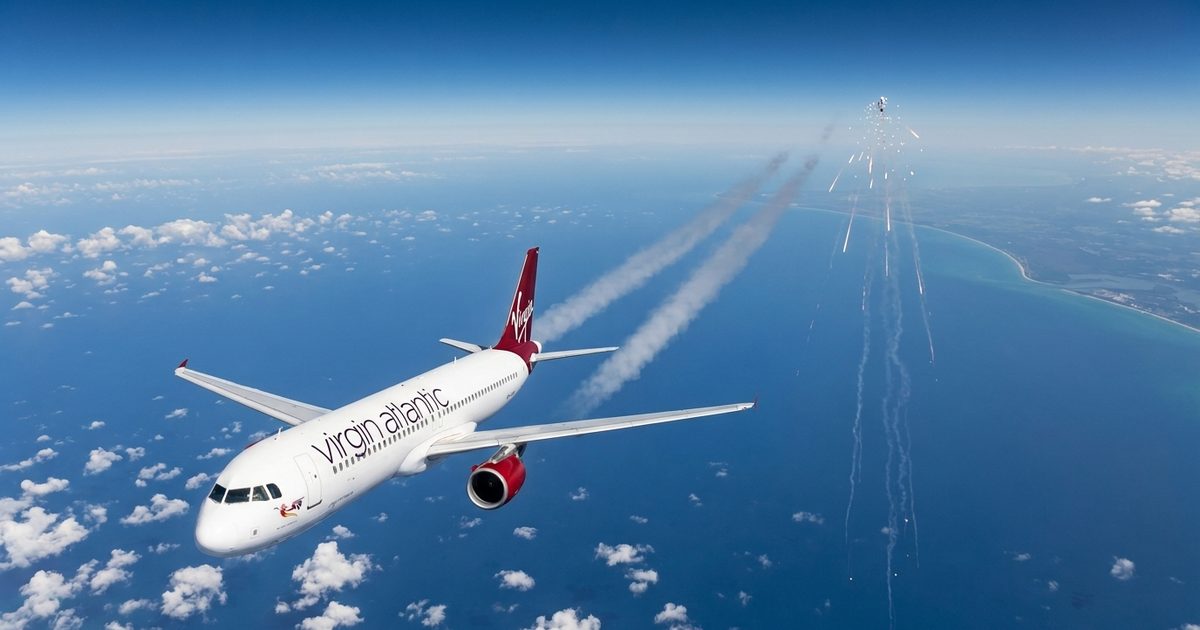
The Federal Aviation Administration has lifted a cap that limited how many commercial flights could pass through higher-risk airspace tied to rocket launches and reentries, according to FAA Order 1030.8, “FAA Safety Management,” which took effect Sept. 15, 2026. The underlying decision came from the FAA’s Executive Safety Council on June 8, and trade publication The Air Current first reported the shift this week, revealing a policy change that accepts greater space debris risk to airliners as U.S. launch cadence accelerates.
What Changed in the FAA’s Space Debris Risk Policy
Order 1030.8’s space-transport appendix states that “the Executive Safety Council memorandum, ‘Decision on Safety Standards for Commercial Space,’ dated June 8, 2026, brought several changes to existing ALR [Acceptable Level of Risk] policy,” including “removal of the 12-month rolling limit of 6,412 aircraft exposures within the 1 × 10⁻⁷ and 1 × 10⁻⁸ contour intervals,” according to FAA Order 1030.8. In plain English, those two contours are the outer, less-hazardous rings of airspace around a launch or reentry corridor, where an individual aircraft’s odds of being struck by hazardous debris work out to roughly one in 10 million or one in 100 million. The FAA had previously capped flights through those outer rings at 6,412 movements a year — a limit The Air Current reported was designed to keep the odds of a fatal debris accident below one in 20 (95% confidence) over an average human lifetime. That numerical cap is now gone.
The order also reaffirms, verbatim, a “continued requirement to conform to the 1 × 10⁻⁶ contour standard. No aircraft may enter the 1 × 10⁻⁶ contour interval,” according to FAA Order 1030.8. That innermost ring — where the odds of a debris strike run roughly one in a million — remains fully closed to all air traffic, unchanged from before.
The FAA told The Air Current the revised approach will be phased in over the following year and that its safety experts concluded it remains safe. A spokesperson also said the agency “does not make safety decisions based on a company’s IPO” — addressing the fact that the change surfaced just days before SpaceX’s Nasdaq listing.
Why the FAA Is Accepting More Space Debris Risk
The shift comes as U.S. launch activity climbs sharply. The FAA licensed 33 commercial space launches in 2018; by 2025 that figure had risen to 199, including 161 by SpaceX. The Trump administration has set a goal of more than 1,000 licensed launches and reentries annually by 2030, and SpaceX chief executive Elon Musk has said he is aiming for roughly 10,000 Starship flights a year by then.
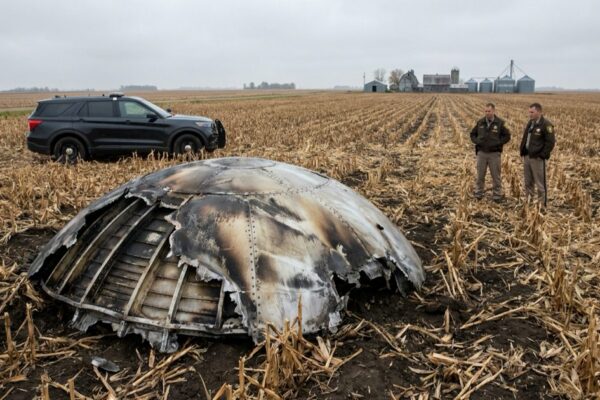
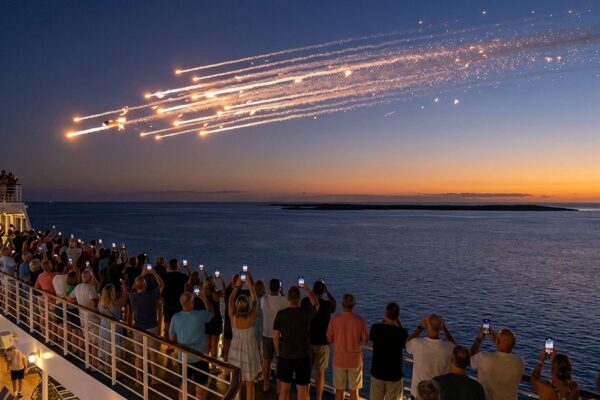
That growth has already collided with commercial air traffic. When Starship’s seventh test flight broke apart over the Caribbean on Jan. 16, 2025, the FAA activated emergency debris response areas, and FODNews reported that the agency’s own SAFO 26001 safety alert warned pilots that falling spacecraft posed a “potential extreme safety risk.” Several flights altered course, and at least three declared fuel emergencies. Rocket debris has repeatedly disrupted civil airspace elsewhere, including back-to-back debris warnings over the Philippines tied to Chinese launches this fall.
Pilots Push Back on the Space Debris Risk Trade-off
The Air Line Pilots Association, which represents roughly 80,000 airline pilots, has criticized the decision. “We’re against reducing safety standards as a mechanism for airspace integration,” ALPA aviation safety chair Steve Jangelis told The Air Current, adding that “innovation must be met with innovation. Integrating the airspace by reducing safety standards will only result in accidents.” Tanner Furr, ALPA’s commercial space operations specialist, pointed instead to tools already in development, including the Range Risk Analysis Tool deployed after the Starship 7 incident. “In all the subsequent launches, the majority of which did fail in some phase of flight, we have had zero airline fuel emergencies that I’m aware of as a result of the debris response area activation,” Furr said, calling for continued investment in systems such as the Real Time Hazard Area Generation tool rather than looser standards. “There’s nothing creative or innovative about reducing a safety standard,” he said.
With the rolling exposure limit gone, critics say cumulative space debris risk to the flying public could rise as launch cadence increases through the decade. The FAA has not released the June 8 memo itself, but its substance is now confirmed in Order 1030.8’s safety appendix — the agency’s own documentation of the policy shift The Air Current first reported from internal sources.
Subscribe to FODNews for continuing coverage of FOD incidents and prevention worldwide.