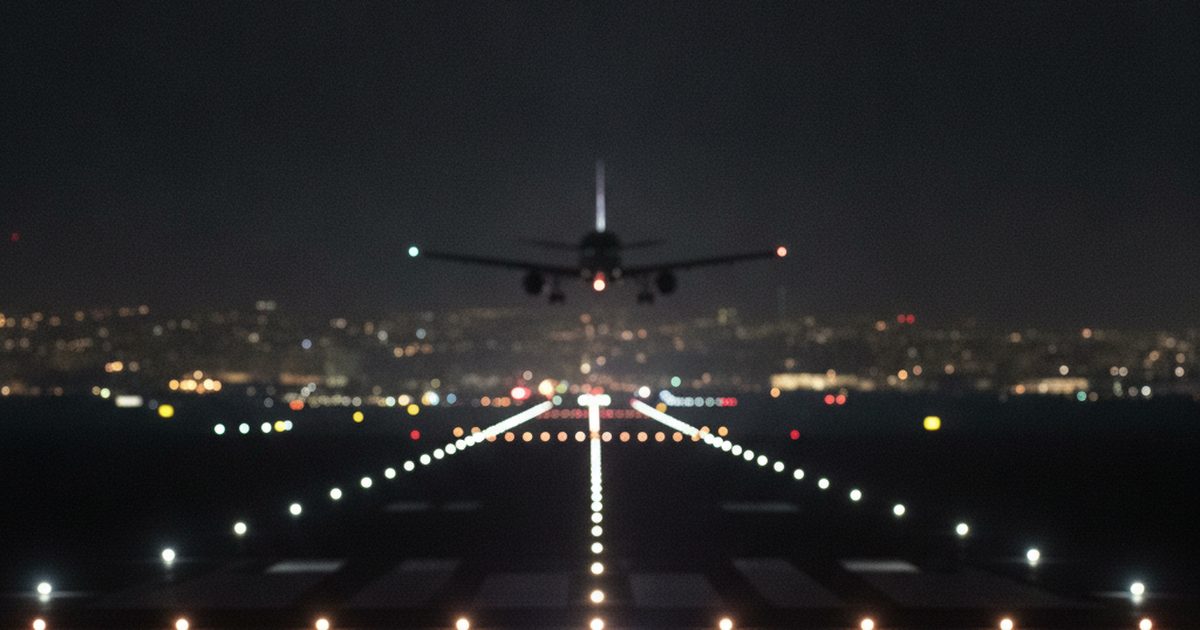
A Melilla drone incursion near the runway-33 approach at Melilla Airport (GEML) held an inbound Iberia flight in a holding pattern for close to an hour. It was the second unauthorized drone sighting at the airport in four days. Spain’s government has since formally asked Morocco to regulate drone altitude near the border. Guardia Civil determined the aircraft was flying at just 75 to 100 meters. That’s well below what officers call typical for routine surveillance flights.
The first incident came on the night of September 18. Pilot Iván Castro Palacios reported an uncontrolled drone hovering in the approach corridor to runway 33. It had a steady white light and an estimated weight of 15 kilograms, straddling the Melilla-Morocco border. Guardia Civil confirmed the sighting and alerted the control tower. No flight suffered a delay that night.
The second sighting, four days later, was more disruptive. A similar drone appeared in the same approach zone, an area already complicated by a bird colony that inhabits a nearby park and golf course. As a result, it kept an inbound Iberia flight from Málaga airborne for nearly an hour before it could land. Spain’s public broadcaster RTVE reported that AENA, the national airport operator, confirmed no cancellations resulted. Melilla’s airspace did not need to close.
No NOTAM, No Explanation From Rabat
Morocco has not issued a NOTAM for either drone flight. A NOTAM — a notice to airmen — would normally restrict other aircraft from operating near a known hazard automatically. Guardia Civil sources believe the aircraft may be one of the larger models used by Moroccan Gendarmerie units for border surveillance. But they say the altitude in both incidents was atypically low for that mission profile. That detail suggests the drones were flown higher than routine patrols, deliberately triggering an air-safety response.
Border Tensions Shape the Timing
Officials in Melilla have linked the timing of both incidents to two factors. One is Morocco’s Eagle Eye 26 military exercises, underway just across the Mediterranean. The other is heightened border security following social-media calls for a mass crossing attempt, a pattern that echoes the Ceuta incidents in late July. Spain’s government delegation in Melilla acknowledged both drone sightings only after being pressed on the record. It downplayed their severity even while requesting the altitude change from Rabat.
Melilla Drone Incursion Fits a Wider Pattern
Melilla joins a run of drone-driven holding-pattern and closure incidents FODNews has tracked this year. But the cross-border dynamic sets it apart. Unauthorized drones shut down Luxembourg’s Findel Airport for several hours in September, diverting 19 flights and disrupting more than 1,800 passengers. A drone hovering over the control tower grounded San Diego International Airport for two and a half hours. In both cases, domestic authorities could act unilaterally to halt operations. At Melilla, the drone’s presence in Moroccan airspace leaves Spain dependent on a neighboring government’s cooperation. So far, it doesn’t even have a NOTAM to work with.
No further drone sightings had been reported near GEML as of publication. Still, Spain’s request to Morocco for an altitude adjustment remains unanswered.
Subscribe to FODNews for continuing coverage of FOD incidents and prevention worldwide.
Sources
- RTVE — “España pide a Marruecos ajustar la altura de sus drones tras interferir uno en el aterrizaje de un vuelo en Melilla” (Sept. 24, 2026)
- The Objective — “Marruecos apunta a Melilla: vuelos furtivos de drones para bloquear espacio aéreo” (Sept. 25, 2026)
- La Razón — “Un dron marroquí interfiere en los vuelos que llegan a Melilla” (Sept. 25, 2026)
- Le Maroc 360 — “Rising Tensions in Melilla: Drone Incidents Raise Security Concerns” (Sept. 25, 2026)