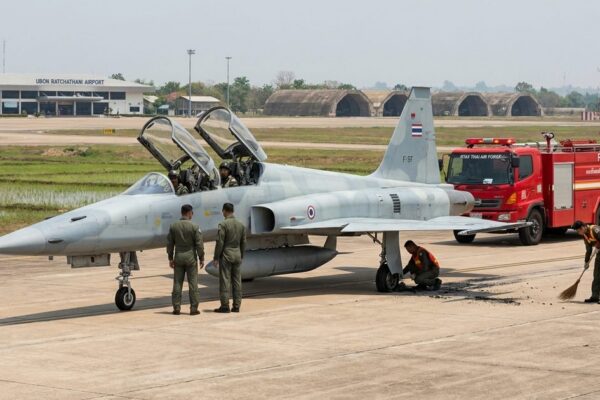
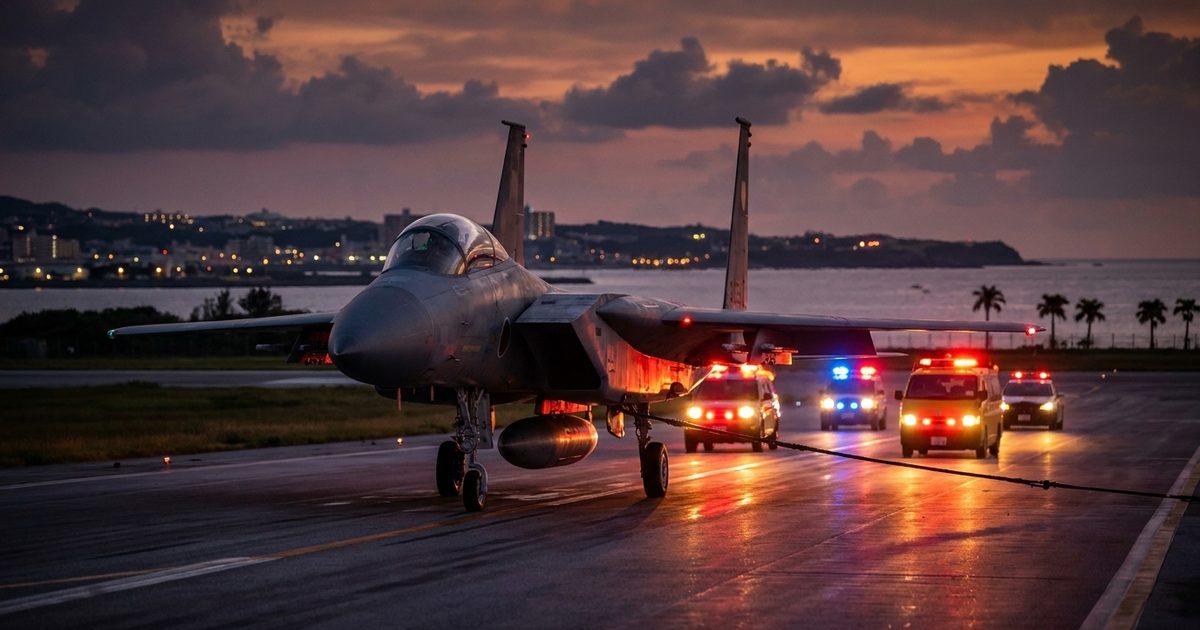
A Japan Air Self-Defense Force (JASDF) F-15J Eagle made an emergency landing at Naha Airport in Okinawa on Sept. 10. Its pilot had detected a hydraulic-system malfunction in flight. The landing shut down one of the airport’s two runways and delayed more than a dozen commercial flights. The emergency landing was the second runway-closing mishap involving JASDF fighters at the joint civil-military airfield in less than a month.
Hydraulic Failure Triggers Runway Closure
The single-seat F-15J had been scrambled on an intercept mission and was returning to base when the pilot reported a hydraulic-system problem. That’s according to a JASDF spokesman cited by Stars and Stripes. The fighter touched down on Naha’s Runway B at approximately 7:16 p.m. local time. It used the runway’s arresting-cable system to stop. The cable engagement may have produced sparks, the spokesman said. The pilot was not injured. Officials were still assessing the extent of any damage to the aircraft as of Sept. 11.
Naha Airport shares its runways with Naha Air Base, a JASDF installation. As a result, any military ground stoppage on the shared strip directly disrupts civilian air traffic. Ground crews confirmed an oil leak on the runway surface. That finding prompted a full closure while crews inspected and cleared the aircraft, Japanese broadcaster TV Asahi reported.
Civilian Flights Delayed
Crews closed Runway B for roughly an hour, from about 7:15 p.m. to around 8:25 p.m., while emergency responders moved the fighter. That’s according to Japan’s Ministry of Land, Infrastructure, Transport and Tourism office at Naha Airport, as relayed by Kyodo News affiliate reporting. An airport official said 14 to 15 arriving commercial flights were delayed, some by more than 20 minutes. Meanwhile, the airport shifted all operations to its other runway during the closure, allowing civilian traffic to continue.
The cause of the hydraulic malfunction remains under investigation. The JASDF spokesman declined to say whether F-15Js would face any operational restrictions following the incident.
Second Naha Mishap in Weeks
The Sept. 10 landing came just over three weeks after a more serious F-15J mishap at the same airfield. On Aug. 18, an F-15J’s left main landing gear collapsed on touchdown on the same Runway B. The fighter skidded and rotated roughly 180 degrees. It came to rest with its left wing and external fuel tank contacting the pavement. That incident closed the runway for about four hours and delayed roughly 40 commercial flights. Crews had to lift the damaged jet by crane and haul it off the runway on a trailer. JASDF fighters resumed flying from Naha only on Sept. 1, following that earlier grounding period, according to Stars and Stripes.
Runway incursions and disabled aircraft on active pavement are a core runway-safety concern at joint-use airfields worldwide. A single military mishap can cascade into hours of civilian delays. Indeed, similar dynamics have played out elsewhere this year. Two Indonesian military aircraft skidded off a runway in consecutive days at Sultan Hasanuddin Air Base, forcing repeated closures at another mixed-use airport. In addition, fighter-jet operators elsewhere have invested in prevention hardware. The Royal Malaysian Air Force’s indigenous air-intake FOD screen was developed specifically to reduce debris-related engine risk on fighter aircraft during ground operations.
Ongoing Scrutiny of Naha Operations
Naha is among Japan’s busiest airports and hosts the JASDF’s 9th Air Wing, which maintains F-15J quick-reaction-alert coverage over the East China Sea. Back-to-back mishaps within a single month have drawn renewed attention to maintenance and inspection practices for the base’s F-15 fleet. Still, the Ministry of Defense has not announced new grounding or fleet-wide inspection measures tied to either incident as of this report. No fires occurred in either the Aug. 18 or Sept. 10 events, and officials have confirmed no injuries among flight or ground crews.
Stay informed — subscribe to FODNews for daily coverage of FOD incidents and prevention worldwide.