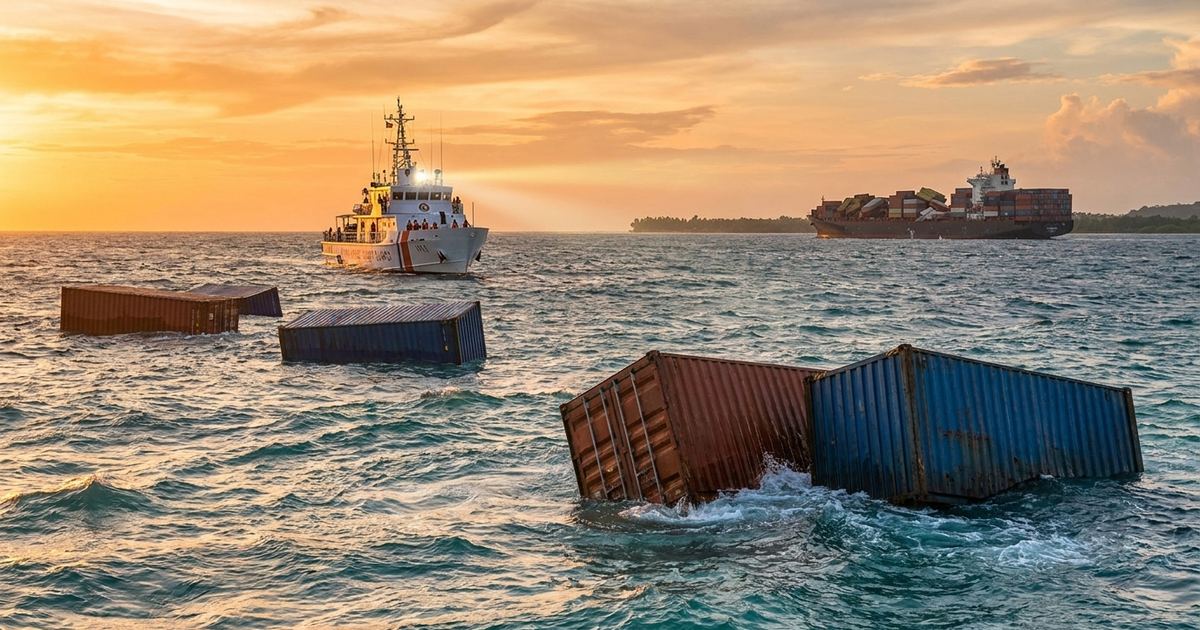
Forty-six shipping containers went overboard from an interisland cargo vessel in rough seas off Batangas, Philippines, on Sept. 3, prompting the Philippine Coast Guard to issue a navigational warning and deploy patrol vessels and a drone to locate the drifting boxes.
The incident involved the containership Span Asia 39, an 8,300-deadweight-ton vessel operated by Philippine Span Asia Carrier Corp. According to the Philippine Coast Guard’s Southern Tagalog District, the ship encountered heavy and continuous rolling around 11 a.m. while approaching waters off Calatagan, Batangas, near Hamilo Point, roughly 1.5 nautical miles from shore. The rolling loosened container lashings, sending 30 twenty-foot containers, 11 forty-foot containers, and five open-type containers into the sea. The ship reported the containers were empty.
A Second, Separate Loss at Manila Anchorage
The 46 containers lost off Batangas were not the full extent of the incident. Later that afternoon, around 2 p.m., Span Asia 39 was maneuvering toward the Manila North Anchorage Area. A separate container fell overboard and sank there, according to the Coast Guard report cited by the Philippine Daily Inquirer. That brings the voyage’s total to 47 lost containers. Still, the two events are distinct: 46 in the initial Batangas incident and one additional unit later at the anchorage. The vessel had departed the Davao International Container Terminal on Aug. 31, carrying 332 containers bound for Manila North Harbor.
At least one of the 46 containers has washed ashore, based on photos reviewed by maritime outlets. However, the Coast Guard has not confirmed the location or status of the remaining boxes. Some may still be floating at or just below the surface, while others may have sunk.
Coast Guard Response and Navigational Warning
The PCG-Batangas station issued an immediate navigational warning covering the affected shipping lane, urging vessels to maintain a safe distance from the floating containers. In response, the Coast Guard dispatched the patrol ship CGS Cavite to the search area. It also deployed a drone for aerial assessment, monitoring, and verification of reported container locations, according to the Maritime Executive. The 44-meter multi-role response vessel BRP Malapascua was also sent to assist with search, drift-tracking, and containment operations.
The Marine Environmental Protection Force-Southern Tagalog identified nearby marine protected areas for monitoring in case of ecological or coastal impact. These include Taytayin Cove, Santelmo Cove, Pico de Loro Cove, and Fuego Point Marine Sanctuary. Meanwhile, the PCG sub-station in Nasugbu was directed to establish on-scene command for the response, working with local government units and community fish wardens.
Drifting Containers as a Navigation Hazard
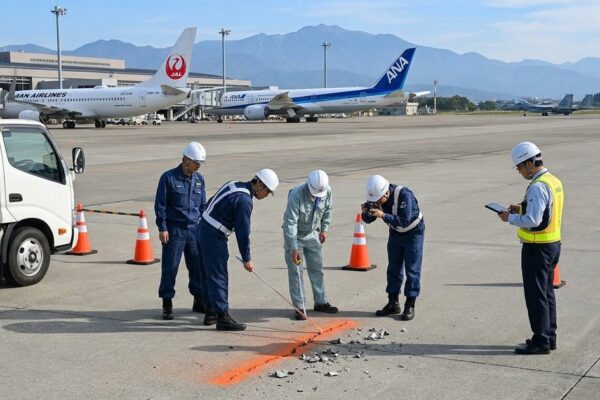
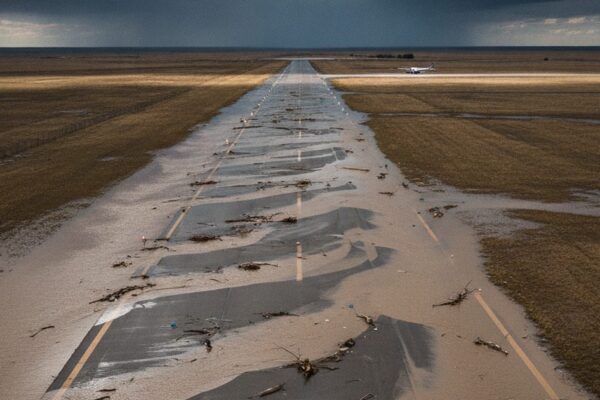
The incident illustrates a hazard that maritime traffic shares with aviation: foreign objects loose in an operating environment. Just as runway debris threatens aircraft tires, engines, and airframes, an unsecured shipping container adrift in a shipping lane threatens hulls, propellers, and rudders. A semi-submerged container floating just below the surface is often invisible to a vessel’s bridge crew. That makes it a serious collision risk in one of the busiest interisland routes in the Philippines.
The Batangas region sits near the Verde Island Passage, a heavily trafficked corridor for both commercial shipping and passenger ferries. Consequently, a debris field of dozens of containers — some visible, some not — represents a prolonged hazard until every unit is located, recovered, or confirmed sunk.
What Comes Next
No injuries have occurred in connection with the incident. However, the Coast Guard has not yet said how many containers crews have recovered so far, whether from the initial 46-container loss or the additional unit lost near Manila. Meanwhile, drift-tracking and aerial surveillance efforts were continuing as authorities worked to clear the shipping lane and confirm the fate of the remaining boxes.
Stay informed — subscribe to FODNews for daily coverage of FOD incidents and prevention worldwide.