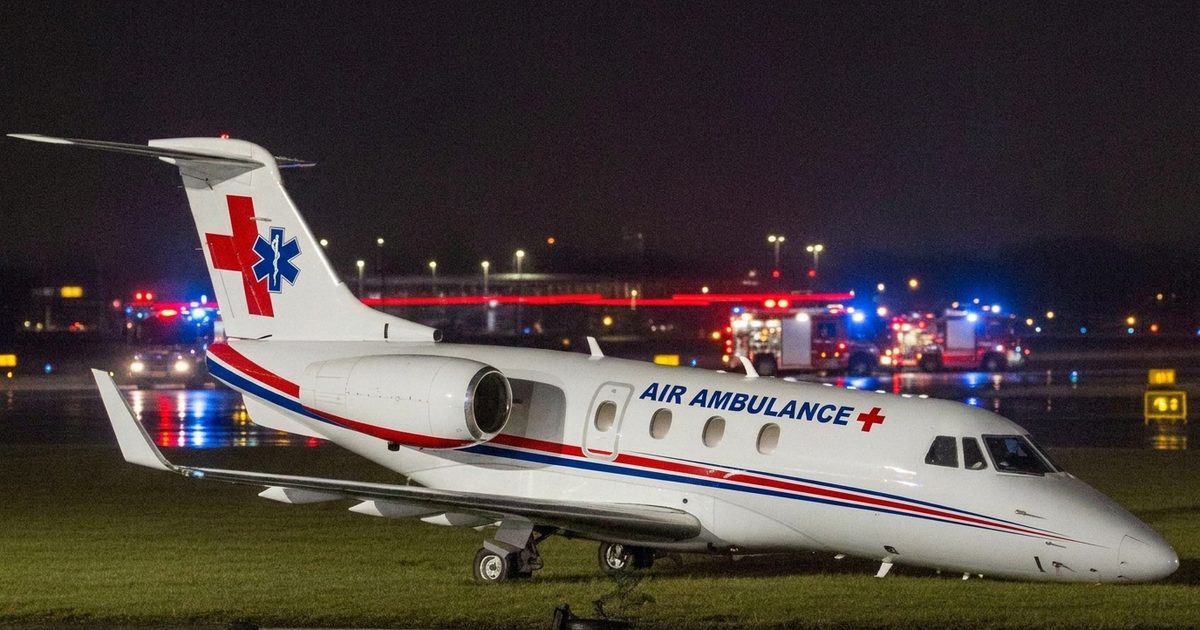
LAS VEGAS — A SkyCare Air Ambulance and Charter jet suffered a tire burst at 130 knots during its takeoff roll at Harry Reid International Airport last month. The failure sent the aircraft off the runway, scattering shredded rubber and brake debris across the pavement, according to a National Transportation Safety Board preliminary report.
The IAI 1124A Westwind, Canadian-registered C-GIAW, was accelerating for takeoff about 1:45 a.m. on Aug. 28 when its left main tire failed with an audible “thud,” the NTSB said. The pilot felt the airplane veer left immediately after.
The crew retarded the throttles, deployed idle thrust reversers, and pressed hard on the brakes and right rudder to fight the swerve. In a last attempt to hold the runway, the pilot released the left brake. The Westwind exited the left side of the pavement, crossed the runway safety area, and came to rest on an adjacent taxiway.
Tire burst leaves a debris field behind
The left main landing gear collapsed during the excursion, and the right tire blew as well, investigators found. Two parallel tire marks ran left of the runway centerline. Investigators found the marks were “accompanied by irregular tire signatures and shredded tire material and brake components” scattered across the surface. That kind of runway debris field becomes a secondary FOD hazard for the next aircraft using the strip. The plane’s lower fuselage sustained substantial damage.
All five people aboard — two pilots and three medical crew members — were uninjured. The flight, operating under Title 14 CFR Part 129 as a foreign-registered air ambulance charter, had been bound for Toronto Pearson International Airport.
The FAA’s initial public accident statement mischaracterized the event. It described a tire blowout that happened while the aircraft “was taxiing after safely landing” and cited six people aboard rather than five. The NTSB’s on-scene factual findings, released weeks later, instead confirm the failure happened during the takeoff roll, not after landing. FlightGlobal republished coverage of the findings on Sept. 21, nearly a month after the accident. The runway-debris story remains in circulation as investigators continue examining what caused the tire to fail.
High-speed tire failures like this one aren’t isolated. A Croatia Airlines A220 rejected takeoff at 131 knots in Split earlier this year after a similar tire event. Investigators traced an American Airlines 737 MAX’s Denver tire failure to melted thermal relief plugs rather than runway debris. Not every high-speed tire failure starts with foreign objects on the pavement — but the resulting wreckage still becomes FOD itself.
The NTSB has classified the Las Vegas accident as a Class 3 investigation and did not send investigators to the scene. A final report determining the tire failure’s root cause is expected in the coming months.
Stay informed — subscribe to FODNews for daily coverage of FOD incidents and prevention worldwide.