From super scoopers to super sleuths, the arsenal
to prevent FOD has new entries.
Separated from its coffee-cup companion, a plastic cap propelled by jet exhaust haphazardly careens across an airport tarmac. To most people, this urban tumbleweed is an irksome, but harmless, traveler on today’s landscape.
To an aviation professional, such litter is anything but harmless. It is FOD. And whether the acronym stands for foreign object debris or foreign object damage, FOD can kill when ingested by an aircraft. [Read more…]
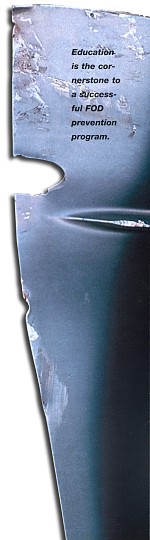 Landing gear safety pins ingested by a running jet engine; a socket wrench jammed in a flight control bell crank mechanism; a stray piece of safety wire that shorts out a circuit breaker panel: All of these scenarios represent Foreign Object Damage (FOD) that could wreak havoc on combat or training missions. Even if AFI21-101, Maintenance Management of Aircraft, didn’t require it, we’d have no trouble recognizing that an effective FOD Prevention Program is vital to safe, successful flying activities in today’s Air Force. FOD costs each year typically run in the millions of dollars. In Fiscal Year 2000 alone, FOD cost the Air Force nearly $24 million, diverting valuable resources needed for the readiness of our Air Expeditionary Forces.