Bird Strike Cracks Cockpit Windshield on United 737 MAX Out of Newark, Forces Emergency Return
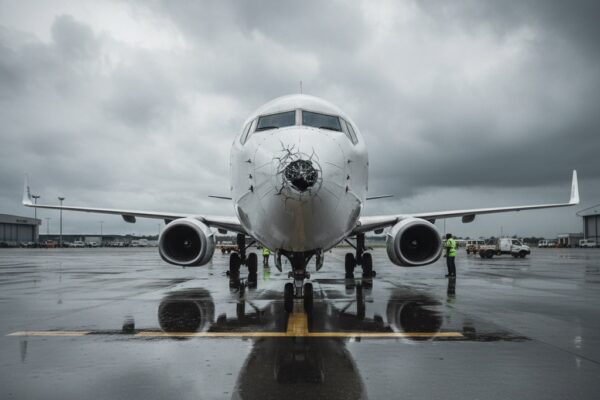
A United Airlines Boeing 737 MAX 8 declared an emergency Monday morning and returned to Newark Liberty International Airport. A bird strike had cracked the cockpit windshield and raised pressurization concerns shortly after takeoff.
Flight UA-1207, registration N37313, departed Newark on March 9, 2026, bound for Jacksonville International Airport in Florida with 145 people on board. The aircraft was climbing through approximately 3,000 feet off Runway 22R when the crew advised they had struck a bird, were assessing the situation, and requested delay vectors from air traffic control.
Cracked Glass, Pressurization Concerns
The bird strike quickly escalated beyond a routine inspection hold. The crew reported damage to a window gasket and possible pressurization problems, prompting them to consult with their operations center before declaring an emergency.
According to the FAA, the crew reported a cracked windshield and a possible pressurization issue. “United Airlines Flight 1207 returned safely to Newark Liberty International Airport around 8:40 a.m. local time on Monday, March 9, after striking a bird while departing,” the agency said in a statement. “The FAA will investigate.”
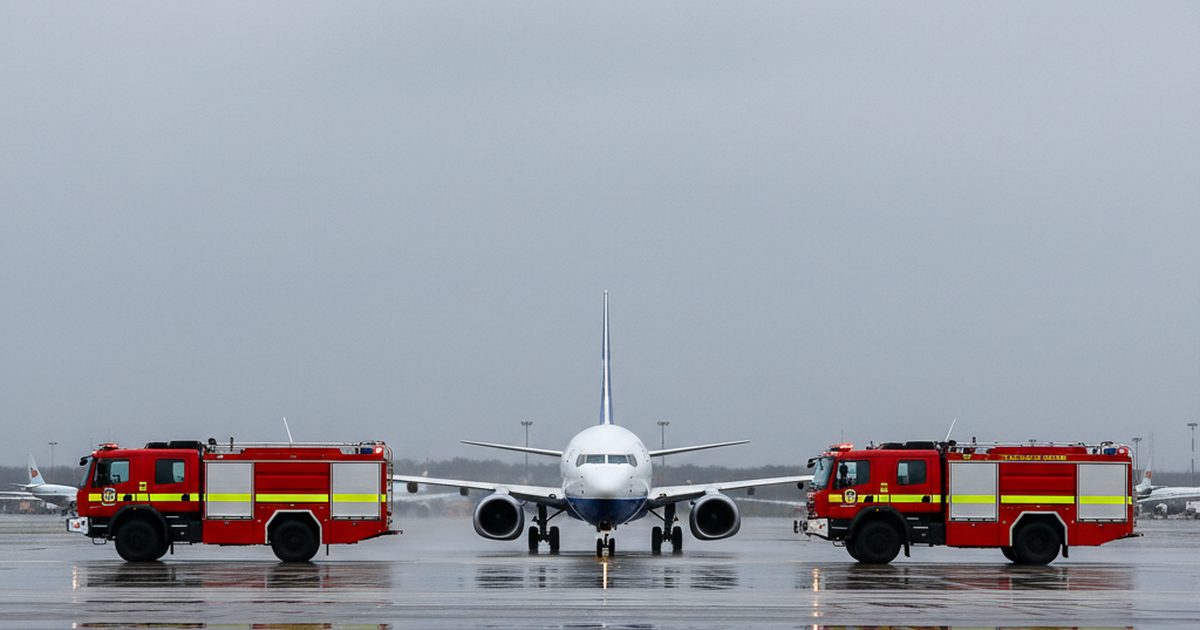
The aircraft executed a right turn and flew a wide loop to the west of the airport, touching down safely on Runway 22L roughly 20 minutes after it had departed. All 145 people on board escaped injury.
United dispatched a replacement Boeing 737 MAX 8, registration N17344, which eventually carried passengers to Jacksonville — arriving approximately three hours and 45 minutes behind schedule.
Why Windshield Damage Is Taken Seriously
Aircraft cockpit windshields are not ordinary glass. They are heated, multi-layer structural transparencies integrated into electrical systems and pressurization architecture. A crack in that assembly, particularly one accompanied by reports of window gasket damage, raises immediate concerns about cabin pressure integrity at altitude.
Bird strikes are most often associated with engine ingestion, but damage to windscreens, radomes, and forward fuselage structures is well-documented. Takeoff and initial climb are especially vulnerable phases — when aircraft fly at lower altitudes and steeper angles of attack, directly through the zones where birds commonly operate.
Newark’s Bird Strike History
Monday’s incident fits a troubling pattern at Newark — one FODNews has covered across multiple carriers. The airport sits in a dense, wildlife-sensitive operating corridor, and its bird strike record reflects that exposure.
In March 2025, a FedEx Boeing 767 returned to Newark after a bird strike caused an engine fire visible from the ground. In October 2024, two separate United Airlines flights — a 737-900 and an Airbus A319 — sustained bird strike damage on departure. A United 787-9 in June 2024 suffered engine cowling damage discovered after landing.
The broader U.S. picture is equally sobering. FAA wildlife strike data shows more than 22,000 documented wildlife strikes in 2024 alone. The agency reports that 82 percent of strikes occur at or below 1,500 feet — the exact phase of flight when aircraft are most vulnerable and pilots have the fewest options. The annual cost to U.S. aviation is estimated at nearly $500 million and 75,000 hours of aircraft downtime.
The crew reported the strike at around 3,000 feet — above the most statistically common strike zone, but still within the low-altitude threat envelope where wildlife management programs focus their attention.
What Comes Next
With the FAA investigation now open, inspectors will examine the aircraft and review data to determine the circumstances of the strike and the resulting damage. Maintenance teams at Newark would have conducted a thorough inspection of the windshield assembly, window gaskets, surrounding structure, and pressurization systems before the aircraft returns to service.
The incident is the latest reminder that wildlife strike mitigation at busy urban airports is an ongoing operational challenge — not a solved problem. As Newark’s record shows, even well-resourced airports with established wildlife programs face repeated encounters between aircraft and birds in the critical moments after wheels leave the ground.
No additional details about the species involved or the precise point of impact were available as of publication.
Subscribe to FODNews for independent coverage of FOD incidents, wildlife strike trends, and airfield safety worldwide.
Sources
- Simple Flying — Bird Strike Forces United 737 MAX Back To EWR With Cracked Windshield
- Aviation Direct — Emergency landing in Newark after bird strike and damage to cockpit window
- AeroInside — United B38M at Newark on Mar 9th 2026, bird strike, cracked windshield, pressurization problems
- FAA — Wildlife Strike Report 1990–2024