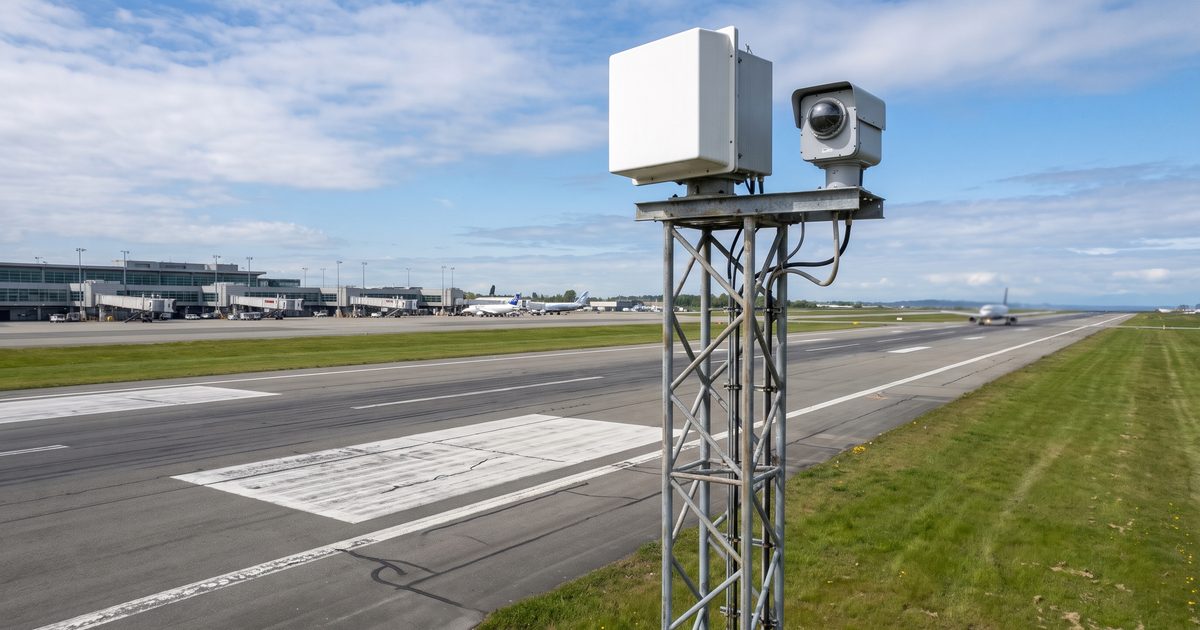
RICHMOND, British Columbia — Four towers stand beside the runways at Vancouver International Airport, each one built to spot debris on the pavement. The firm that upgraded them says the job is done. The Vancouver FOD radar stations were finished in October, on time and under budget, says Whelan Construction Ltd.
The work was never about the towers alone. Whelan says in its project portfolio that it upgraded the infrastructure at “four FOD (Foreign Object Debris) radar stations across YVR’s active airfield.” The aim was to ready them for new radar gear from Moog.
The stakes are plain. YVR is a major Pacific gateway, and debris on a runway is a hazard to every plane that uses it. These stations are meant to catch that debris in all weather.
What crews rebuilt at the four stations
This account comes from the contractor and the equipment supplier, not from Vancouver Airport Authority. Whelan lists the authority as its client and Hatch as the consultant.
In a Nov. 1 LinkedIn post, the firm said the stations sit “across four runway locations on YVR’s north and south airfields.”
The scope reads like a list of all the things a radar needs and no one sees. Crews did the civil work and the foundations. They upgraded heating and cooling, electrical and power distribution, and backup power.
They also put in communications gear, grounding, obstruction lights and lightning protection.
One tower had to shrink. Whelan says the station it calls FS4 needed an engineered height cut to meet Obstacle Limitation Surface rules.
Those rules limit how tall a structure can be near a runway. Even a safety tool has to stay clear of the planes it guards.
Building beside moving aircraft
None of this took place on a quiet site. Whelan says the work was planned with care and sequenced around live airfield operations. That meant night work and runway closures, the firm said in its post.
It also meant four groups working in step. Whelan describes close work among its own crews, Hatch, Moog and YVR operations teams. Each closure had to fit the airport’s traffic, and each task had to fit inside the closure.
Once the stations were ready, the handoff came. Moog did the final radar integration, connections, testing and commissioning, Whelan says.
What the Vancouver FOD radar is built to do
The system has two sets of eyes. “YVR’s Moog Tarsier FOD detection system combines radar and optical camera technology to monitor the airfield for foreign object debris,” Whelan said in its post.
Moog told its side of the story on Oct. 27. The company said on LinkedIn that it had partnered with Vancouver Airport Authority on “the latest upgrade to its Tarsier® Runway Surface Awareness capability, bringing the newest generation of Tarsier technology to the airfield.”
Moog calls Tarsier an all-weather FOD radar. The upgrade, it says, is designed to give operators greater visibility, faster assessment and a more efficient operational response. Those are the supplier’s own claims for its product.
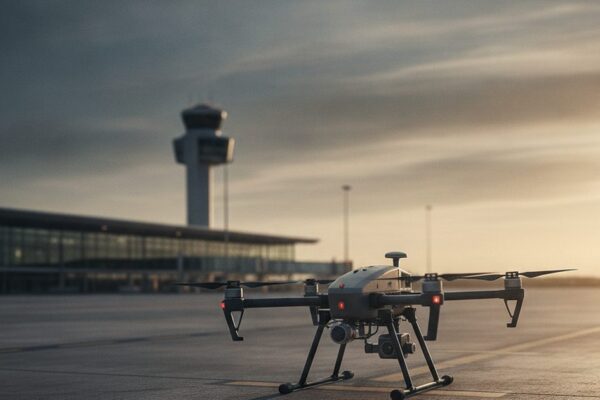
Debris detection by machine is a growing story on airfields. FODNews has reported on FOD-detection systems moving onto the radar and on drone-based FOD detection used to speed up runway sweeps.
The lesson sits under the tower
It is easy to think of debris detection as a sensor and a screen. The Vancouver project shows how much sits beneath that. A radar cannot watch a runway without steady power.
Nor can it report what it sees without working communications. Foundations hold the tower still. Grounding and lightning protection guard the gear in a storm.
Backup power is there for when the main supply is not. Obstruction lights keep the tower itself in view.
That is the quiet point in Whelan’s scope list. The radar gets the attention, but the station keeps it running.
And at a busy airport, that station has to be built and commissioned in the gaps between flights. It must not become a hazard of its own.
Subscribe to FODNews for continuing coverage of FOD incidents and prevention worldwide.
Sources
- Whelan Construction Ltd. — “YVR FOD Radar Stations” project portfolio (completion October 2026)
- Whelan Construction Ltd. — LinkedIn post on the YVR FOD radar upgrade (Nov. 1, 2026)
- Moog Aircraft — LinkedIn post on the Tarsier Runway Surface Awareness upgrade at Vancouver International (Oct. 27, 2026)
- Moog — company site