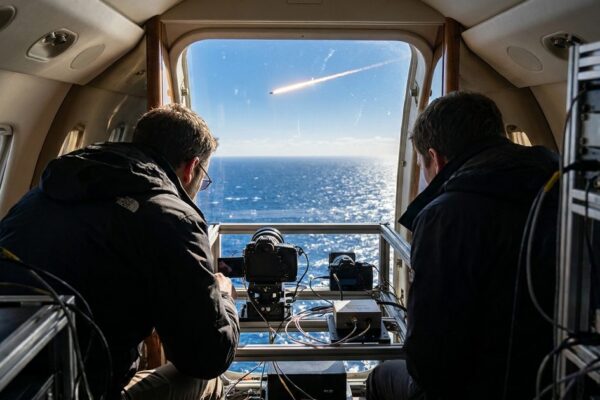

PUERTO PRINCESA, Philippines — Bright lights filled the sky before dawn on Monday, Nov. 9, and loud booms followed. About nine minutes earlier, a Chinese rocket had left its pad in Hainan. The Philippine Space Agency (PhilSA) projected that Long March 12 debris would fall in a drop zone about 25 nautical miles from the city.
Farther out, staff at the Tubbataha Reefs Natural Park saw a bright, glowing object. It was about 35 kilometers (19 nautical miles) from their station. That is the area PhilSA had marked as a possible drop zone.
The zone lies inside Philippine archipelagic waters. Fishing boats, ships and planes pass through it. PhilSA did not expect the spent rocket parts to hit land or populated areas. On the water, though, falling debris is a real danger. The Philippine Navy was on heightened alert.
A bright show in the predawn sky
PhilSA confirmed the launch from the Hainan International Commercial Launch Center in Wenchang. Liftoff came at around 4:24 a.m. Philippine Standard Time. Over Puerto Princesa, the lights came first and the blasts after, the Navy said, according to the Philippine Daily Inquirer. The Navy put the noise down to sonic booms.
Navy crews in the West Philippine Sea saw much the same. Reports came from Lawak, Patag and Likas islands and from Rizal (Commodore) Reef.
The Long March 12 is known for light and smoke trails as it enters the last stage of launch. In a first assessment, Naval Command West in Puerto Princesa called it a “space jellyfish.” The likely cause was rocket exhaust gases spreading out high in the sky.
Why the Long March 12 debris zone put crews on alert
The danger was not the light show. It was what the rocket shed on the way up. Spent parts such as the booster and fairing are built to drop away as a rocket reaches space, PhilSA said.
Those parts are a risk to ships, planes, fishing boats and other craft in the zone. Some may float and drift toward nearby coasts. PhilSA could not rule out an uncontrolled re-entry of the rocket’s upper stages.
The warnings went out early. Drop-zone details appeared in a Notice to Airmen (NOTAM) that flagged aerospace flight activity. PhilSA also sent a pre-launch report to agencies and authorities.
Before the launch, Naval Command West worked with government agencies, coastal communities and fisherfolk. The goal was fast reports of suspected rocket debris or falling objects. After liftoff, it raised its alert level to speed up reporting and assessment.
Palawan has seen this before
In November 2025, a Navy surveillance aircraft spotted a large piece of suspected rocket debris about 60 nautical miles northwest of Tubbataha Reef. The BRP Andres Bonifacio recovered it on Nov. 11, 2025, about 49 nautical miles northwest of the reef.
The piece measured 12 feet by 21 feet. “The Western Naval Command (WESNAVCOM) of the Philippine Navy successfully recovered a large piece of suspected rocket debris this week, believed to be remnants from a Long March 12 rocket launched by the People’s Republic of China,” the Navy said, as reported by GMA News. It went to the naval station in Puerto Princesa for technical analysis.
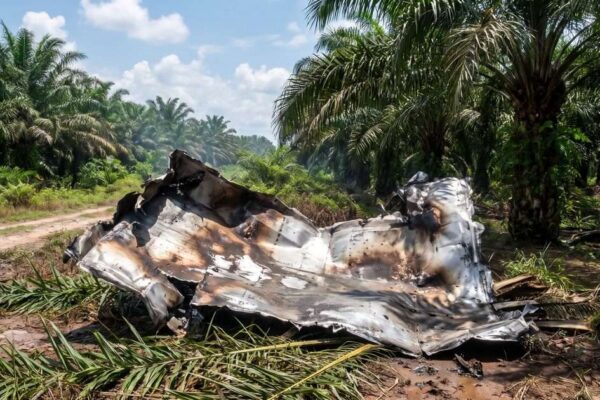
The warnings keep coming. In September, sonic booms from another Long March 12 were heard over Puerto Princesa. FODNews has reported on PhilSA’s back-to-back rocket debris warnings that month and on suspected Zhuque-2E debris that crashed into a palm plantation on Borneo.
What falls from a rocket lands somewhere
For anyone who keeps runways and race tracks clear, the lesson is familiar. Loose objects do not vanish. They end up where people work. At sea, that means fishing grounds and shipping lanes.
PhilSA sees a growing problem. “As global launch rates continue to accelerate, debris shed during staging events and the uncontrolled re-entry of large rocket upper stages pose growing hazards—not only to other spacecraft, but to civil aviation and to populations on the ground.”
It also called for regional cooperation. “The Philippines invites international partners to explore how our region can develop coordinated protocols and capabilities that protect both our space assets and our people on the ground.”
For people on the coast, the advice is simple. Anyone who sees suspected debris should tell local authorities. Do not pick it up or get close, PhilSA warns. It may hold traces of toxic substances such as rocket fuel.
Subscribe to FODNews for continuing coverage of FOD incidents and prevention worldwide.
Sources
- Philippine Space Agency — “Advisory on the Long March 12 rocket launch” (Nov. 9, 2026)
- Philippine Daily Inquirer — “Navy raises alert in Palawan following China’s rocket launch” (Nov. 11, 2026)
- GMA News — “Chinese rocket debris may have fallen near Palawan, Tubbataha waters —PhilSA” (Nov. 9, 2026)
- Daily Tribune — “Palawan waters on rocket debris watch” (Nov. 9, 2026)
- GMA News — “Suspected China rocket debris recovered off Tubbataha Reef” (Nov. 15, 2025)