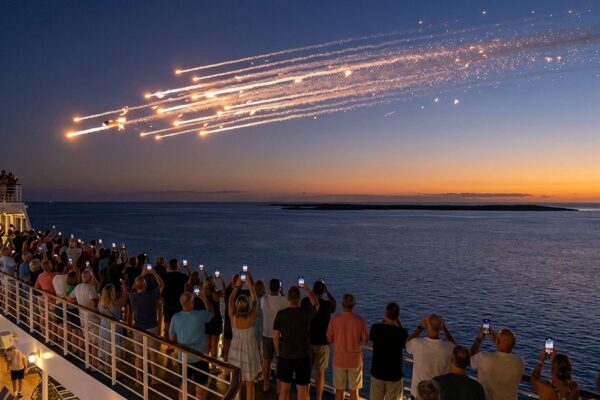
On Oct. 12, 2026, a business jet took off from Rarotonga in the Cook Islands. It climbed out over the Pacific with a team of scientists on board. They were waiting for something that would last only moments: the KREPE-3 re-entry. Twelve test capsules were about to fall back to Earth.
One of the people on the jet was Dr Byrenn Birch of the University of Southern Queensland (UniSQ). Birch had brought a custom-built computed tomographic imaging spectrometer, or CTIS. In plain terms, it is a camera that splits light into hundreds of colors and maps where each one comes from. According to iLAuNCH, the instrument caught a spacecraft breaking apart as it fell.
The capsules came home with Cygnus NG-24. The University of Stuttgart says the supply ship let them go on re-entry. That came after it finished its work at the International Space Station. Eleven were built by the University of Kentucky. One, called KRACO, was built in Stuttgart. All were made to show how heat shields hold up as they fall through the air.
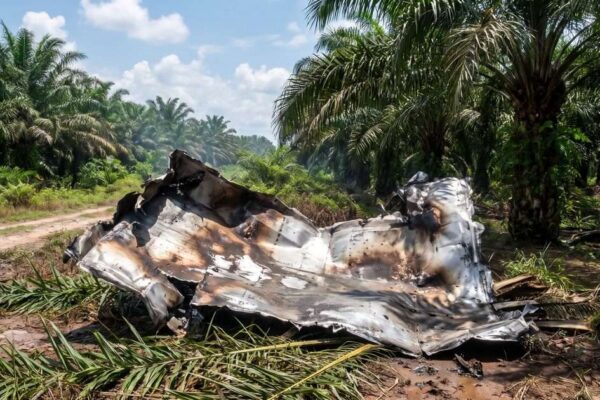
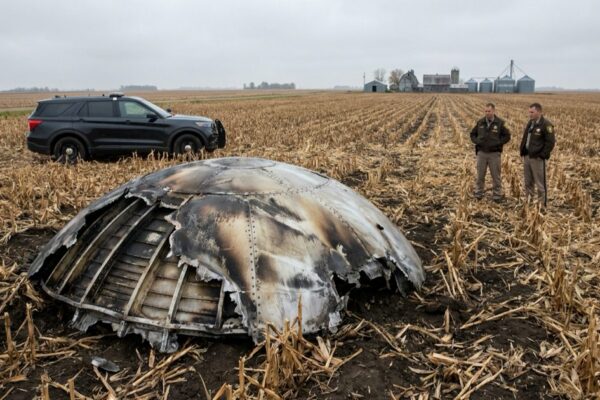
Every object that falls out of orbit raises the same question. What burns up, and what makes it to the ground? Watching hardware break up as it happens is one of the best ways to find out.
Two days to build a lab in the sky
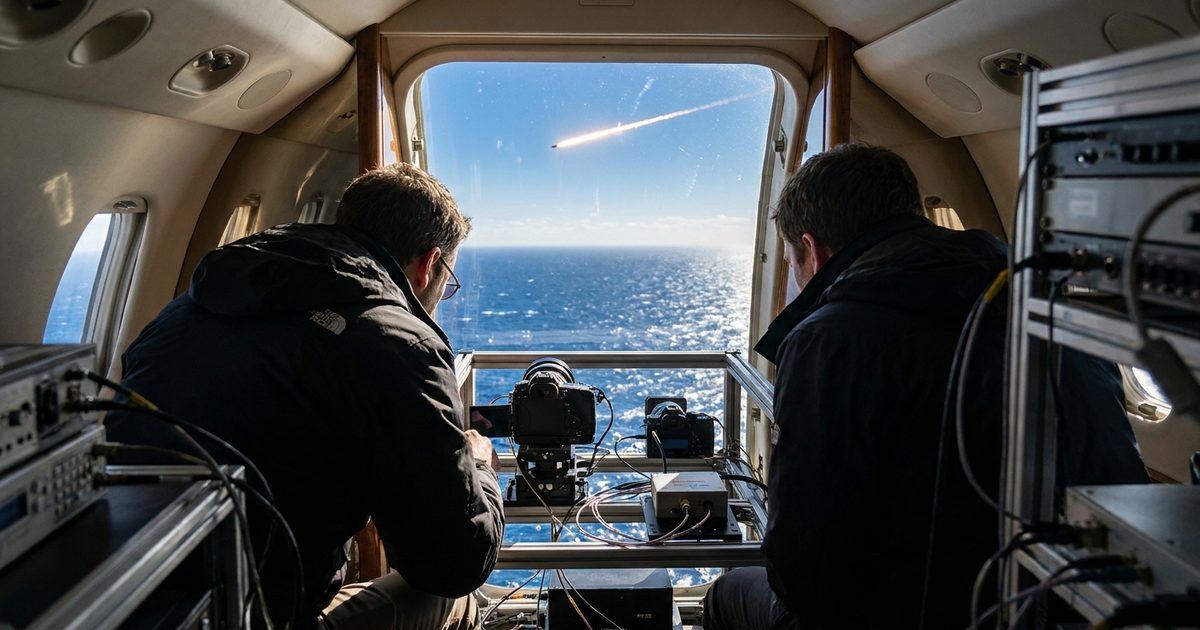
The team picked Rarotonga because it was close to where the capsules were due to come down. Then they had just two days to fit their gear into the jet.
In that time, they mounted camera rigs inside the cabin and lined each one up. They set up the computers, GPS units and timing gear needed to catch an event that would be over fast. Birch worked with researchers from Kentucky, Stuttgart and Zafiro Systems.
UniSQ brought four instruments. There was the CTIS and a tracking camera. There was also a standard imaging spectrometer. The fourth was a filtered camera built to spot carbon signs linked to spacecraft breakup. Australian Manufacturing reported that all of the teams found the spacecraft soon after it appeared over the horizon.
Seeing more than 500 colors at once
An ordinary camera records three main colors. The UniSQ instrument takes in more than 500 at once. That lets the team tell apart the different materials and what is happening to them as they burn.
The instrument also captures where things are, and their color, in a single image. That matters when the view fills with debris. Older tools of this kind struggle when several objects show up together. SatNews reported that the instrument picked out several breaking pieces at the same time.
iLAuNCH announced the result on Nov. 5. It is an Australian Government Trailblazer program led by UniSQ. It called the flight a world first for this kind of imaging of spacecraft breakup during re-entry. The instrument grew out of Birch’s Australian Research Council Discovery Early Career Researcher Award.
“Seeing our instrument operate alongside international research teams was an exciting demonstration of what Australian research can contribute,” Birch said.
What the KREPE-3 re-entry capsules were testing
NASA funds KREPE-3. Prof. Alexandre Martin leads it at the University of Kentucky’s Pigman College of Engineering. Each of its 12 capsules carries sensors. They compare capsule shapes, heat shields and ways of measuring heat. The goal is to better understand, and better predict, the heat a spacecraft faces on the way down.
Stuttgart’s KRACO carried HARLEM, a heat-shield material. It was made by the High Enthalpy Flow Diagnostics Group, led by Dr Stefan Löhle. A violet coat gave the capsule a look that observers could pick out from the rest. Löhle’s team watched from a research plane. They wanted outside readings to add to the capsule’s own sensor data.
“This is incredibly exciting,” Löhle said. The flight will let the Stuttgart team match what the capsule’s sensors recorded with what they saw from the air. That, Löhle said, will show how the heat-shield material behaves in flight, and how those color marks help with the study.
Why breakup data matters on the ground
The data is still being studied, iLAuNCH says. The program says the results could help build better spacecraft. They could sharpen the models that predict re-entry. And they could lead to tools that lower the risk to people and the environment.
Those risks are real. In earlier research from February 2026, UniSQ said up to 40 percent of the mass of large objects can survive re-entry. It also noted that about 98 percent of rocket bodies heavier than 500 kilograms pass over Australia as they orbit.
FODNews has covered the re-entry of NASA’s Swift observatory. We have also covered the regulatory response to uncontrolled space debris re-entries. Both point to the same gap KREPE-3 is trying to close.
The more clearly researchers can see how a spacecraft breaks apart, the more they learn about which pieces might survive. That helps forecasters predict where those pieces will land.
Subscribe to FODNews for continuing coverage of FOD incidents and prevention worldwide.
Sources
- iLAuNCH Trailblazer — “Australian researcher achieves world-first spacecraft re-entry imaging breakthrough during international mission” (Nov. 5, 2026)
- University of Stuttgart, Institute of Space Systems — “KRACO Put to the Test: University of Stuttgart Participates in the KREPE-3 Observation Mission” (Oct. 13, 2026)
- University of Southern Queensland — “UniSQ research addresses growing safety risks from space debris re-entry” (Feb. 17, 2026)
- SatNews — “UniSQ Demonstrates Tomographic Spectrometer During KREPE-3 Re-Entry Campaign” (Nov. 5, 2026)
- Australian Manufacturing — “Australian researcher achieves spacecraft re-entry imaging breakthrough” (Nov. 6, 2026)