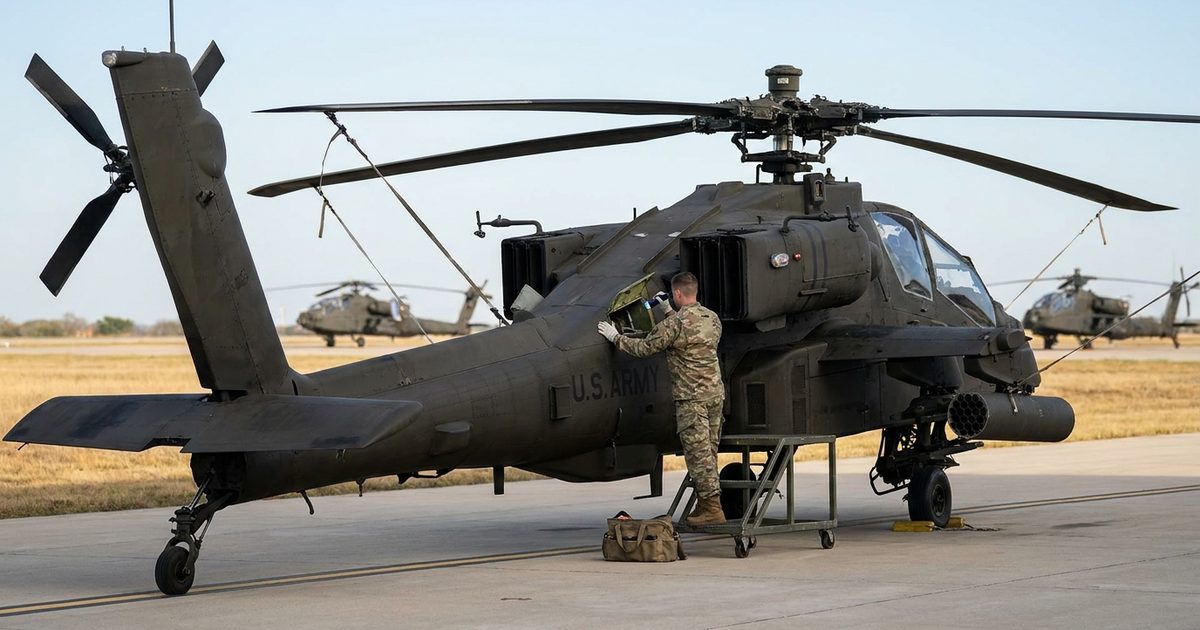
A closer look during a postflight inspection of an AH-64E Apache at Fort Hood, Texas, turned up a loose panel fastener that could have caused FOD in flight, according to an Army Combat Readiness Center article that calls the episode a near miss.
The article, “One Fastener from Failure”, was published Oct. 18, 2026, in the center’s Risk Management magazine. Its author is Sgt. 1st Class Steven Schwander of the 7-17 Air Cavalry Squadron at Fort Hood. The article doesn’t say when the inspection took place, and it doesn’t identify the aircraft.
“On a busy flight line, the boundary between a routine maintenance day and an in-flight emergency can hang by a single, unseated fastener,” the author writes. The Boeing-built Apache is an attack helicopter flown by the U.S. Army.
How a loose fastener on an Apache became a FOD near miss
A postflight inspection is the check done after an aircraft comes back from a flight. According to the Army article, this one found a discrepancy with an airframe panel that had been removed during earlier maintenance.
At first, nothing looked wrong. “Although the panel appeared secure at a brief glance, an intuitive feeling that something was wrong prompted a closer look — challenging the immense pressure to turn aircraft quickly and keep operations moving,” the article says.
That closer look showed that one of the panel’s fasteners wasn’t properly seated. “While the hardware was not completely missing, it was loose enough to fail under the stress of flight,” Schwander writes.
The article spells out what could have followed. “If the panel had torn free in the air, it could have caused severe foreign object damage (FOD), interfered with critical flight controls or created a hazardous falling object for other aircraft operating nearby.”
Why the problem nearly slipped through
The article names three contributing factors: operational pressure to finish maintenance quickly, task familiarity that dulled attention to detail, and a breakdown in the deliberate use of the technical manual, or TM, during the inspection.
The article says the shared assumption that the panel “looked good enough” nearly let a preventable maintenance problem go undetected.
According to the article, the team fixed the discrepancy immediately. It then inspected similar panels across the entire airframe. Unit leaders also used the case as a teaching point at the next scheduled safety briefing.
Lessons for any machinery operation
The article’s lessons apply well beyond helicopters. First, it says, maintainers should physically check panels and fasteners instead of relying on a quick visual once-over.
Second, the TM should be used for every step, and experience or familiarity should never stand in for written procedures. As the author puts it, “technical standards do not shift simply because the operational tempo increases.”
Third, the article puts deliberate accuracy ahead of speed, noting that rushing raises risk and ends up delaying the mission. Fourth, teams should be trained to spot early signs of complacency in routine, high-volume work.
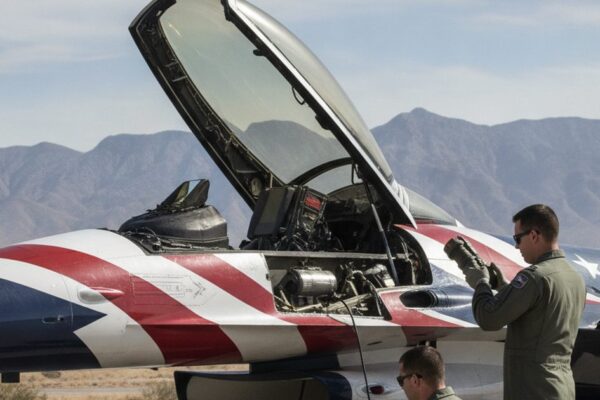
Other cases show how a small miss can grow. They include a hidden engine flaw that doomed a Thunderbirds F-16 and led to a new post-FOD inspection rule. In another, a tool was suspected of being left in the engine bay of a 3,000-hp drag Mustang before its tire failed at 228 mph.
“In aviation, there is no such thing as a minor maintenance mistake,” Schwander writes. He closes on a practical note: “Taking a few extra seconds to double-check fastening hardware can make the difference between a safe landing and a catastrophic in-flight failure.”
Subscribe to FODNews for continuing coverage of FOD incidents and prevention worldwide.