Capybara Herd Breaches Ogle Airport Perimeter, Cripples Trans Guyana Beechcraft 1900
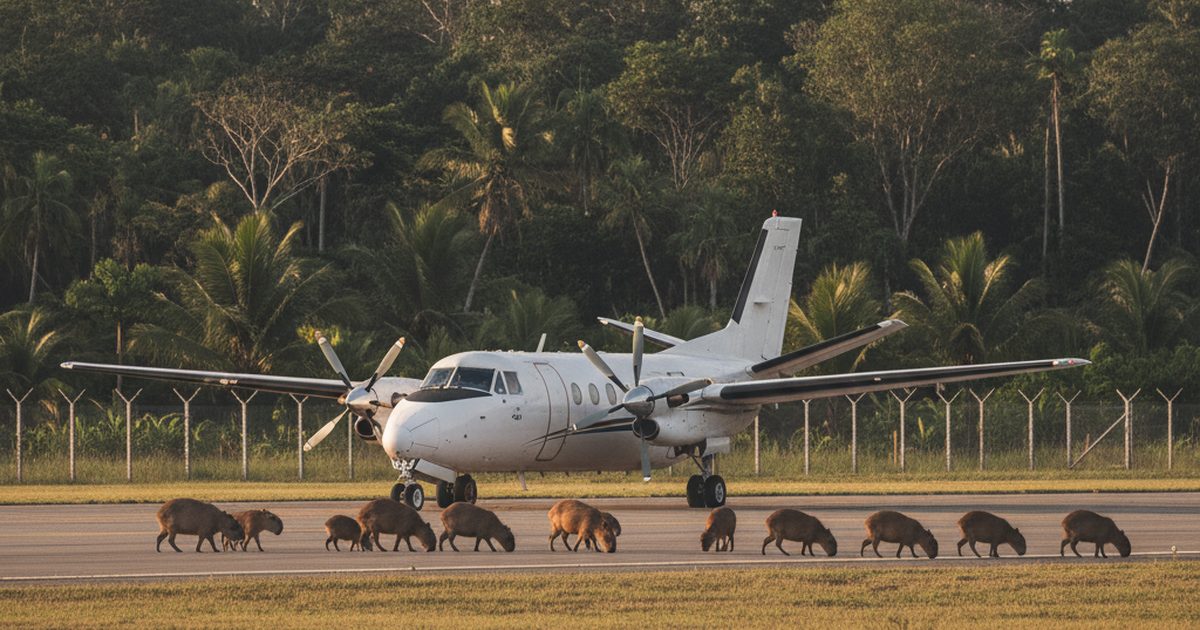
A Trans Guyana Airways regional flight ended in a runway excursion Tuesday evening after the aircraft struck a herd of capybara during landing at Georgetown’s Eugene F. Correia International Airport, Guyana aviation authorities confirmed.
Flight TGY441, operated by a Beechcraft 1900D (registration 8R-GAQ), was completing a scheduled passenger service from Paramaribo’s Eduard Alexander Gummels Airport in Suriname when it encountered the animals on the runway at approximately 6:13 p.m. local time on April 14, 2026.
Nose Gear Collapses on Impact
The aircraft struck members of the capybara herd during the landing roll. The collision caused the nose landing gear to collapse, sending the twin-engine turboprop off the paved runway surface onto the adjacent grass verge, where it came to a controlled stop.
All 14 people aboard — 12 passengers and two crew members — evacuated safely without physical injury. Airport emergency services responded immediately.
A post-incident runway inspection confirmed a capybara carcass on the runway surface. The aircraft sustained substantial structural damage and was grounded pending investigation.
GCAA Opens Formal Safety Inquiry
The Guyana Civil Aviation Authority (GCAA) has classified the event as a runway excursion and launched a formal safety investigation. Investigators are examining how the animals penetrated the airport’s perimeter fencing and whether deficiencies in wildlife management protocols contributed to the breach.
In a statement, the GCAA said preliminary findings point to “wildlife breaching the runway during landing” as the primary causal factor. The regulator reiterated its commitment to civil aviation safety standards.
Trans Guyana Airways, a regional carrier serving Guyana and neighboring countries, had not issued a separate public statement as of publication.
A Growing Hazard at Coastal Airports
Capybaras — the world’s largest rodent species, native to South America — thrive in the marshy, canal-lined terrain surrounding Ogle Airport on the East Coast Demerara. The airport’s runway orientation puts it in close proximity to drainage channels and low-lying vegetation that serve as natural capybara habitat.
Wildlife strikes remain one of aviation’s most persistent and underreported safety challenges. The International Civil Aviation Organization (ICAO) has long flagged mammal intrusions — particularly large ground animals — as a distinct risk category from the bird strikes that dominate wildlife strike databases. Unlike birds, large mammals such as capybara, deer or hogs can transmit enormous kinetic energy to landing gear structures during the high-speed landing phase.
According to data tracked by the Aviation Safety Network, the TGY441 incident is catalogued as an accident with substantial aircraft damage — the formal threshold indicating the aircraft is not airworthy without significant repair.
Perimeter Security Under Scrutiny
The GCAA investigation will focus on how a herd of large mammals accessed an active runway. Perimeter fencing integrity, inspection frequency and vegetation management in fence-line corridors are expected to be central to the inquiry.
Airports in tropical and subtropical regions face particular challenges maintaining effective wildlife exclusion. Flooding, ground subsidence and dense vegetation can compromise fence foundations, while capybara — capable swimmers — can exploit breaches near drainage infrastructure.
The incident comes as regional aviation authorities across the Caribbean and South America have faced increasing pressure to formalize wildlife hazard management plans in line with ICAO Annex 14 standards, which require airports to assess and mitigate wildlife strike risk as part of aerodrome certification.
Aircraft Background
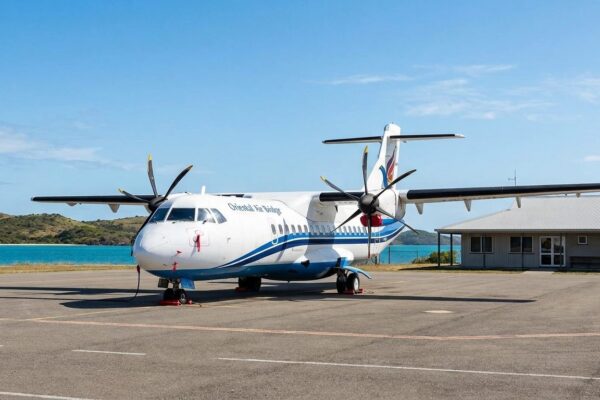
The Beechcraft 1900D is a 19-seat twin-turboprop widely used for short-haul regional operations across South America and the Caribbean. The specific airframe, manufacturer serial number UE-363, has operated Trans Guyana Airways routes between Guyana, Suriname and neighboring destinations.
The status of the aircraft’s repair timeline and the impact on Trans Guyana’s operational schedule have not been disclosed.
Subscribe to FODNews for continuing coverage of wildlife strike incidents and aerodrome safety investigations worldwide.