Meteorite Strikes German Home as ESA Fireball Lights Up Five European Countries
KOBLENZ, Germany — March 9, 2026
A meteorite punched a football-sized hole through the roof of a residential home in Koblenz-Güls, Germany, Sunday evening after a blazing fireball streaked across western Europe — and the European Space Agency says ground-based telescopes had no chance of seeing it coming.
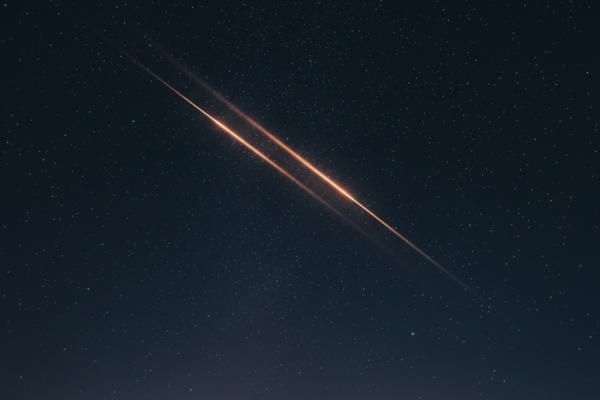
The fireball appeared at approximately 18:55 CET on March 8, traveling from southwest to northeast and lighting up skies across Belgium, France, Germany, Luxembourg, and the Netherlands before fracturing into pieces over the Rhineland-Palatinate region.
A Bedroom Hit From Space
The fragment penetrated the roof of a house in Koblenz’s Güls district and came to rest in a bedroom, damaging floor tiles and scattering stone fragments and dust. People were inside the building at the time, but none were in that room. No injuries were reported.
Fire Chief Benjamin Marx, who led a response team of roughly 25 Koblenz firefighters, said crews immediately checked for radioactive or chemical hazards. All tests came back clear.
“It could be confirmed that we had a meteorite flyover across Rhineland-Palatinate that had split apart,” Marx said. “There were multiple descents, including an impact into a residential building.”
Additional building damage was reported across the Eifel and Hunsrück regions west of Koblenz. Local police quickly ruled out a rocket strike or plane crash.
Probable Chondrite — Science Value Is High
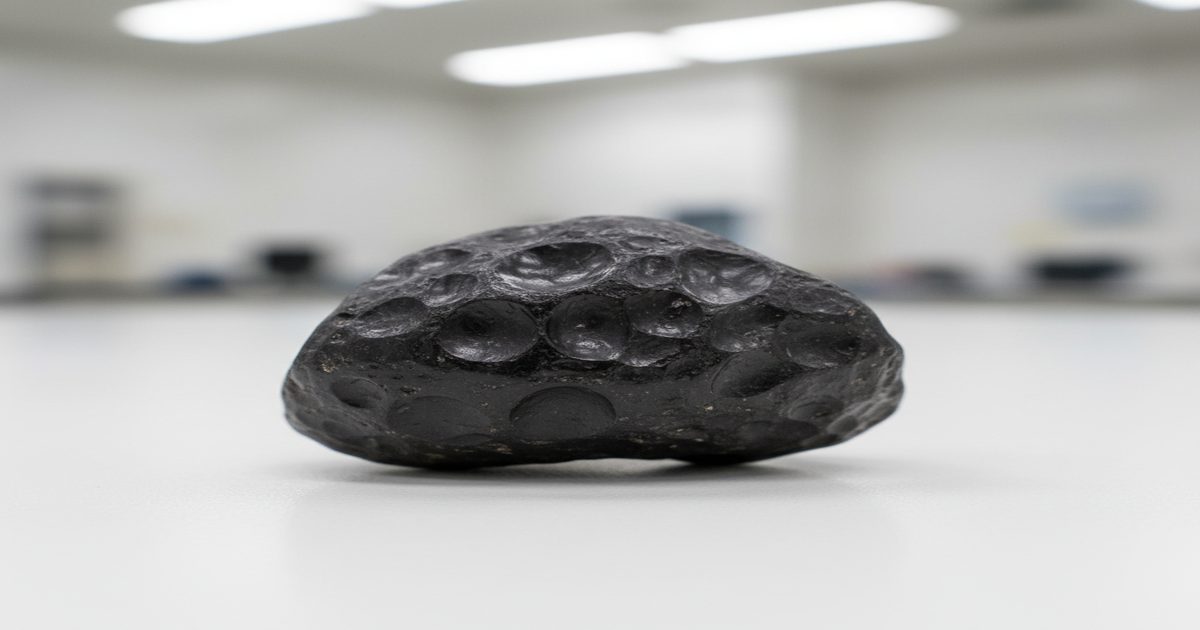
Several centimeter-sized fragments were recovered from the Güls building within hours of impact. Preliminary identification points to chondrites — the most common class of stony meteorite, composed of material unchanged since the early solar system. Definitive classification requires laboratory analysis.
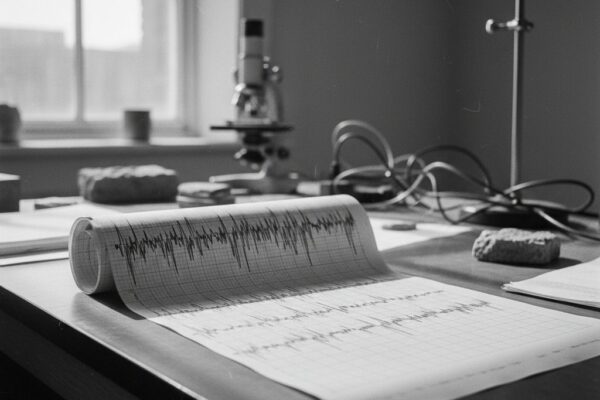
Researchers from Germany’s Karlsruhe Institute of Technology (KIT) used seismic data from earthquake monitoring stations to independently reconstruct the meteoroid’s flight path. The data shows it entered the atmosphere from the west, crossing Luxembourg and the Eifel before fragments reached the Koblenz area around 18:57 CET.
The object’s rapid recovery gives scientists a rare window. Freshly fallen meteorites provide uncontaminated samples from the formation era of the solar system — a find that planetary scientists described as scientifically significant.
2,800+ Eyewitness Reports
The International Meteor Organization (IMO) had logged 2,806 sightings as of March 9, with dozens of video recordings uploaded to social media. Witnesses across multiple countries described seeing a brilliant light streak across the sky for approximately six seconds, followed by a visible smoke trail that lingered before dissipating.
Many observers reported hearing what sounded like explosions — the result of a supersonic shockwave as the meteoroid plowed through the atmosphere at many times the speed of sound.
“It looked like a rocket crossing the sky,” one Belgian witness told regional media. “We were terrified — the ball was enormous and extremely bright.”
Emergency call volumes in Koblenz surged immediately following the event.
ESA: No Telescope Had a Chance to See It
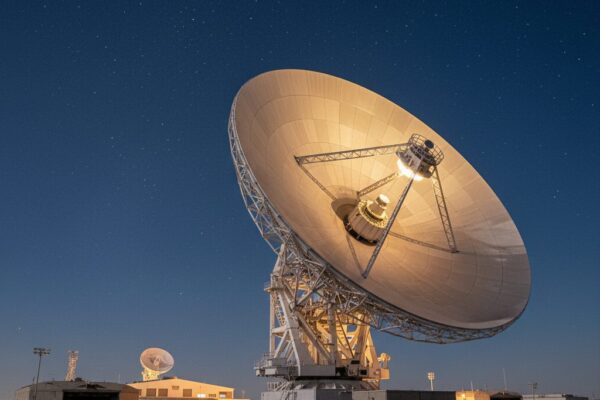
The European Space Agency’s Planetary Defence team is analyzing all available data. Current estimates put the object at up to a few meters in diameter — a size range that strikes Earth anywhere from once every few weeks to once every few years.
The critical factor: it was undetectable.
“The timing and direction of the impact indicate that the object was likely not visible to any of the large-scale telescope sky surveys that scan the night sky for such objects,” ESA stated. “Small objects approaching Earth from brighter, daytime regions of the sky — even around dusk, as in this case — are missed in most cases.”
To date, only 11 natural space objects in history have been successfully detected before atmospheric entry. The Koblenz fireball was not among them.
The detection blind spot is structural, not a matter of telescope quality. Ground-based survey systems are designed to scan dark sky. Objects approaching from the sunlit quadrant are invisible against daytime glare until it is too late.
Germany Meteorite Strike Exposes a Known Gap in Planetary Defence
The event underscores a persistent gap that ESA and other agencies have acknowledged for years: small-to-medium natural objects approaching from the direction of the sun remain effectively undetectable with current infrastructure.
ESA’s Planetary Defence team is developing the Flyeye asteroid survey telescope — a wide-field instrument designed to improve detection rates for near-Earth objects — but the system remains in development.
The Koblenz event is a reminder that debris strikes from space are not theoretical. They are periodic and difficult to predict. For small objects in particular, warning time with today’s detection networks is nearly impossible.
Most meteoroids burn up entirely during atmospheric entry. The Koblenz fragment demonstrates that even small natural objects can survive to the surface with enough force to cause structural damage.
Subscribe to FODNews for ongoing coverage of space debris, orbital hazards, and airfield safety incidents worldwide.
Related Coverage
- UK Experts Warn Space Junk Strike Is Inevitable
- First-Ever Direct Measurement of Space Debris Pollution in LEO
- Space Junk Is Now Triggering Seismic Events
Sources
- ESA — ESA analysing fireball over Europe on 8 March 2026
- ESA — Fireball over Europe, 8 March 2026 (video)
- Phys.org — ESA analyzing fireball over Europe on 8 March 2026
- Wikipedia — 2026 Koblenz meteor
- Space.com — Spectacular fireball over Europe sends meteorite crashing through roof of German home
- International Meteor Organization — Event 1467-2026