A TezJet landing gear collapse on July 7, 2026, disabled a McDonnell Douglas MD-83 on Runway 26 at Bishkek Manas International Airport (UCFM) during the takeoff roll, spilling jet fuel and scattering debris across the airport’s only runway. The incident closed that strip for more than 20 hours, halting all traffic at one of Central Asia’s busiest transit hubs.
All 187 people aboard – 181 passengers and six crew members – evacuated the aircraft. No fatalities were reported. Some passengers sustained minor injuries during the evacuation, according to multiple firsthand social-media accounts. Kyrgyzstan’s State Civil Aviation Agency has since temporarily suspended TezJet’s operations and opened a formal investigation.
Left Main Gear Fails at Takeoff; Wing Strikes the Pavement
TezJet flight K9117 was rolling down Runway 26 for a scheduled departure to Osh when the left main landing gear collapsed. The MD-83 (registration EX-80003, a 1996-vintage aircraft originally delivered to Korean Air) listed sharply left. Its wing contacted the runway surface before the crew brought the jet to a stop.
Emergency services responded immediately to fuel spilled from the disabled aircraft. Passengers evacuated via emergency slides; the crew jettisoned a tail-cone exit during the process. The aircraft came to rest blocking the runway centerline.
The Aviation Safety Network classified the event as an accident with an ICAO occurrence category of SCF-NP – System/Component Failure or Malfunction (Non-Powerplant) – and listed the aircraft damage as substantial. Aviation analysts have suggested the 30-year-old airframe may be economically irreparable, though no official determination has been issued.
Spilled Fuel and Debris Shut Down Manas’ Only Runway
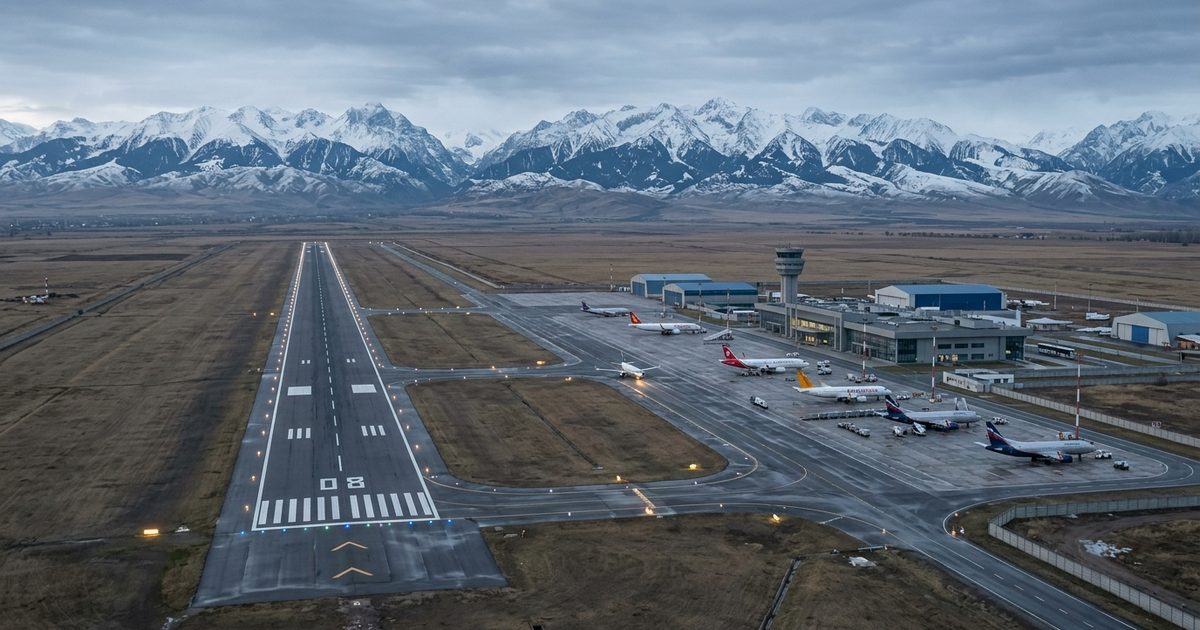
Manas International Airport operates a single runway, designated 08/26. With EX-80003 blocking the departure threshold and fuel pooled across the pavement, airport controllers suspended all arriving and departing traffic. Emergency crews cleared the contamination field while recovery teams worked to remove the disabled aircraft.
The incident occurred at 09:55 UTC; Manas did not reopen until approximately 06:00 local time on July 8 – an operational outage of roughly 20 hours. The closure disrupted domestic and regional connections serving Kyrgyzstan, including the high-volume Bishkek-to-Osh corridor, throughout that period.
The event underscores a recurring vulnerability at single-runway airports: when a gear failure or wing strike creates a compound debris-and-fluid contamination field, there is no alternative surface to reopen while cleanup proceeds. The runway, the fuel, and the aircraft wreckage must all be addressed before any movement resumes.
Kyrgyz Regulator Suspends TezJet; Investigators Examine Maintenance Records
Kyrgyzstan’s State Civil Aviation Agency announced a formal investigation into the incident. The agency immediately suspended TezJet’s operations “until necessary verification activities are completed.” Investigators are examining maintenance records, the landing gear assembly, and operational data from the flight.
The incident carries broader regulatory significance. On June 9, 2026 – just 28 days before the gear collapse – the European Commission removed all Kyrgyzstan-certified carriers from the EU Air Safety List. That decision ended a blanket ban on Kyrgyz airlines dating to 2006. The move followed a March 2026 safety assessment concluding that Kyrgyzstan’s aviation oversight framework had been substantially reformed.
The TezJet accident does not automatically affect the EU delisting, but it places fresh scrutiny on the Kyrgyz aviation sector at a sensitive regulatory moment. Investigators have not established a definitive cause for the gear collapse and have released no preliminary findings.
The investigation is ongoing.
Stay current on airport safety incidents worldwide – subscribe to FODNews.
Sources
- Aviation Safety Network – Accident record, McDonnell Douglas MD-83 EX-80003, 7 July 2026
- European Commission – Commission updates EU Air Safety List: all air carriers of Kyrgyzstan removed, 9 June 2026
- State Civil Aviation Agency of Kyrgyzstan – Official statement on TezJet investigation (Kyrgyz language)