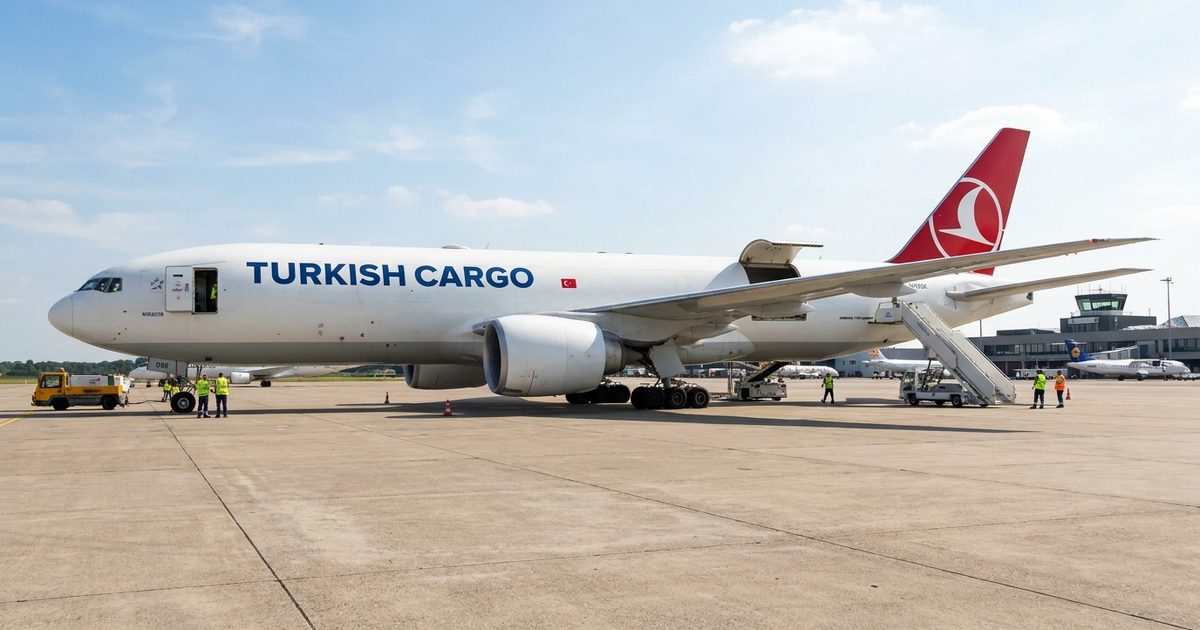
MAASTRICHT, Netherlands — A Turkish Cargo 777F bound for Istanbul had only just climbed away from Maastricht Aachen Airport on Saturday night, Nov. 7, when it flew into birds. The damage was enough to turn the big freighter around, and on Sunday it was still on the ground awaiting possible repairs.
Bringing it back was not simple. The jet had left with fuel for the trip to Istanbul, and Dutch air navigation service provider LVNL told L1 Nieuws the aircraft was too heavy to land and had to dump fuel first.
That is what makes a departure bird strike so demanding. The airplane is low, heavy and climbing just as the hazard shows up, and the crew has to give up the planned flight and fly a careful return instead.
Birds in the climb, then a turn back
According to an airport spokesperson quoted by the regional broadcaster, the freighter came into contact with birds in the air, and the damage forced the pilot to return. The Boeing was still sitting at the airport in Beek, the spokesperson said, awaiting possible repairs.
LVNL’s role came next. A spokesperson for the agency said controllers helped the pilot to a safe landing, and that dumping fuel was necessary because the aircraft was too heavy to land. How much kerosene went overboard is unclear, L1 reported.
The airport has not said where on the aircraft the birds hit, or what kind of birds they were.
How the Turkish Cargo 777F came back
The two Dutch outlets covering the return give different timelines. L1 reported that the freighter touched down again around 9:55 p.m. after 45 minutes in the air, rather than continuing to Istanbul.
Aviation site Up in the Sky, citing Flightradar24 data, put the departure at 11:20 p.m. It said the jet first flew at about 5,000 feet, then climbed to roughly 7,000 feet and made several circuits over Limburg before heading back. In its account, the aircraft landed about 26 minutes after takeoff.
Up in the Sky identified the jet as a Boeing 777F, registration TC-LJL. The roughly nine-year-old freighter was delivered new in November 2017 and has flown since then for Turkish Cargo, the cargo division of Turkish Airlines.
A familiar hazard at the edge of the runway
Birds are among the oldest threats in airfield safety. They belong to the same family of problems as runway debris: something that shouldn’t be in an aircraft’s path meets it at the worst possible moment. The minutes right after takeoff, when engines are at high power and the aircraft is close to the ground, leave crews little room.
The Maastricht return follows a pattern seen in other wildlife strikes. FODNews reported earlier on an RAF Chinook that made a field landing near Chippenham after a bird strike, another case where the crew put the aircraft down first and left the damage assessment for later.
The freighter sitting in Beek shows the other half of that discipline. After a strike damages an aircraft, it stays on the ground until it has been checked and, if needed, repaired. Wildlife strikes can also leave remains on or near a runway, which is why airports treat the departure path as a possible debris hazard after an event like this. A missed cargo run to Istanbul is a small price for that caution.
Subscribe to FODNews for continuing coverage of FOD incidents and prevention worldwide.