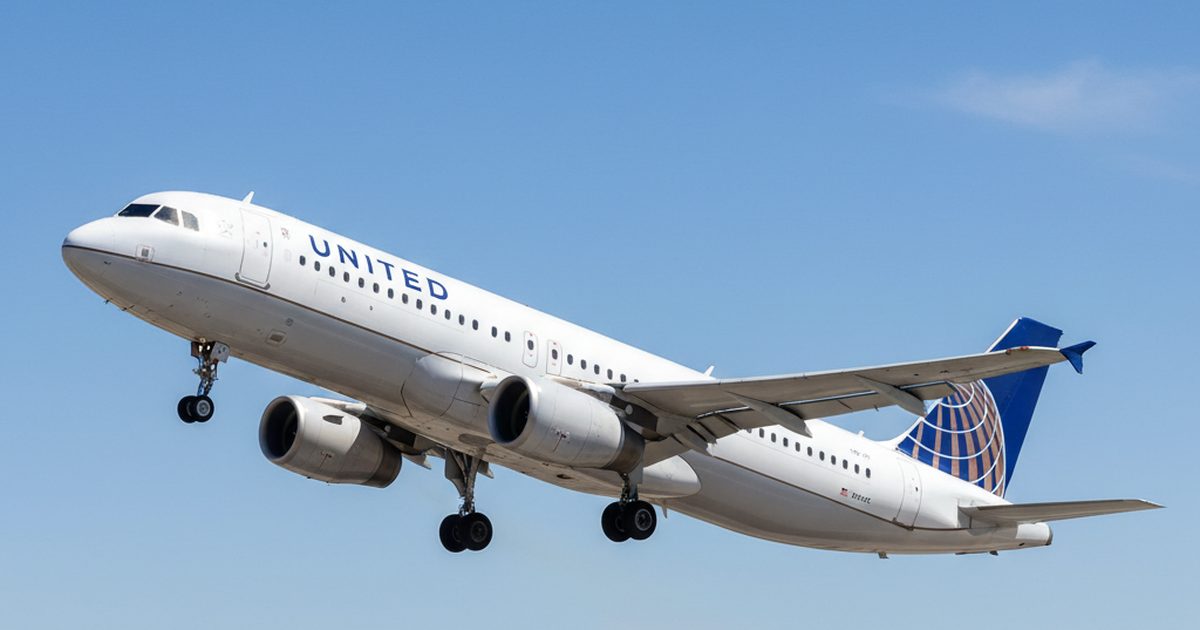
A United Airlines Airbus A321neo received a potential blown tire indication while departing Denver International Airport on May 2, 2026. The aircraft continued roughly three hours to Washington Dulles and landed with a dent in its left flap — damage the FAA attributed to blown-tire FOD shed over Chantilly, Virginia, during the approach.
The incident illustrates what runway safety professionals call a two-front FOD problem. A single tire event can simultaneously contaminate the originating airfield and drop debris on communities and aircraft miles away.
What the FAA Reported
According to a Federal Aviation Administration service difficulty report cited by The Aviation Herald, the FAA stated: “AIRCRAFT RECEIVED A POTENTIAL BLOWN TIRE INDICATION UPON DEPARTURE FROM DEN AND LANDED AT IAD. POST FLIGHT INSPECTION REVEALED A DENT IN THE LEFT FLAP, CHANTILLY, VA.”
The FAA’s report uses the language “potential blown tire indication,” meaning the crew received a cockpit signal consistent with tire failure but a confirmed structural assessment awaited post-flight inspection. That inspection found physical evidence — the flap dent — consistent with an in-flight debris strike.
The Flight
Flight UA347 departed Denver’s runway 08 and climbed through flight levels 310, 350, and 270, according to The Aviation Herald. The aircraft landed on runway 01R at Dulles approximately three hours after departure. The aircraft involved was an Airbus A321-200N — the neo-engine variant — registered N34547.
FlightAware’s tracking data for UA347 on May 2 corroborates the Denver-to-Dulles routing on that date.
There are no reports of injuries to passengers or crew. United has not confirmed whether the aircraft required removal from service for flap repair.
Two Streams of FOD From One Event
The FAA report’s Chantilly, Virginia, location is the detail that gives this incident broader significance for airfield safety teams.
Chantilly sits directly under Dulles’s approach paths. Rubber fragments from the wheel that shed on departure from Denver apparently remained embedded in — or attached to — the aircraft through the entire flight. They then struck the airframe during descent, well after the initial event. The FAA’s notation of “Chantilly, VA” indicates the debris impact occurred in that geographic area, consistent with the final approach track into Dulles’s runway 01R.
That creates two simultaneous FOD concerns separated by nearly 1,700 miles:
- Denver runway 08: A tire departure at rotation speed can scatter rubber fragments across significant runway length. Whether Denver ground crews swept runway 08 for Foreign Object Debris after the departure, and what they found, has not been publicly reported.
- The Virginia approach corridor: Debris traveling with an aircraft — lodged in landing gear bays or still attached to a damaged wheel assembly — can detach and fall during descent. No ground injuries in Chantilly have been reported in connection with this flight. However, the flap dent confirms something struck the aircraft in that airspace.
The National Transportation Safety Board has not confirmed whether it has opened a formal inquiry. The FAA service difficulty report represents the agency’s logging of the event, not necessarily an investigation outcome.
Blown Tire FOD and Runway Contamination Risk
Blown or partially deflated tires during takeoff roll are a documented FOD generation mechanism. At rotation speeds, a compromised tire can shed rubber at high velocity across runway surfaces and overrun areas. Fragments can puncture subsequent aircraft tires, ingest into engines of following traffic, or present hazards to ground crews.
Post-event sweeps matter even when a departing aircraft appears to have continued its flight safely. The Denver side of this incident makes that case plainly: the runway 08 contamination question remains unanswered. The aircraft left the scene; the debris, if any, did not.
Subscribe to FODNews for continuing coverage of foreign object debris incidents and airfield safety.