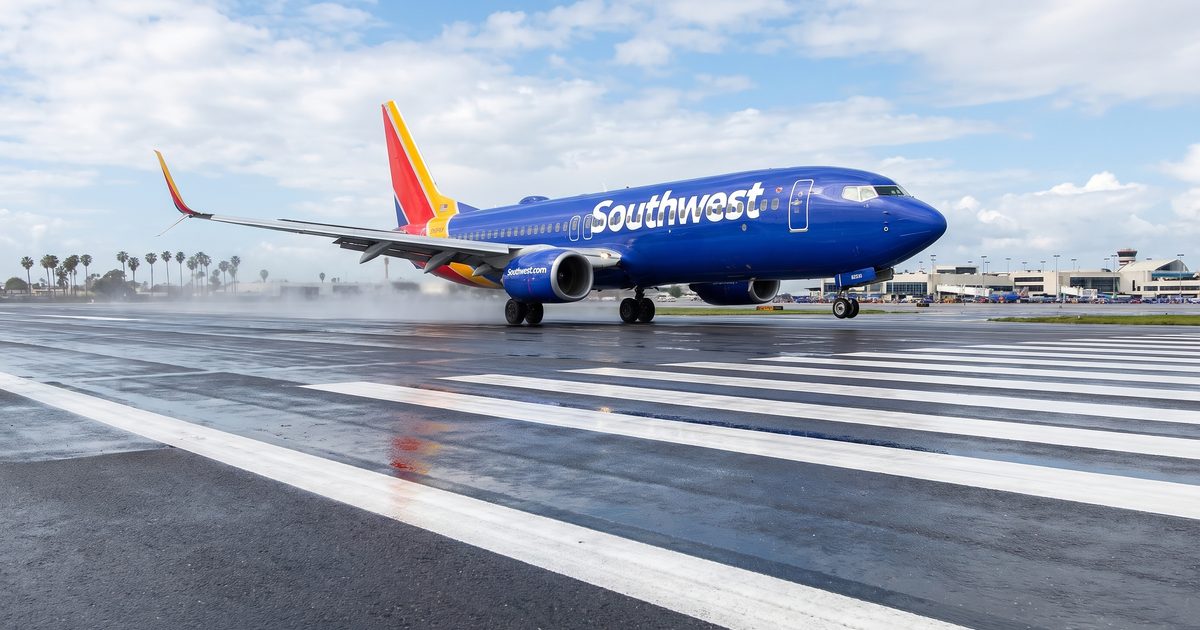
LOS ANGELES — Southwest Flight 1121 was gathering speed down runway 24L at LAX on Thursday, Nov. 19, bound for Las Vegas, when the Boeing 737-800 began to sway. The crew stopped at about 60 knots, a Southwest rejected takeoff that The Aviation Herald reported the same day.
It was over in moments. Light rain had fallen earlier that day, and the wind was gusting. The crew told air traffic control the jet felt a bit unstable, and that it swayed where the runway paint was wet.
At low speed, a stop costs a few minutes and a second try. This time the story ended well: the jet cleared the runway, the crew regrouped, and the flight reached Las Vegas on time.
How the Southwest rejected takeoff unfolded
The 737 was accelerating on runway 24L when the crew rejected the takeoff. The jet was moving at about 60 knots over the ground.
That is low speed for an airliner on its takeoff roll, well short of flying speed.
Over the radio, the crew kept it simple. They told the tower they had been a bit unstable on takeoff, and the aircraft had swayed a little where the paint of the runway was wet. The account comes from The Aviation Herald’s report of that exchange with air traffic control, which AeroInside repeats.
A few minutes later, good to go
The jet turned off the runway onto the parallel taxiway.
A few minutes later, they reported they were good to go. The 737 taxied to the holding point and departed without further incident. It landed in Las Vegas on time.
The call to stop came in seconds. FODNews has reported on other takeoffs that ended early or turned back, including a Lufthansa A320 rejected takeoff at Frankfurt after a nose-tire burst and a Southwest 737 that returned to Orlando after a blown tire.
Why wet runway paint can feel different
Thursday was not a dry day in Los Angeles. The airport weather reports listed with the account show light rain and mist earlier that morning. By mid-morning, winds blew from the southeast and gusted to about 24 knots, under an overcast sky.
That matters because a runway is not one uniform surface. It is covered in painted markings: centerlines, numbers, edge stripes and more. Painted markings can be slippery when wet.
That is what this crew described: a sway where the paint was wet.
A runway is a working surface
It is easy to think of a runway as a floor, flat and unchanging. It is closer to a working surface that shifts with the weather and with every landing.
Painted markings, rubber left behind by tires, and standing water all change how much friction a wheel can find. Airports manage those surfaces, and crews feel the results through the rudder pedals and the seat. For anyone who follows runway safety, the details of that surface are where much of the story lives.
Flight 1121 shows the system at its most ordinary. The jet swayed, and the crew stopped early. Then the 737 departed and reached Las Vegas on time. Sometimes the safest takeoff starts with a decision not to take off.
Subscribe to FODNews for continuing coverage of FOD incidents and prevention worldwide.