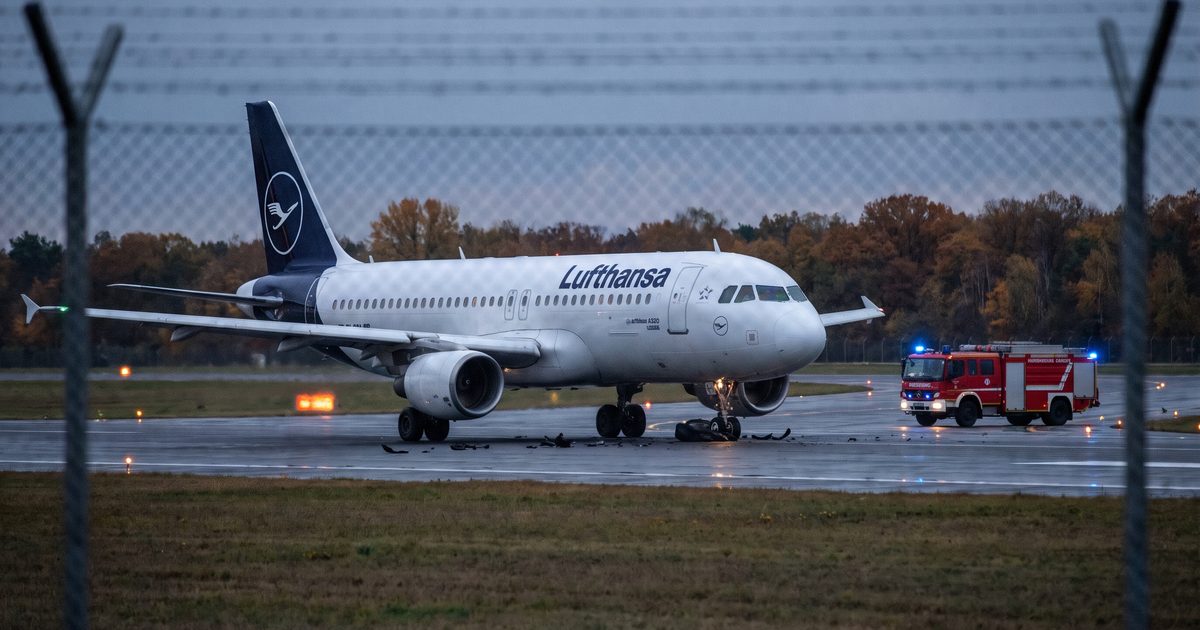
FRANKFURT, Germany — A Lufthansa Airbus A320 bound for Salzburg, Austria, rejected its takeoff from Frankfurt Airport on Wednesday, Oct. 28, after a nose gear tire burst on the takeoff roll, according to The Aviation Herald. The airline said all 153 people on board were unhurt.
No cause for the Lufthansa tire burst has been reported. The incident became widely known after former Formula 1 driver Ralf Schumacher, who was on board, described it on Instagram.
The statements from Lufthansa and Schumacher were reported in German. They are paraphrased in English here.
What happened when the Lufthansa tire burst on the roll
According to The Aviation Herald, flight LH1264, an Airbus A320-200, was accelerating for takeoff from Runway 18 when the crew rejected the takeoff at about 80 knots indicated airspeed because of a burst nose gear tire. The aircraft slowed safely, the report said.
The flight had been scheduled to depart at 5:15 p.m., according to tagesschau.de, which carried a report from public broadcaster hr’s hessenschau. The airport’s website listed the flight as canceled.
The Frankfurter Rundschau, citing the German news agency dpa, reported that the tire burst shortly before liftoff. The aircraft had to brake hard, and the takeoff was aborted, the newspaper said.
The Aviation Herald reported that the jet was towed back to the apron about 30 minutes later and that its return rotation was canceled. The aircraft, registered D-AIZA, was still on the ground in Frankfurt about 26 hours after the rejected takeoff, according to the same report.
What Lufthansa and a passenger said
Lufthansa confirmed to dpa that flight LH1264 was aborted. A Lufthansa spokeswoman said all 153 passengers and crew members on board were unhurt, tagesschau.de reported.
The spokeswoman said passengers were brought back to the terminal and rebooked directly onto alternative flights, according to the Frankfurter Rundschau.
Schumacher, 51, has worked for years as a Formula 1 TV pundit. On Instagram, he said that the aircraft was already at full speed on the runway when one of the two tires on the front landing gear burst, followed by an emergency braking.
He said the braking was very hard, and the brakes became hot and had to be cooled before the aircraft was towed back. Schumacher, who was traveling home, said there was luckily another flight to Salzburg the same evening.
He joked that dinner was off. He also thanked Lufthansa for handling the situation professionally.
Why a burst tire becomes a runway debris hazard
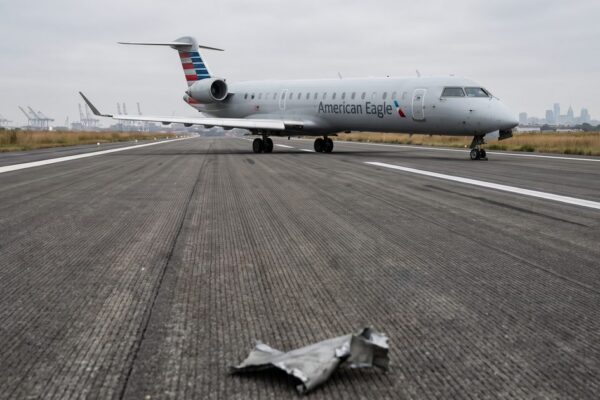
None of the reports say what caused the tire to fail. Regardless of cause, however, a burst tire sheds rubber and casing fragments onto the runway, and those pieces become foreign object debris.
Such fragments are a hazard to engines and to the next aircraft using the runway. For that reason, runways are typically checked and swept after a tire failure before normal operations resume.
Tire failures have disrupted airports before. In August, a Kenya Airways 737 tire burst shut Cape Town’s only runway, while at Chicago O’Hare a string of tire failures prompted an FAA runway-debris investigation.
For flight crews, a rejected takeoff at low speed is the textbook outcome when a tire fails during the takeoff roll. In Frankfurt, the aircraft stopped on the runway, and no one on board was hurt.
Subscribe to FODNews for continuing coverage of FOD incidents and prevention worldwide.
Sources
- The Aviation Herald via AeroInside — “Lufthansa A320 at Frankfurt on Oct 28th 2026, rejected takeoff due to burst tyre” (Oct. 29, 2026)
- tagesschau.de / hessenschau — “Frankfurt: Lufthansa-Reifen platzt bei Start – Schreck für Ralf Schumacher” (Oct. 29, 2026)
- Frankfurter Rundschau — “Ex-Formel-1-Pilot strandet in Frankfurt – Flieger platzt Reifen” (Oct. 30, 2026)