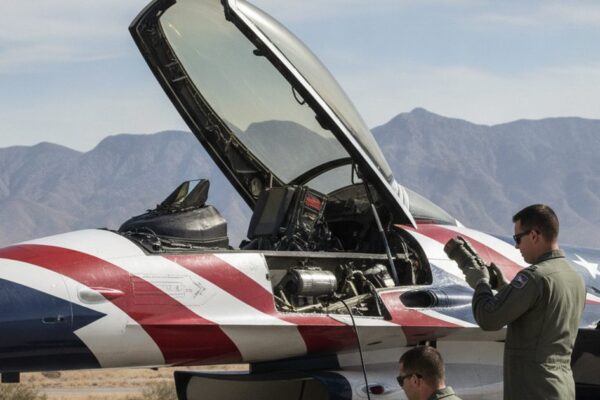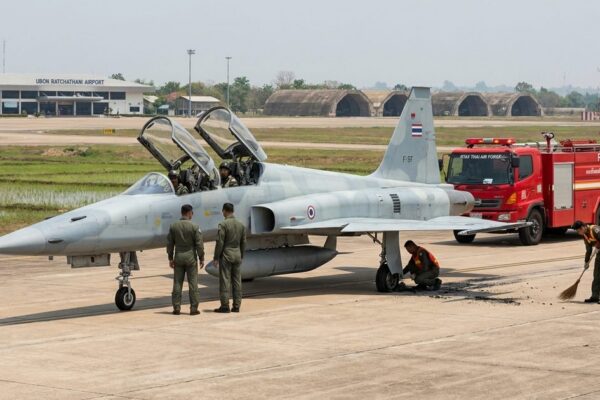
Fighter jets get the headlines. The wreckage gets left behind.
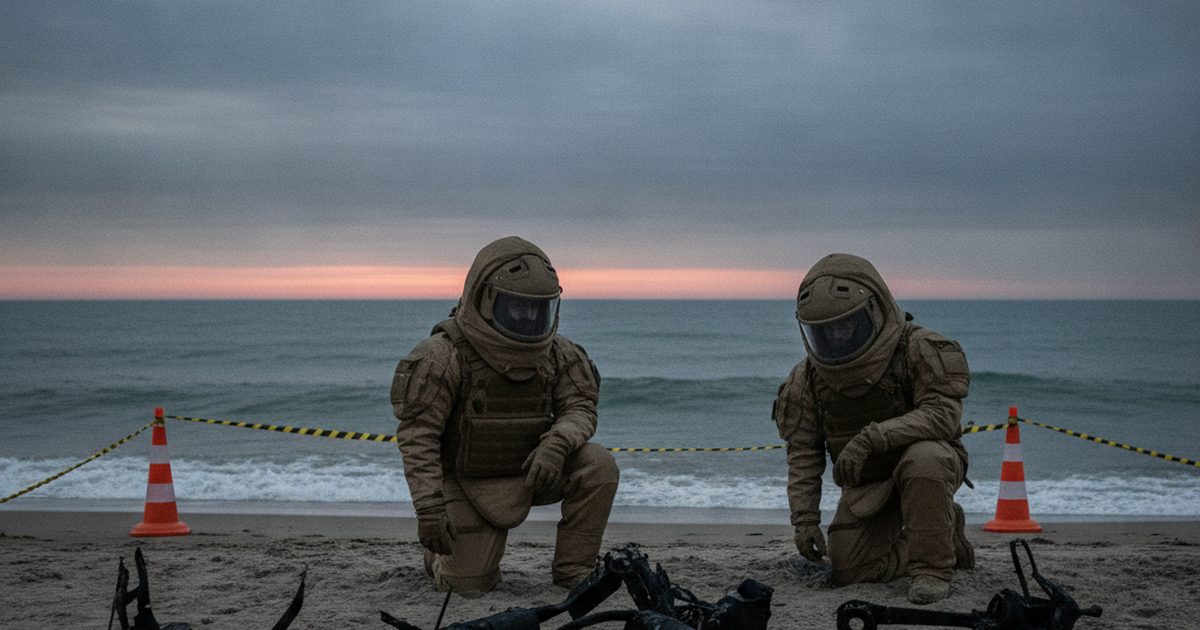
Over the past two weeks, Romanian and Bulgarian authorities have logged a rapid-fire sequence of drone crashes and debris discoveries. The finds aren’t limited to farmland and open water — they’re turning up on private property, public beaches and resort promenades packed with tourists. Each discovery has triggered the same response: cordon the area, call in explosive ordnance disposal (EOD) teams, and hope the fragments are inert.
Most of the time, they have been. But the pattern has turned a military airspace story into a ground-level public-safety one — drone debris as a foreign-object hazard, not just a headline about intercepts.
A drone crashes near the Ukraine border
On Aug. 20, Romania’s Ministry of National Defense (MApN) said a drone crossed into national airspace roughly 13 kilometers east of Galați at 3:21 a.m. and crashed three minutes later near the village of Grindu in Tulcea County, close to the Ukraine border. The impact sparked a fire that burned out on its own. No injuries or property damage were reported, but a military team was dispatched to secure and search the site, according to Air Force Technology.
That incident was separate from the Aug. 16 shoot-down near Galați, when a Spanish Air and Space Force F-18 on a NATO air-policing mission destroyed a drone that had entered from Moldova — the fourth intercept over Romania this year. FODNews covered that intercept in our earlier report on European fighter jets responding to unknown drones over Romania. This story picks up where that one left off: what happens to the debris after the jets land.
Fragments on private land, “no explosive charge”
Days after the Grindu crash, MApN said drone fragments were found on private property in Tulcea County. EOD specialists safely detonated them. The ministry said the fragments most likely came from the drone detected earlier that day and confirmed they carried no explosive charge, according to CGTN. The case was referred to the Prosecutor’s Office attached to the Constanța Court of Appeal, which is now handling several related debris cases along the coast.
Then the beaches started producing wreckage
By Aug. 25 and 26, the debris problem had moved to the coast — and to tourists.
On the evening of Aug. 25, drone remains washed up near the Casino promenade in Constanța, carried in between the breakwaters. The next morning, a fragment reached the beach at Olimp, a resort roughly 38 kilometers south of Constanța, drifting in with the waves and settling between sunbeds. Authorities restricted tourist access while specialists assessed the object. Digi24 reported a portion of the debris was detonated on site as a precaution, according to Romania Insider, which noted the Army has also recovered fragments this month from Port Tomis, Eforie Sud, Eforie Nord, Costinești and Năvodari.
The same week, Bulgaria’s Navy responded to its own cluster of finds. On Aug. 26, naval teams from Varna and Burgas were dispatched to four sites: fuselage debris on Kabakum beach, a wing at the Golden Sands resort, wreckage on Pasha Dere beach, and a submerged drone nose section near Cape Galata, towed in due to worsening sea conditions. The Kabakum debris contained no explosives, the Bulgarian Defense Ministry said, according to the Bulgarian News Agency (BTA). A separate object near Pomorie was destroyed at sea by Navy divers.
Why the debris matters as much as the intercepts
An intercept over farmland is a military story. Wreckage that lands or washes ashore near people is something else: an immediate, localized foreign-object hazard. Unexploded ordnance risk and sharp fragments can end up in sand where children play, and beaches or private property get closed while EOD teams work. Every discovery this month has required the same sequence — cordon, inspect, determine explosive status, remove.
The frequency is rising by the ministry’s own count. Romania’s Defense Ministry dashboard, cited by AeroTime, recorded 25 unauthorized drone incursions in 2026 as of Aug. 25 — nearly triple the nine logged in all of 2025. ABC News separately reported drone or fragment discoveries on Romanian territory had reached 27 so far this year, versus 16 for all of last year.
Bulgarian authorities have not yet said whether the string of coastal finds share a common origin. What is consistent is the response: each piece of wreckage gets treated as a hazard until proven otherwise — a routine now playing out on beaches meant for tourists, not military ranges.
Subscribe to FODNews for continuing coverage of debris and airspace incidents along NATO’s eastern flank.
Sources
- Air Force Technology — “Spanish F-18s respond to UAS crash on Romania-Ukraine border”
- CGTN — Romania Defence Ministry statement on drone fragments, Aug. 24, 2026
- Romania Insider — “Drone fragment discovered on beach in Romanian seaside resort”
- Bulgarian News Agency (BTA) — Bulgarian Navy debris retrieval report, Aug. 26, 2026
- AeroTime — “Romania records 25 drone incursions in 2026, nearly triple 2025”
- Reuters — “Suspected Russian drone shot down in Romanian airspace”