ESA’s Draco Mission Advances Reentry Safety Science — Terma Joins as Star Tracker Supplier
The European Space Agency is building a satellite designed to destroy itself — deliberately — and the data it collects on the way down could reshape how the industry thinks about debris falling from the sky.
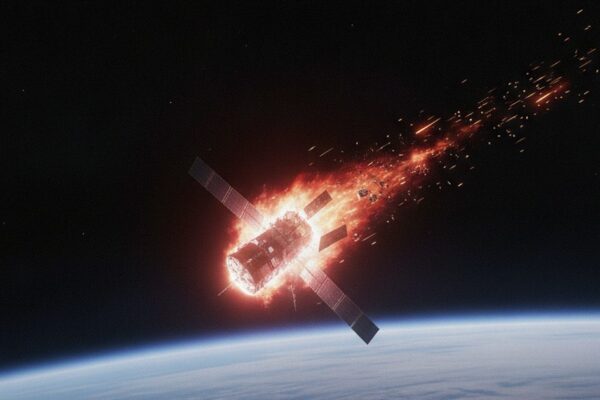
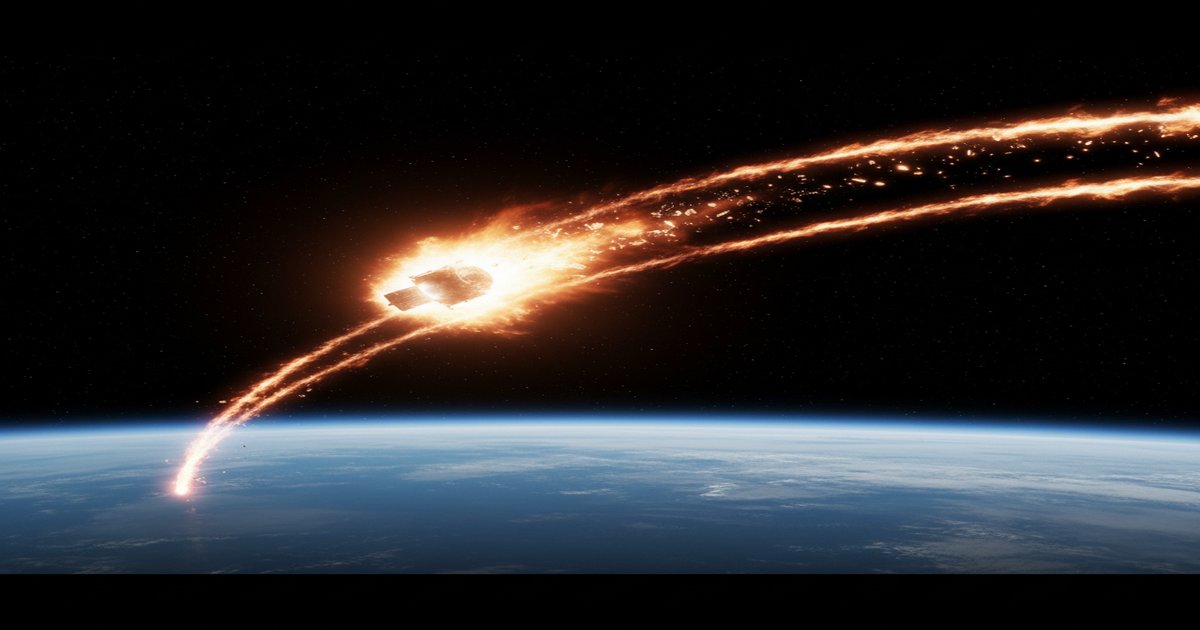
ESA’s Draco mission, short for Destructive Reentry Assessment Container Object, will launch in 2027 and intentionally plunge back through Earth’s atmosphere to study how spacecraft actually disintegrate. On March 24, Danish aerospace firm Terma announced a contract with Indra Space to supply the mission’s T3 Star Tracker — a compact attitude sensor that will feed precise orientation data from deployment all the way through final burnup.
Why This Mission Exists
Satellites fall out of orbit constantly. Roughly 10,000 uncontrolled reentries have occurred since the space age began, yet scientists have almost no direct measurements of what happens inside a spacecraft as it tears apart at hypersonic speeds.
Current risk models — used to predict whether debris will survive reentry and reach the ground — rely heavily on computer simulations and a thin dataset of historical observations. The industry standard casualty risk threshold is 1 in 10,000: if a reentering object poses a greater than 0.01% chance of injuring a person on the ground, regulators require a controlled reentry. But without empirical data validating those models, there is limited confidence in whether that threshold is being accurately assessed.
Draco is designed to close that gap.
How the Experiment Works
The spacecraft is a washing-machine-sized satellite weighing between 150 and 200 kilograms. It carries no propulsion system — by design. Once it completes a short operational phase in low Earth orbit, natural orbital decay will pull it into the upper atmosphere, mimicking a typical uncontrolled satellite demise.
But unlike those unmonitored reentries, Draco is packed with 200 sensors and 4 cameras monitoring temperature, pressure, structural strain, plasma dynamics, and material ablation in real time. A 40-centimeter heat-resistant capsule housed within the satellite is built to survive reentry, deploy a parachute over an uninhabited ocean area, and transmit data via satellite link for approximately 20 minutes before splashdown.
The mission was contracted to Deimos, a Spanish aerospace company, and builds on lessons from ESA’s 2013 ATV reentry observation and the 2023 assisted reentry of the Aeolus wind satellite. It is part of ESA’s broader Space Safety Programme and its Zero Debris charter, which targets zero net new space debris by 2030.
Draco is scheduled to fly on Ariane 6, Vega, or another European microlauncher.
The Star Tracker’s Role
For the data Draco collects to be scientifically useful, researchers must know exactly where the spacecraft is pointing at every moment. That’s the job of the Terma T3 Star Tracker.
Star trackers determine a spacecraft’s orientation by photographing the surrounding star field and comparing it against an onboard catalog. The T3 model — designed for nano- and microsatellite missions — weighs just 350 grams, draws 2 watts of power, and delivers pointing accuracy of better than 2 arcseconds in pitch and yaw.
Terma, headquartered in Denmark, signed a contract with Indra Space — the prime contractor on Draco — to deliver the unit ahead of the 2027 launch.
“The Draco mission depends on reliable, continuous attitude information to achieve its scientific objectives,” said Günther Lackner, Senior Vice President for Space at Terma, in a statement released by the company. “Our T3 Star Tracker delivers the precision and robustness required to ensure that every measurement captured during re-entry can be properly interpreted.”
According to Simone Centuori of Indra Space, “the data we acquire will benefit the entire space community.”
What’s at Stake for Debris Standards
The timing is not incidental. The number of operational satellites in low Earth orbit has grown dramatically in recent years, and so has the pace of uncontrolled reentries. The U.S. Federal Aviation Administration projected that large LEO constellations, if left unchecked, could generate up to 28,000 hazardous debris fragments annually by 2035.
In March 2026, the FAA rescinded a proposed orbital debris rule amid industry pressure, maintaining existing voluntary guidelines rather than establishing new mandates. Critics note that most industry goals — such as deorbiting 95% of satellites within three years of mission end — lack enforcement mechanisms.
Against that backdrop, Draco’s empirical dataset could carry significant weight in future regulatory debates. Validated reentry models would allow spacecraft designers to predict more accurately whether components will survive to the ground — and engineer for demise when they shouldn’t.
The mission also aims to assess a less-discussed concern: the atmospheric impact of vaporized satellite materials, including aluminum oxides, that accumulate in the upper atmosphere as reentry rates rise.
A Controlled Crash to Improve the Models
No spacecraft has previously been built specifically to instrument its own destruction and return that data. Draco’s value is in the quality of its in-situ measurements — not what survives the fall, but what the sensors record on the way down.
If the mission succeeds, the reentry models used by satellite manufacturers, national space agencies, and international regulators will have something they currently lack: ground truth.
That shift in data quality could directly influence how future satellites are designed for disposal — and, by extension, what risks remain overhead for everyone on the ground beneath them.
Subscribe to FODNews for ongoing coverage of space debris, reentry safety, and orbital risk.
Sources
- Terma (March 24, 2026): Terma to support ESA Draco Mission on Advancing Re-Entry Safety for Future Space Operations
- Wikipedia: Draco (space mission)
- NASA Technical Reports Server: Small Satellite Orbital Debris Introduction (2025)
- FAA Report to Congress: Reentry Disposal of Satellites