ESA Space Environment Report: LEO Debris Density Nearing Critical Threshold as Collision Risk Jumps 20%
The numbers in ESA’s 2026 Space Environment Report do not read like a forecast. They read like a countdown.
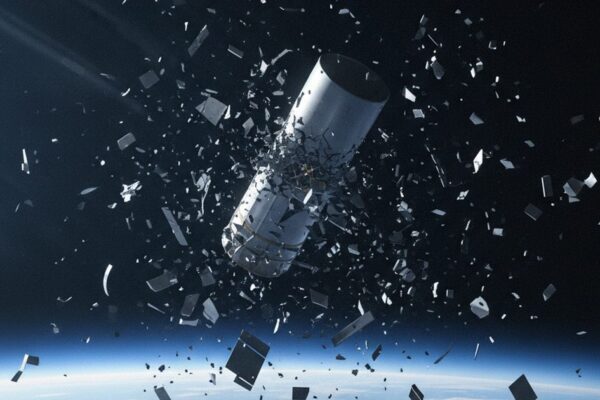
LEO debris collision risk in low-Earth orbit has risen 20 percent since 2024, according to findings from the European Space Agency’s latest annual assessment. The drivers are familiar but intensifying: rapid megaconstellation expansion, the accumulating toll of deliberate anti-satellite tests, and a fragmentation rate that continues to outpace the ability of atmospheric drag to clean house.
The result is a LEO environment unlike anything operators faced a decade ago — and one that is fundamentally changing the mathematics of safe spaceflight.
40,000 Tracked Objects. 1.2 Million That Can’t Be.
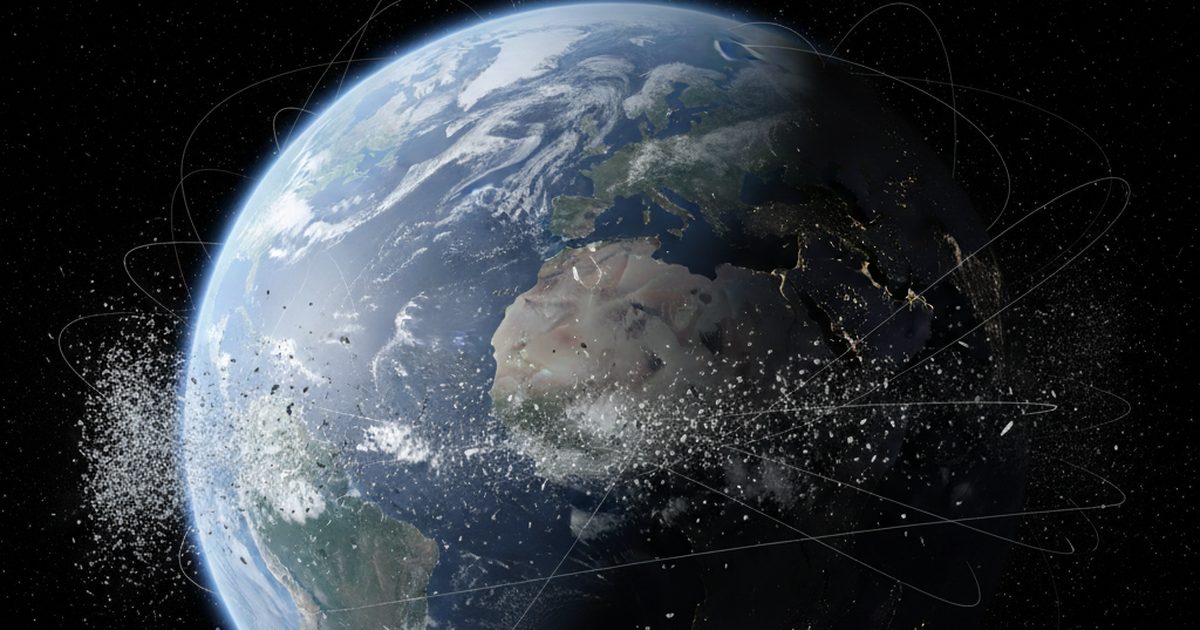
The headline figure from ESA’s Space Debris Office is arresting: more than 40,000 objects are now catalogued in Earth’s orbit. But that number, while record-setting, understates the actual threat environment by orders of magnitude.
ESA’s MASTER-8 debris modeling system estimates that roughly 54,000 objects larger than 10 centimeters currently circle the Earth — meaning nearly a quarter of objects large enough to catastrophically destroy a satellite are simply not tracked by any ground-based sensor network. More critically, MASTER-8 puts the population of debris fragments between 1 and 10 centimeters at approximately 1.2 million pieces.
That size class — what ESA calls the “lethal non-trackable” range — is where the calculus becomes brutally stark. Objects in this range are too small to reliably detect with current surveillance infrastructure, yet large enough to destroy a functioning satellite on impact. No conjunction warning will be issued before one of them strikes. No maneuver will be commanded. The collision would simply happen.
Below 1 centimeter, MASTER-8 estimates the debris count climbs to approximately 140 million fragments. These pose meaningful shielding and micrometeorite risks but are unlikely to cause immediate catastrophic spacecraft failure. It is the invisible middle tier — the 1.2 million pieces between 1 and 10 centimeters — that commands the most concern among debris scientists.
The 550-Kilometer Problem
ESA’s report identifies 550 kilometers altitude as a focal point for the emerging crisis. That is not coincidental. It is SpaceX’s preferred operational band for its Starlink broadband constellation, and it has become a crowded throughway for commercial satellite traffic more broadly.
At 550km, ESA’s MASTER data now shows that debris object density is approaching the same order of magnitude as active satellite density. That is a qualitatively different operational reality than existed even five years ago.
When debris was sparse relative to active satellites, collision avoidance was primarily about tracking the known debris field and maneuvering around it. When debris density approaches parity with operational traffic, the calculus inverts: operators must manage close approaches not just from non-maneuverable fragments but from thousands of other active satellites whose trajectory decisions are made independently, often autonomously, and sometimes without coordination.
The evidence that this inversion is already occurring shows up in maneuver statistics. SpaceX’s Starlink constellation performed approximately 300,000 collision avoidance maneuvers across 2025 — a 50 percent increase from 2024, according to figures reported by the company. That works out to roughly 40 maneuvers per satellite per year across roughly 10,000 operational units. Projections from researchers tracking the sector suggest that number could reach 1 million maneuvers annually by 2027 as constellation deployments continue.
FODNews has previously reported on the nine conjunction threats Starlink faced across just four days in March 2026, including one high-risk close approach that triggered autonomous evasion. That incident was not anomalous — it was representative of daily operational conditions at 550km.
The Math Behind the 20% Risk Increase
The 20 percent jump in collision probability cited by ESA’s 2026 report reflects several compounding pressures that emerged between 2024 and 2025.
The first is simple volume. Megaconstellations have continued to grow faster than regulatory frameworks designed to manage them. Each new satellite added to an already-dense operational band marginally increases the conjunction rate for every other object sharing that altitude. Across fleets numbering in the thousands, those marginal increases aggregate into substantial systemic risk elevation.
The second is the accumulating toll of historical anti-satellite tests. ASAT tests have a documented track record of producing debris fields that propagate into widely used orbital bands for years or decades. China’s 2007 ASAT test against the Fengyun-1C satellite remains the single largest deliberate orbital debris event in history, and its fragment cloud continues to influence ESA’s MASTER-8 population calibration nearly two decades later. India’s 2019 Mission Shakti test, conducted at 285 kilometers altitude, generated more than 400 trackable fragments, with some reaching apogees above 1,000 kilometers. The international community has since called for binding restrictions on kinetic ASAT tests to prevent further debris generation in usable orbital bands.
Non-deliberate fragmentation events compounded both trends. ESA’s long-term data shows an average of 10.5 accidental in-orbit fragmentations per year. The 2024 data year alone produced more than 3,000 newly catalogued debris fragments from such events — explosions, battery failures, and pressurization anomalies aboard defunct spacecraft that have been waiting silently for decades to become a debris source.
MASTER Projects Doubling by 2030
The trajectory concerns ESA’s modeling teams as much as the current snapshot.
ESA’s DELTA long-term analysis tool — which runs Monte Carlo simulations across decades of projected debris evolution — projects that debris density at key LEO altitudes will double by 2030 under baseline assumptions. Baseline, in this context, means current launch rates continue and mitigation compliance holds roughly steady. It does not assume things get worse. Under baseline assumptions, they get significantly worse anyway.
The underlying physics explains why. Some heavily used orbital bands have already crossed what debris scientists call the Kessler threshold — the density level at which collisions generate new debris faster than natural processes can remove it. A 2025 study found that the current intact object population exceeds the runaway threshold at nearly all altitudes between 520 and 1,000 kilometers.
NASA scientist Donald Kessler identified this self-sustaining cascade dynamic in a 1978 paper. What was theoretical then is modeled as operative now in specific altitude bands by ESA, NASA, JAXA, Roscosmos, and China’s CNSA — all of which participate in comparative modeling studies through the Inter-Agency Space Debris Coordination Committee. Scientific consensus within the IADC community holds that active debris removal is no longer optional for stabilizing the most congested orbital regions.
A striking operational indicator of just how tight the margins have become: researchers using a metric called the Collision Realization and Significant Harm (CRASH) Clock calculated that if satellite operators suddenly lost maneuvering capability, a catastrophic collision could occur within 2.8 to 5.5 days as of mid-2025. In 2018, the same loss of maneuvering would have allowed 121 days before risk became critical. That compression of safety margin over seven years captures, in a single number, the pace of LEO congestion.
The Economic Weight of a Cluttered Orbit
The World Economic Forum’s 2026 “Clear Orbit, Secure Future” report, developed with space market research firm Novaspace, quantifies the economic cost of the current trajectory at $25.8 to $42.3 billion over the decade from 2025 to 2035 — and that projection assumes no major cascading collision events.
The cost breakdown is revealing. Service disruptions and degraded performance account for $14.7 to $26.3 billion of the estimate, driven by satellite anomalies and failures attributable to the debris environment. Physical asset losses — the satellites themselves — account for another $10.5 to $15.5 billion. Collision avoidance maneuver fuel costs, at $560 million, are nearly a rounding error in the larger figure but represent a direct drag on satellite operational lifespans.
The WEF characterizes this as a “hidden tax” on space operations — costs that accrue continuously but sit below the threshold of a headline-generating catastrophe. That framing is apt. The debris crisis does not primarily manifest as sudden dramatic failures. Instead, it manifests as incremental erosion: higher insurance premiums, more fuel consumed on avoidance burns, shorter satellite operational lifetimes, and increasing regulatory and operational friction for any operator trying to reach low Earth orbit.
Mitigation Is Improving. It Is Not Improving Fast Enough.
ESA’s 2026 report does document genuine progress on debris mitigation compliance — a point worth acknowledging clearly before characterizing the overall situation as worsening.
Approximately 90 percent of rocket bodies in LEO now comply with the internationally accepted 25-year post-mission deorbit standard. Around 80 percent comply with ESA’s stricter five-year requirement, which the agency introduced in 2023. Controlled re-entries outnumbered uncontrolled ones for the first time in 2024, a meaningful milestone driven partly by improved mission design and partly by the natural consequence of deploying large constellations at low altitudes where atmospheric drag handles disposal automatically within years.
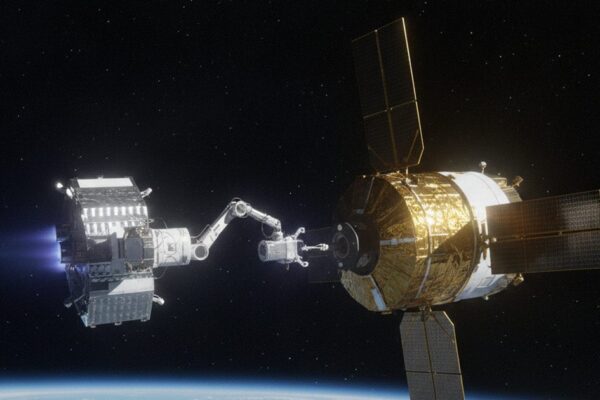
ESA’s Zero Debris Charter, launched in 2023, has gathered more than 150 signatories across 19 countries as of 2025 — a substantial showing of voluntary commitment from both government agencies and commercial operators. ESA has also contracted ClearSpace SA, a Swiss startup, to conduct the world’s first active debris removal mission. ClearSpace-1, expected to launch in 2028, will capture the defunct PROBA-1 satellite using robotic arms and deorbit it for destructive re-entry. FODNews covered ESA’s broader reentry safety work in its reporting on the DRACO mission and T3 Star Tracker.
But ESA’s own modeling makes the gap between current mitigation efforts and what stabilization requires uncomfortably explicit. DELTA projections consistently show that even perfect compliance with the 25-year deorbit rule is insufficient to reverse population growth in the most congested altitude bands. ESA’s research indicates that preventing runaway cascade dynamics would require a disposal compliance rate of at least 95 percent for large constellation satellites — and active removal of legacy large objects already in orbit, at scale, for which no commercial market yet exists at meaningful volume.
The Operational Rewrite Underway at 550km
For satellite operators, the implications of ESA’s findings are not theoretical. They are operational, daily, and accelerating.
Collision avoidance has historically been a background function — something done occasionally, in response to specific tracked conjunction warnings issued days in advance. The environment at 550km in 2026 has made it a continuous, high-frequency operational burden. Starlink’s autonomous avoidance system triggers at a collision probability threshold of 1-in-3.3-million — far more conservative than the industry standard of 1-in-10,000 — yet still executes maneuvers at a rate that strains propellant budgets and predictability of satellite positions.
When debris density and active satellite density occupy the same order of magnitude at a given altitude, the traditional distinction between “the debris field” and “the operational environment” ceases to exist. They become the same thing. Every object at that altitude — active or dead, tracked or estimated — is simultaneously traffic and hazard.
That is the environment ESA’s 2026 report describes at 550km. It is not a future projection. It is the current condition. And under MASTER’s baseline modeling, it will be meaningfully worse by 2030.
What Comes Next
The policy levers available to address the debris crisis are well understood. Stricter international standards for post-mission disposal. Faster adoption of debris-free mission design across all operators, not just ESA signatories to voluntary charters. Development of a commercial active debris removal market capable of removing large legacy objects at scale. Binding international restrictions on ASAT testing that generates debris in usable orbital bands.
What remains genuinely uncertain is whether the pace of political and regulatory response will match the pace of debris population growth. DELTA’s projections do not provide a single fixed doomsday date — they produce probability distributions across decades. The uncertainty in timing has historically provided cover for policy inertia. ESA’s debris scientists have been consistent on this point: the qualitative direction is not uncertain. The debris environment in heavily used LEO bands is on a trajectory toward functional unusability unless active removal is deployed at scale. What the models cannot specify is when that inflection point arrives.
What is clear from ESA’s 2026 report is that the window for preventive action is narrower than it was in 2024, and narrower still than it was in 2020. Every year of baseline launch rates and baseline mitigation compliance moves the 2030 doubling projection closer to certainty and the operational margin at 550km closer to the edge.
The debris at 550 kilometers is not waiting for international consensus.
Stay current on space debris, FOD incidents, and aviation safety worldwide. Subscribe to FODNews for independent reporting delivered to your inbox.
Sources
- ESA Space Environment Report 2025 — European Space Agency
- ESA Space Debris Analysis and Prediction: Tools, Databases, and the Race to Protect Earth’s Orbits — New Space Economy (March 2026)
- Clear Orbit, Secure Future: A Call to Action on Space Debris — World Economic Forum / Novaspace (2026)
- ESA Space Environment Report 2025 Summary — UN-SPIDER
- Days to Disaster: CRASH Clock Research — Phys.org (December 2025)
- Starlink Faces Nine Conjunction Threats in Four Days Amid Escalating LEO Congestion — FODNews
- ESA DRACO Mission: Reentry Safety and the T3 Star Tracker — FODNews