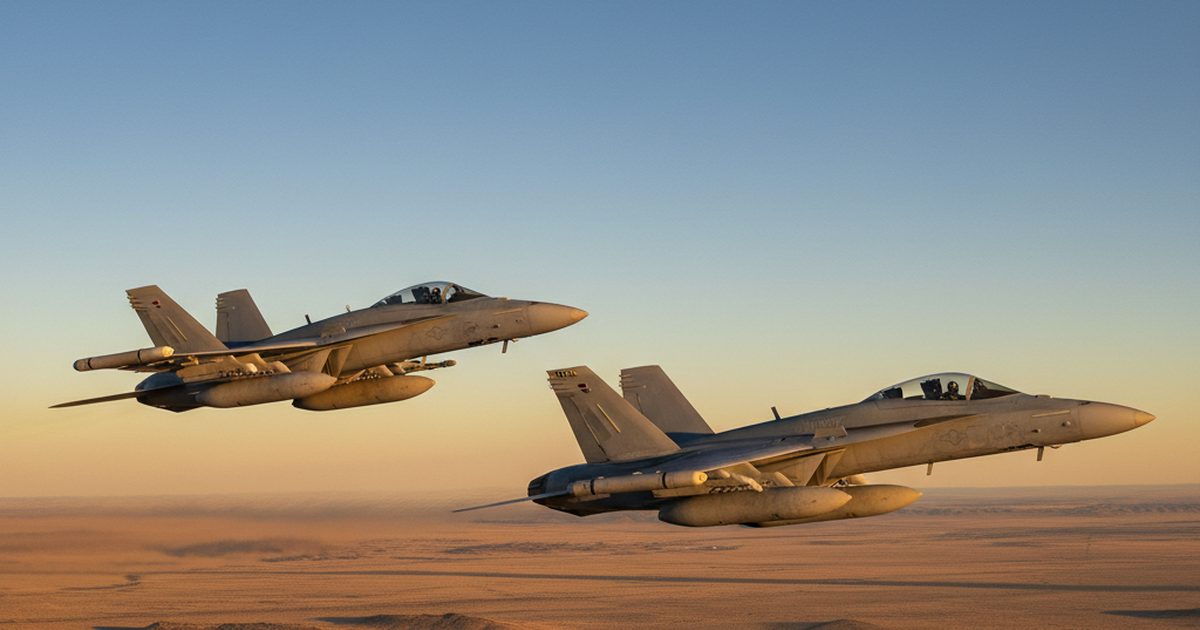
MOUNTAIN HOME AIR FORCE BASE, Idaho — When two U.S. Navy EA-18G Growlers collided during an airshow demonstration on May 17 and fell to the ground near Mountain Home Air Force Base, the four crew members who ejected safely were the headline. But what landed with the jets tells a different story about how modern military aircraft — and their debris — interact with the public spaces around them.
The collision happened at approximately 12:10 p.m. MDT during the Gunfighter Skies air show, the base’s first public airshow since 2018. The two Growlers were from Electronic Attack Squadron 129 (VAQ-129) — the Navy’s EA-18G Fleet Replacement Squadron at NAS Whidbey Island, Washington. They were performing a formation demonstration when one aircraft overtook the other. All four aircrew — two pilots and two electronic warfare officers — activated their ejection seats and survived. One was treated at a local hospital for a non-life-threatening injury; the other three were uninjured.
The aircraft, still entangled, impacted near Grand View Highway in Elmore County, triggering a brush fire of approximately 25 acres before it was contained. Idaho Transportation Department closed State Highway 167 — from Simco Road to SH-67 — for a multi-day investigation and recovery operation.
What Fell With the Jets
The EA-18G Growler is the Navy’s primary airborne electronic warfare platform, equipped with the AN/ALQ-99 tactical jamming system and AN/ALQ-218 wideband receiver. Those systems, along with training munitions such as chaff and flare cartridges, scattered across the impact zone alongside structural fragments of titanium, aluminum, and composite material.
Recovery teams faced the task of securing not just wreckage, but classified electronic components in terrain soaked in jet fuel and fire suppression foam. The highway closure maintained a controlled perimeter around debris that required military-custody handling.
The operation is a real-world case study in post-mishap debris containment — the kind that plays out after any high-energy airframe loss. Rarely does it involve classified EW equipment and active public roads simultaneously.
Scatter, Buffers, and What the Crowd Line Protects
Airshow crowd buffer standards for fast-jet demonstrations typically place the display line 500 to 1,500 feet from spectators, with no planned maneuver axis pointed at the crowd. Those distances are calculated for an aircraft that fails along its intended flight path. A mid-air collision introduces a different scatter geometry: two interlocked, burning aircraft tumbling on an uncontrolled vector.
Spectator video and accounts suggest the debris field cleared the public viewing area. As FODNews has reported in other infrastructure contexts, the gap between expected and actual debris spread is what drives post-incident reviews. Whether defined buffers adequately account for a dual-aircraft catastrophic loss will be among the questions investigators examine.
VAQ-129 and the Training Pipeline
VAQ-129 is the schoolhouse where the Navy trains every EA-18G pilot and electronic warfare officer before they reach a deployed unit. Instructor crews man the squadron’s demonstration team, meaning the aircrew involved were among the most experienced Growler operators in the fleet.
The crash is the second loss of Growler airframes from the Whidbey Island community in less than two years. In October 2024, a fatal training accident near Mount Rainier killed two crew members.
EA-18G Growler Collision Investigation and Stand-Down
The Navy has opened a formal aircraft mishap investigation. Aviation reporting indicated that, by May 21, the Commander of Naval Air Forces ordered a safety stand-down for Navy flight demonstration teams. Units were directed to review maneuver profiles, separation standards, and risk controls before resuming public performances. The VAQ-129 Growler Demo Team is stood down from future shows while the investigation proceeds.
No official cause has been released. Preliminary indications from open-source video analysis suggest a closure-rate error during a formation rejoin. Investigators will examine pilot proficiency, mission planning, crew rest, and weather conditions — winds were gusting to 29 mph at the time — before reaching any formal finding. A full safety investigation board report typically takes months and is seldom released in full to the public.
Investigators hold an unusual advantage: all four crew members survived and can provide direct accounts of the moments before impact. As of mid-May, debris recovery operations on SH-167 remained ongoing and no cause had been officially characterized.
Stay informed — subscribe to FODNews for daily coverage of FOD incidents and prevention worldwide.
Sources
- The Aviationist — “Growler Demo Team Collision” (May 17, 2026)
- Flying Magazine — “Crews Eject After Jets Collide During Airshow” (May 2026)
- Idaho News — “Two EA-18 Fighter Jets Collide at Mountain Home Airshow” (May 17, 2026)
- South Whidbey Record — “Crews Survive Crash of NAS Whidbey Jets During Airshow” (May 19, 2026)
- ABC7/Associated Press — “2 Navy Jets Crash During Air Show in Idaho” (May 17, 2026)