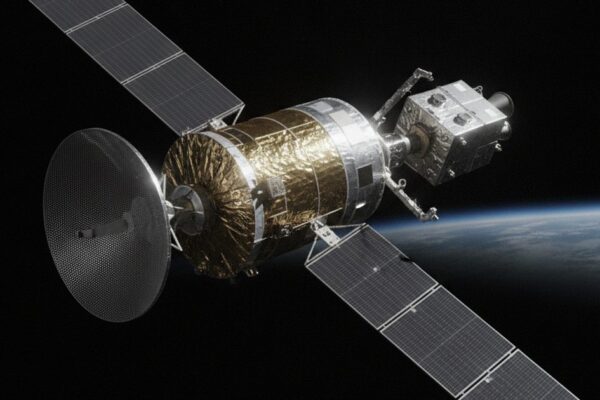
On May 4, NASA’s Aqua satellite marked its 24th birthday in orbit. The agency is now conserving its last reserves of fuel for a controlled deorbit burn. For the first time in years, Aqua is descending without the ability to dodge what’s coming its way.
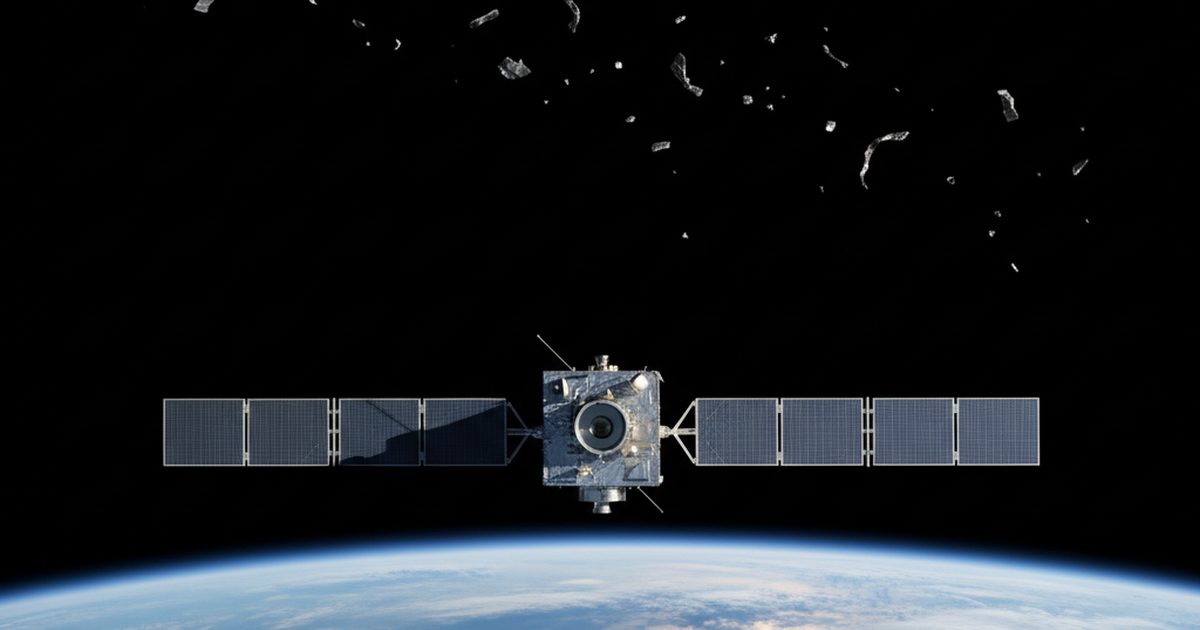
Aqua is not failing. Its instruments still work. Its data still flows. What’s ending it is the debris environment it can no longer safely operate in. LEO collision risk is not a future problem—it is already determining which missions survive and which don’t. The numbers from ESA’s latest Space Environment Report, Issue 10, released in May 2026, confirm this is a trend, not an edge case.
Aqua’s Mission—and Why It Is Ending Early
Aqua carries six instruments, the most important of which is MODIS, the Moderate Resolution Imaging Spectroradiometer. Over 24 years, MODIS has produced daily global maps of sea surface temperature, vegetation health, snow and ice cover, wildfire extent, and ocean color. That data has underpinned more than 30,000 scientific publications and is embedded in fire-tracking systems, climate models, and agricultural forecasting tools across dozens of countries.
Aqua was also the anchor of the A-Train, NASA’s coordinated formation of Earth-observing satellites. It left the formation in early 2022 when fuel ran too low to hold its precise orbital slot.
According to a NASA mission operations briefing, Aqua has been involved in 19 high-interest debris events over its lifetime. NASA’s broader EOS constellation—Aqua, Terra, and Aura—has collectively executed at least 32 debris-avoidance maneuvers since 2005, according to Space.com. Each maneuver costs propellant. Each one also interrupts measurement continuity—calibration sequences break, altitude shifts introduce data gaps, and trend detection over decades accumulates uncertainty.
Aqua completed its last drag-makeup maneuver in December 2021. The remaining fuel was reserved for perigee-lowering burns in summer 2026 and final passivation. The science mission is expected to end around August 2026. The choice was rational; it was also forced. Aqua did not run dry from age. It ran dry from a debris environment that demanded more maneuvers than a 2002-era fuel budget could sustain.
The Numbers Behind LEO Collision Risk
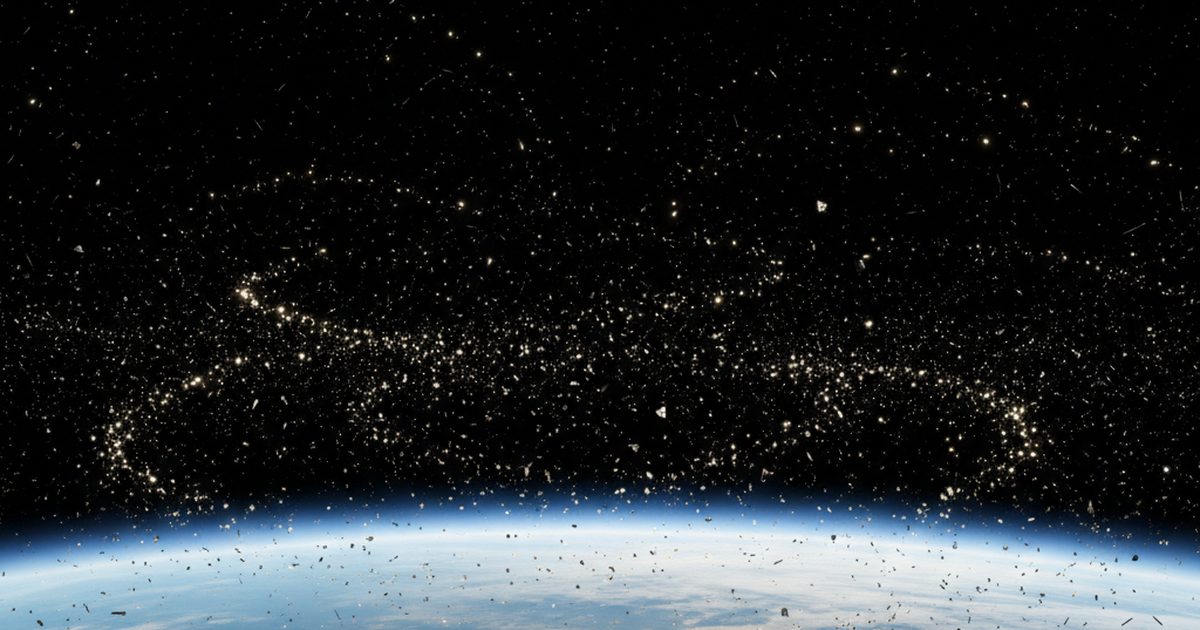
ESA’s Annual Space Environment Report, Issue 10, released in May 2026, contextualizes what happened to Aqua. More than 44,870 objects are now regularly tracked by space surveillance networks worldwide—a roughly 180% increase from approximately 16,000 tracked objects in 2005, the year Aqua performed its first recorded avoidance maneuver.
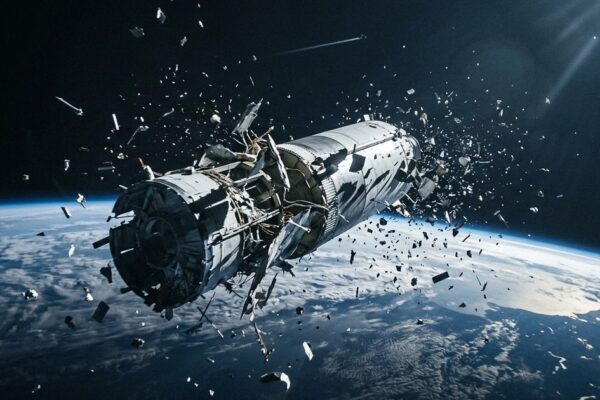
Tracked objects are only part of the picture. ESA’s MASTER-8 model estimates more than 1.2 million fragments between 1 centimeter and 10 centimeters. At typical LEO impact velocities of 10–15 kilometers per second, a 1-centimeter fragment carries enough kinetic energy to destroy most operational satellites. These objects are too small to track reliably. They cannot be dodged.
Most of the concentrated risk does not come from those fragments. According to ESA’s report, spent rocket upper stages—large, intact objects left behind after payload delivery—account for approximately 65% of the LEO environmental risk index. Some of those stages are more than 50 years old and will remain in orbit for decades.
In March 2021, the consequences became concrete. A fragment from a 1996 Russian Zenit-2 rocket body struck China’s Yunhai-1 02 weather satellite at roughly 780 kilometers. The U.S. Space Force confirmed the collision in December 2021. The parent stage remains in orbit. It is one of only four confirmed on-orbit collisions in the history of spaceflight—but the near-miss rate tells a different story. In the densest LEO bands, individual satellites can now expect nearly 30 conjunction events per year. Earlier this month, FODNews covered how Solar Cycle 25 is accelerating decay in lower orbits; at Aqua’s altitude near 700 km, solar drag provides no meaningful cleansing. The debris stays. The Kessler cascade risk documented in April is the mathematical consequence of current trajectory.
The Policy Gap
There is no binding international treaty requiring post-mission disposal of spacecraft or upper stages. No international agreement prohibits anti-satellite weapon tests that create long-lived debris. The voluntary “25-year rule” for end-of-mission deorbit has no enforcement mechanism.
The U.S. Federal Aviation Administration proposed an upper-stage deorbit rule in 2024 that would have required deorbit within five years. It was withdrawn in early 2026. ESA’s Zero Debris Charter—a voluntary commitment to net-zero debris generation by 2030—is gaining signatories but no enforceability. The April 2026 ESA Space Environment Report notes that even at a 90% post-mission disposal success rate, the LEO debris environment would continue growing.
The gap between what physics demands and what international governance provides is where satellites go to die early.
What Comes After Aqua
Aqua’s science mission ends around August 2026. NASA will then execute perigee-lowering maneuvers, shortening natural orbital decay. Passivation—venting pressurized systems and discharging batteries—is expected to begin in fall 2026. Natural reentry is projected for approximately 2049. From then on, Aqua is debris: a 2,934-kilogram piece of legacy hardware adding to the conjunction workload of every active satellite that shares its altitude band.
Aqua is not the last of its kind. Several other long-lived Earth-observation missions—some from the same A-Train generation—are operating with reduced fuel margins in the same debris environment. The technical question for the next decade is not whether LEO will get harder to operate in. It is which missions pay the price first.
Stay informed — subscribe to FODNews for daily coverage of FOD incidents and prevention worldwide.
Sources
- Space.com — “Space debris is forcing satellites to dodge more often — costing us vital science” (2026)
- NASA. Aqua Earth-Observing Satellite Mission. aqua.nasa.gov
- ESA Space Debris Office. Annual Space Environment Report, Issue 10. ESA/ESOC, May 2026.
- ESA. Space debris by the numbers. esa.int
- NASA NTRS. EOS Aqua Mission Operations Status (2022). ntrs.nasa.gov
- Space.com — “Russian rocket junk likely caused Chinese satellite’s breakup, researcher says” (2021)