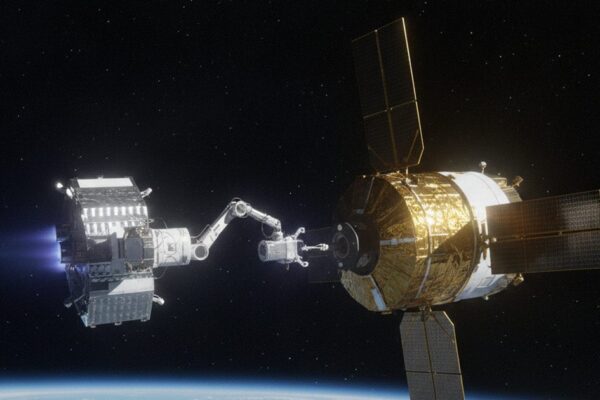
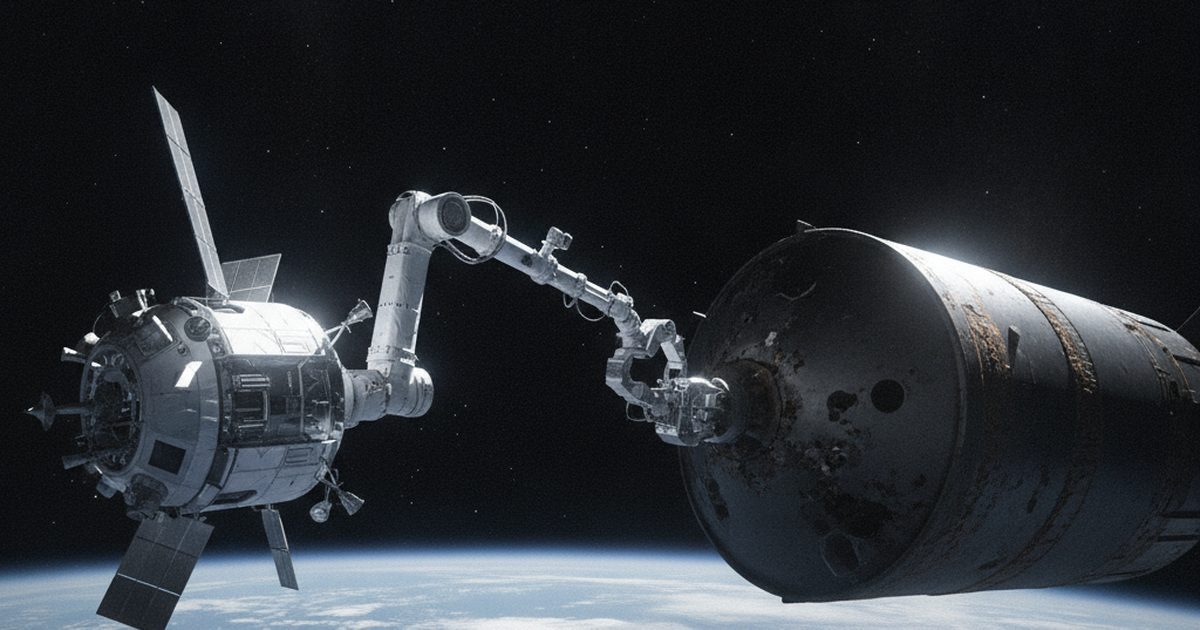
Ten European nations, the European Commission, and the European Space Agency signed a joint declaration at the Berlin International Airshow on June 10, 2026, formalizing their support for the ISOS orbital debris removal and in-orbit servicing pilot mission — the most concrete collective step Europe has taken yet toward building an operational infrastructure for cleaning up low Earth orbit.
The signing took place at ILA Berlin 2026, the International Airshow held June 10–14 at Berlin ExpoCenter Airport. According to the European Commission, the declaration advances plans for a new In-Space Operations and Services (ISOS) pilot mission intended to perform tasks directly in orbit — including capturing and removing debris — with operational capability targeted by approximately 2030.
What ISOS Orbital Debris Removal Actually Commits To
ISOS is not a single mission but a framework for building a European in-orbit service infrastructure. The declaration defines five core capability areas the participating nations agree to pursue: debris removal, satellite capture and repositioning, satellite inspection, in-orbit repair, and in-space logistics and manufacturing.
The goal, as described by the European Commission, is to allow Europe to “operate, service, repair, manage and extend the lifecycle of space systems once in orbit, lowering replacement costs and ensuring the protection and long-term use of European space assets.”
Andrius Kubilius, the EU Commissioner for Defence and Space, called the signing “the first step towards building a new capacity for in-space operations and services, creating new business opportunities for European talents in the thriving orbital economy.”
Who Signed — and When
Five nations joined the declaration at Berlin: Greece, Italy, the Netherlands, Sweden, and Norway. They joined five founding signatories — Germany, France, Luxembourg, Portugal, and Spain — that had already signed in 2025. The European Commission and ESA also endorsed the declaration, marking the first time both institutions have jointly committed to a concrete EU in-orbit servicing roadmap.
The declaration remains open to additional signatures from other European nations. No timeline was given for potential further joiners.
Six Horizon Europe Projects Launch Implementation
Immediately following the signing ceremony, a separate event with industry and research leaders marked the start of the ISOS pilot mission’s implementation phase. Six Horizon Europe research and development projects were officially launched, coordinated respectively by Thales Alenia Space (France), Leonardo (Italy), The Exploration Company (Germany), ArianeGroup (Germany), Planetek (Italy), and RWTH Aachen University (Germany).
The projects span the full spectrum of technology needed for active debris removal and in-orbit servicing — from rendezvous and proximity operations to on-orbit manufacturing and logistics systems. Their combined output is expected to underpin the engineering foundation of an eventual operational ISOS mission.
Fitting Into Europe’s Broader Zero Debris Push
The ISOS declaration dovetails with ESA’s Zero Debris policy, which targets a significant reduction in new debris production in Earth and lunar orbits by 2030. ESA’s updated debris mitigation requirements — adopted in late 2023 — cut the maximum allowed post-mission disposal time in low Earth orbit from 25 years to five years and require more than 90 percent probability of successful disposal. Satellites in protected orbital regions must now be designed with serviceable interfaces so active removal missions can reach and deorbit them if they fail in orbit.
ISOS provides the operational industrial layer that ESA’s regulatory framework anticipates — the missions capable of executing those plans. France’s CNES agency has already moved toward sovereign space surveillance infrastructure, as FODNews reported when CNES launched its independent space debris radar tracking service.
The LEO environment continues to grow more congested as commercial satellite constellations expand. Researchers are also developing new in-situ monitoring tools: earlier this year, a University of Colorado Boulder team received a grant to develop a debris-sensing instrument that flies aboard satellites themselves, providing real-time proximity data that could aid both collision avoidance and debris removal targeting.
What Comes Next
The declaration is a political commitment, not a procurement contract. The six Horizon Europe projects now underway will define the technical roadmap over the next several years. European Commission officials have signaled the declaration is designed to attract further national co-signers and build political will ahead of EU Space Programme budget negotiations.
Whether ISOS fields a working in-orbit servicing infrastructure by decade’s end will depend on how quickly those technology projects mature — and on whether the political coalition holds together long enough to fund the operational phase.
Stay informed — subscribe to FODNews for daily coverage of FOD incidents and prevention worldwide.
Sources
- European Commission — EU and partners agree to strengthen Europe’s role in the orbital economy (June 10, 2026)
- European Commission — In-Space Operations and Services (ISOS) overview
- ESA — New Space Debris Mitigation Policy and Requirements in Effect
- Innovation News Network — Trends in zero space debris (Zero Debris Charter background)