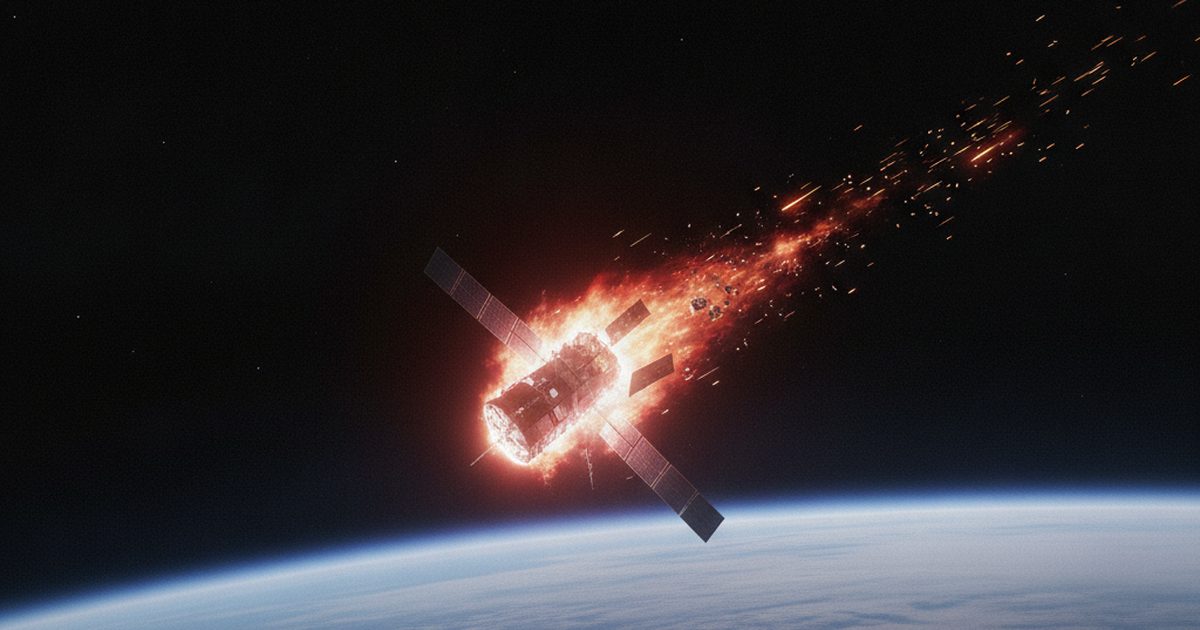
When satellites reach end of life, burning up in Earth’s atmosphere has long been the approved answer. It is a clean disposal method that removes debris from orbit and, in theory, leaves no lasting trace. But as the LEO constellation boom sends reentry rates climbing, that assumption is finally facing scrutiny.
In early June, Astroscale — the Tokyo-based orbital sustainability company — launched the Atmospheric Impact of Reentered Spacecraft (AIRS) initiative. The industry–academia collaboration aims to quantify exactly what satellites release into the upper atmosphere when they ablate, fragment, and vaporize during reentry. Founded alongside Planet Labs PBC and the University of Southampton, the initiative represents the first coordinated effort to link real-world spacecraft manufacturing data to atmospheric modeling.
A Scientific Gap Nobody Was Filling
The problem is straightforward but stubborn. When a satellite reenters, extreme heating melts and vaporizes its structural materials — aluminum alloys, composites, battery chemistries, coatings — releasing those compounds at various altitudes in the upper atmosphere. Current models rely on simplified assumptions about what spacecraft are actually made of, because detailed manufacturing data is almost always proprietary.
As a result, researchers can track that reentries happen, but they cannot accurately predict what compounds are deposited, at what altitude, or in what quantities. As FODNews has previously reported on the aluminum oxide concerns tied to Starlink satellite reentries, this is not a theoretical debate. The chemistry of ablating spacecraft is already accumulating in the upper atmosphere with limited scientific oversight.
Astroscale’s CTO, Mike Lindsay, framed the initiative bluntly: “Spacecraft reentry has long been treated as an optimal mission endpoint, but it is increasingly clear that we need a deeper scientific understanding of what happens during this phase. By enabling industry to contribute real-world data in a trusted way, AIRS removes critical barriers for atmospheric research and ensures space sustainability is guided with the most accurate and up-to-date information.”
How the Data-Sharing Framework Works
The core of AIRS is a secure data-sharing architecture designed to resolve the IP problem that has kept spacecraft material data locked away from researchers. Operators and manufacturers can contribute spacecraft composition data — material types, approximate mass breakdowns, component layouts, anticipated reentry profiles — under bilateral confidentiality agreements. Participants decide how much detail to share; commercially sensitive information stays protected.
Astroscale and Planet Labs have each committed to contributing their own spacecraft data as founding participants. The University of Southampton, which brings expertise in aerospace engineering and atmospheric science, anchors the academic modeling component — running and refining reentry simulations as real-world industry data flows in.
Planet’s Chief Space Officer, James Mason, connected the initiative to the full satellite lifecycle: “Sustainable space operations must account for a satellite’s entire lifecycle, including its eventual reentry. By providing data to the AIRS initiative, we are helping the scientific community move past simulations and toward a factual, data-driven understanding of our industry’s atmospheric footprint.”
Satellite Reentry Atmospheric Impact as a Regulatory Frontier
Moreover, the urgency is proportional to the scale of the LEO buildout. Thousands of satellites from competing constellations are expected to reenter over the coming decade. The aggregate atmospheric footprint of that volume was never a serious modeling input when reentry rates were modest. Now, however, it is.
The initiative also reframes the orbital sustainability calculus in a meaningful way. Controlled deorbit and reentry has been the preferred end-of-life strategy — a conclusion underscored by ESA’s 2026 space environment report and its emphasis on active deorbit compliance. AIRS signals that “sustainable disposal” can no longer be evaluated solely on orbital congestion grounds. Atmospheric chemistry now has a seat at the table.
University of Southampton professor Minkwan Kim, who will lead the modeling work, described the data scarcity problem directly: “A primary challenge in assessing the effects of re-entry emissions on the upper atmosphere is the scarcity of high-quality data required for robust modelling and evidence-based analysis. AIRS will address this critical gap, improving our understanding and mitigation of atmospheric re-entry ablation impacts, and ensuring that the benefits of space remain accessible to future generations.”
Early Days, but the Question Won’t Stay Academic
AIRS is still in its formation stage. No datasets have been published; no atmospheric modeling results have been released. The initiative is currently recruiting additional operator and manufacturer participants willing to contribute under the bilateral agreement structure.
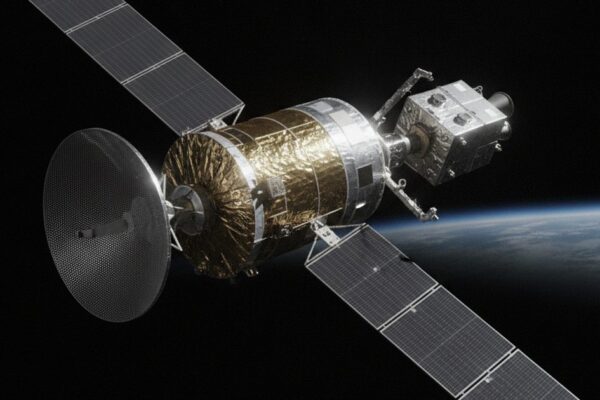
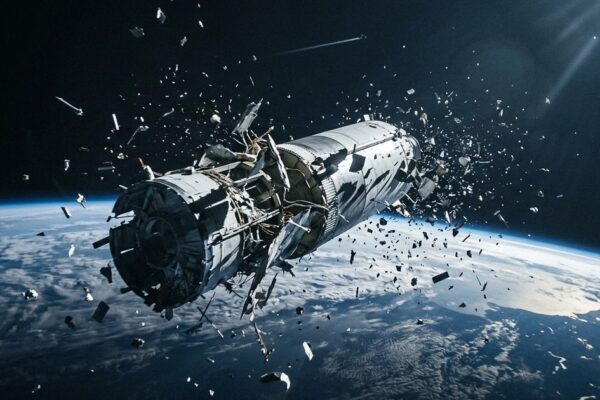
The initiative builds on Astroscale’s existing orbital sustainability work. The company’s ELSA-M active debris removal mission targets the problem of defunct satellites accumulating in LEO — an orbital safety solution. AIRS attacks the other side of the same lifecycle: what end-of-life disposal actually costs the atmosphere.
In the near term, the practical impact depends on how many operators join and how much data they are willing to share. But as reentry rates accelerate and regulatory scrutiny of the LEO environmental footprint grows, the question AIRS is asking — what exactly burns up, and where does it go? — is unlikely to stay academic for long.
Sources
- Astroscale — “Astroscale Leads New Industry Initiative on Spacecraft Reentry and Atmospheric Impact” (June 9, 2026)
- Satellite Today — “New Astroscale Initiative Looks to Improve Data for Spacecraft Reentry Studies” (June 9, 2026)
- Aviation Week — “Astroscale Leads Effort to Model Atmospheric Effects of Sat Reentry” (June 9, 2026)