When FAA accident investigators finished examining two 2023 Southwest Airlines 737 MAX bird-strike smoke incidents, an internal recommendation was on the table: an emergency airworthiness directive requiring alternative takeoff procedures until a permanent fix was in hand. The FAA’s Corrective Action Review Board (CARB) weighed that recommendation in November 2024 and chose a different path — a design-level software fix rather than an interim procedural mandate.
That decision is documented in a DOT Inspector General audit and an NTSB accident investigation report, both of which concluded the FAA followed its processes while identifying safety gaps that remain open during the interim. Full fleet coverage of the software fix is not expected before mid-2028. The 737 MAX bird-strike smoke problem did not go unnoticed or unaddressed. The open question is one of pace: whether the chosen response closes the gap fast enough, and whether the safeguards around the interim period match the stakes.
A Known Chain: 737 MAX Bird-Strike Smoke, Two Close Calls
The mechanism is specific to the CFM LEAP-1B engine’s architecture. The engine’s Load Reduction Device (LRD) is a mechanical failsafe that reduces structural stress during a blade event or severe bird strike. When triggered, it can allow engine oil to migrate into the engine’s bleed-air stream. On the 737 MAX, that bleed air feeds the environmental control system. The result: oil mist and combustion fumes routed into the cockpit and cabin, typically within seconds of rotation.
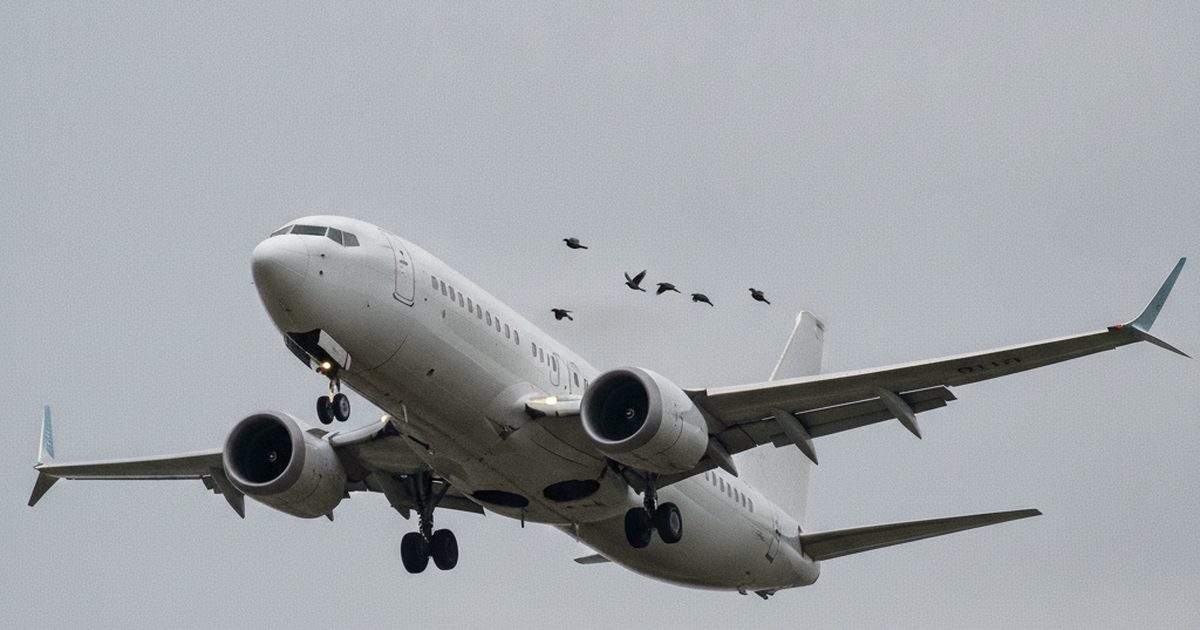
Two Southwest flights encountered exactly this sequence in 2023. Flight WN3923, departing Havana on March 5, and Flight WN554, departing New Orleans on December 20, both experienced bird strikes that activated the LEAP-1B’s Load Reduction Device. Both landed safely with no serious injuries. For more on the underlying incidents, the OIG audit findings, and the timeline to a fleet-wide fix, see FODNews’s May 2, 2026 report. This analysis focuses on the decision the FAA made afterward — and the questions that decision leaves open.
What Investigators Recommended — and What the CARB Decided
Following the two Southwest incidents, the FAA’s Office of Accident Investigation and Prevention (AVP) made an internal recommendation: issue an Emergency Airworthiness Directive requiring alternative takeoff procedures — specifically, packs-off or APU-bleed-air departures up to approximately 3,000 feet. The logic was straightforward. If a bird strike triggers LRD activation in the seconds just after liftoff, running the packs off would physically prevent contaminated bleed air from reaching the cockpit during the most critical window. It was a procedural hedge: imperfect, but immediately available and requiring no engineering development time.
On November 26, 2024, CARB convened and considered that option, ultimately recommending against mandating modified takeoff procedures. The board’s stated reasoning was that packs-off or APU-bleed configurations would increase pilot workload during the departure phase — the most compressed and least-forgiving portion of any flight — and could introduce new risks of their own. A crew managing a non-standard bleed configuration at rotation, while simultaneously monitoring for engine anomalies, would carry a higher cognitive burden in a phase that already demands full attention.
Instead, CARB recommended the FAA pursue a design-level fix through normal rulemaking: a CFM/Boeing software update that would automatically close the affected engine’s Pressure Regulating and Shutoff Valve (PRSOV) upon LRD activation, physically severing the bleed-air contamination path before it reaches the cabin. The Airworthiness Directive mandating that fix would be issued once the software was certified. According to NTSB Safety Report AIR-25-03, CFM and Boeing anticipated completing the software design update around Q1 2026. Design completion, however, is several steps removed from fleet-wide installation.
The Trade-Off: Workload Now vs. Exposure Later
CARB’s reasoning rests on solid ground. Aviation’s accident record includes multiple cases where added procedural complexity during high-workload phases produced the very outcome it was designed to prevent. The departure roll and initial climb are the phases with the narrowest margin for procedure error; non-standard bleed configurations in that window represent a genuine addition to crew workload for an event — bird strike plus LRD activation plus smoke — that has occurred twice in the LEAP-1B fleet across millions of flights. The case against an emergency procedural mandate is a substantive safety argument, not bureaucratic convenience.
That choice does, however, carry a cost that is now coming into focus. The software fix requires CFM and Boeing to finalize the design, complete FAA certification testing, produce an approved software load, and then execute a maintenance campaign across approximately 612 U.S.-registered 737 MAX 8/9 aircraft — plus an additional ~197 LEAP-1A-powered A320neo and A321neo variants that share related architectural concerns. The DOT Office of Inspector General audit AV2026026, released in April 2026, found the FAA did not yet have a robust mechanism to monitor that timeline or a formal escalation trigger if the end-to-end schedule slips. In practical terms: if the software takes longer than expected, the current framework does not automatically prompt the FAA to revisit the procedural option it set aside.
This is the core tension the OIG identified, and it is worth stating fairly. CARB chose the design-level path on defensible safety grounds. The question the audit raises is not whether that call was wrong, but whether the supporting infrastructure — the monitoring, the contingency planning, and clear thresholds for reassessment — has caught up to the weight of the decision. A measured, engineering-first fix is a reasonable approach. Pairing it with a firmer mechanism to flag slippage would strengthen it.
Three Open Questions for the Interim Period
Until the PRSOV software update is certified and installed, the interim mitigation rests largely on crew procedures. Three areas, flagged by the OIG and NTSB, are worth watching as the interim runs its course.
Monitoring follow-through. The OIG issued four recommendations; the FAA accepted all four. Acceptance is an important first step, and implementation is the next one. The OIG specifically directed the FAA to notify affected operators if certification or rulemaking timelines exceed the Boeing/FAA End-to-End Agreement milestones. As of the audit, that notification mechanism was still being operationalized. The distinction between accepted and fully implemented is the kind of follow-through that turns a recommendation into a functioning safeguard.
Consistent new-hire awareness. Boeing issued updated guidance in several waves: a Flight Crew Operations Manual bulletin on February 9, 2024; a system-description FCOM update on November 15, 2024; a QRH update on November 30, 2024; and an EASA Safety Information Bulletin. The recommended response sequence — treating engine anomalies with smoke as Engine Fire/Severe Damage or Separation, shutting down the affected engine, closing its bleed valves, then working the Smoke/Fire/Fumes checklist — is now in the manuals. The OIG noted, however, that dissemination to newly hired pilots varies by airline, without an FAA-mandated mechanism to verify every crew member has been briefed on this failure mode. Consistent reinforcement in recurrent ground school — not just initial distribution to a training department — is what closes that variability.
Simulator limitations. Full-motion 737 MAX simulators cannot model LRD activation, cannot reproduce bleed-air oil contamination, and cannot generate realistic cockpit smoke — the kind that degrades visibility and adds physiological urgency at 500 feet above the airport. Training for this scenario is therefore necessarily abstract. Pilots can learn the QRH steps, but they cannot practice a realistic response to a smoke-filled cockpit in a simulator that never fills with smoke. NTSB AIR-25-03 flagged this directly, and FODNews reported on the broader NTSB push for simulator improvements in the wake of these incidents. Improving simulator fidelity for low-probability, high-consequence events takes both hardware investment and regulatory will, and neither moves quickly.
When FOD Damage Doesn’t Stop at the Engine
Bird strikes are, at their core, a foreign object debris event. FOD management programs are built around finding and removing debris before it reaches an engine — and in most cases, the consequence chain ends there. A bird strike damages an engine component. The engine is inspected or replaced. The aircraft returns to service.
The LEAP-1B cases describe something structurally different: a secondary consequence of a FOD event that travels through the aircraft’s own systems to produce a new hazard in a separate, inhabited compartment. The FOD hit the engine. The danger that materialized — oil smoke reaching the cockpit shortly after takeoff — emerged from an architectural connection between the engine bleed-air system and the environmental control system that, under normal conditions, is a designed and certified pathway. The LRD, in protecting the engine structure, became a vector for a hazard the system was never designed to contain.
That pattern deserves a name: secondary FOD consequence propagation through coupled aircraft systems. It is distinct from direct FOD damage because the harm travels downstream through intended-function systems rather than through physical impact. The NTSB’s recommendation to examine LEAP-1A and LEAP-1C variants for similar vulnerabilities — in A320neo and COMAC C919 applications alike — suggests the architecture may carry comparable exposure wherever bleed air runs from a LEAP-series engine into an ECS. If that proves out, the 737 MAX events are data points in a larger pattern rather than isolated anomalies.
The Road to Mid-2028
As of the OIG’s April 2026 report, the PRSOV software update remained in development. The AD does not yet exist because the certified software does not yet exist. Every 737 MAX 8 and MAX 9 currently operating does so under interim FCOM and QRH guidance — documentation that is materially better than what existed during the 2023 Southwest incidents, but that relies on crew recall of a revised checklist for a failure mode most pilots have never experienced in a simulator and may never encounter in their careers.
The FAA made a deliberate calculation: that increasing procedural complexity at departure — for a scenario that has occurred twice across a large fleet over three years — presented a greater aggregate risk than the gap created by waiting for a certified engineering solution. That may well prove to be the right call. What the OIG audit and NTSB report together establish is that the monitoring infrastructure around the decision has room to catch up to its stakes.
The next visible milestone is FAA certification of the PRSOV software update. If it clears on schedule, the rulemaking and installation campaign can begin. If it slips, the interim period extends — which is precisely why the OIG’s call for a clear notification trigger and the NTSB’s stated expectations matter. The watchdogs are tracking the calendar. Until the valve closes automatically, the interim guidance is what stands between a bird strike and a smoke event at rotation — and ensuring that guidance is consistently trained and monitored is the work that remains.
Subscribe to FODNews for independent coverage of aviation safety, FOD incidents, and regulatory developments — delivered to your inbox.
Sources
- DOT Office of Inspector General — “FAA’s Oversight of LEAP-1B Engine Issues on the 737 MAX” (April 2026)
- NTSB — Safety Report AIR-25-03: LEAP-1B Engine Bird-Strike and Smoke Events (2025)
- FODNews — “DOT Watchdog Slams FAA on 737 MAX Bird-Strike Smoke Fix — Pilots Won’t See Full Mitigation Until 2028” (May 2, 2026)
- FODNews — NTSB Smoke-in-Cockpit Simulator Training Coverage