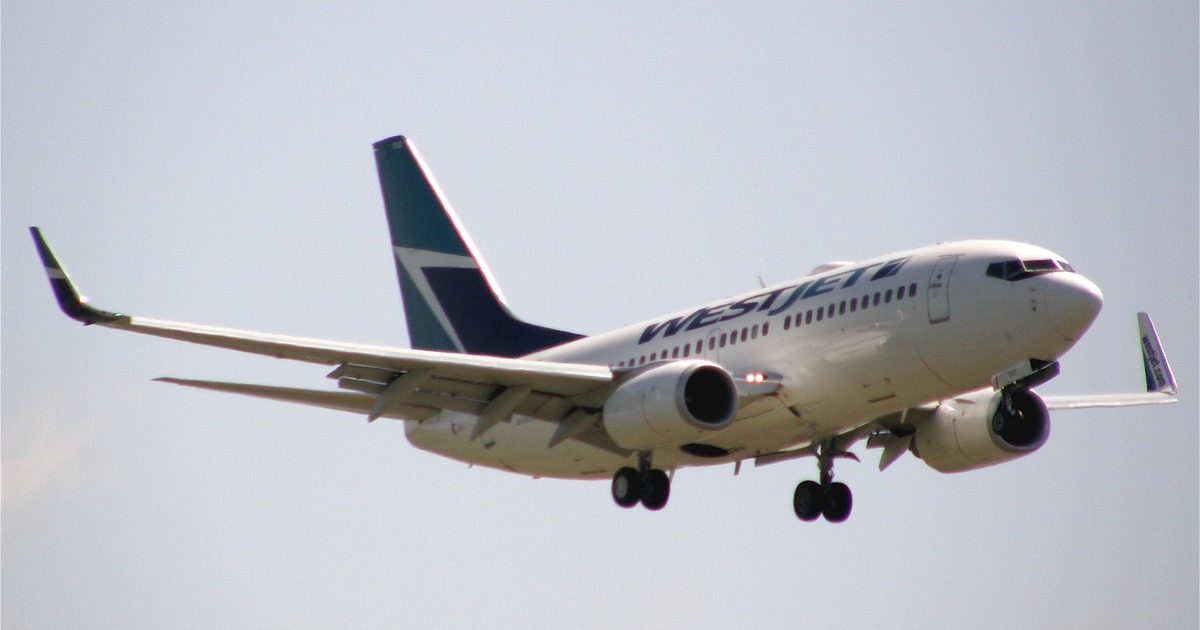
DENVER — A WestJet Boeing 737-700 aborted takeoff at Denver International Airport last week after both tires on the left main landing gear failed during the takeoff roll, scattering shredded rubber across Runway 8. Passengers deplaned onto the pavement and were bused to the terminal. No injuries were reported.
WestJet Flight WS1571, bound for Calgary, was rolling on Runway 8 at approximately 12:30 p.m. local time Thursday, June 18, when both left-main-gear tires failed before the 737-700 — registration C-FUWS — reached rotation speed. ATC audio captured by aviation monitors was unambiguous: “both tires on your left main are blown… no tire present,” meaning the aircraft came to rest on its wheel rims. People magazine and CTV News Calgary were among the first to confirm details from WestJet and the airport.
High-Speed Abort on Runway 8
The flight crew initiated a high-speed rejected takeoff at roughly 100 knots — a speed at which stopping distances grow quickly and brake heat accumulates fast. The aircraft stopped on Runway 8 without departing the paved surface. WestJet confirmed the crew declared an emergency; Denver International Airport emergency response teams arrived promptly. No fire was reported.
Passengers did not evacuate via emergency slides. After the aircraft came to rest, they deplaned onto the runway and were transported to the terminal by bus. WestJet cancelled the flight and said it was assisting affected passengers with re-accommodation.
The FOD Cascade: Debris on an Active Runway
Once the 737-700 stopped, so did Runway 8.
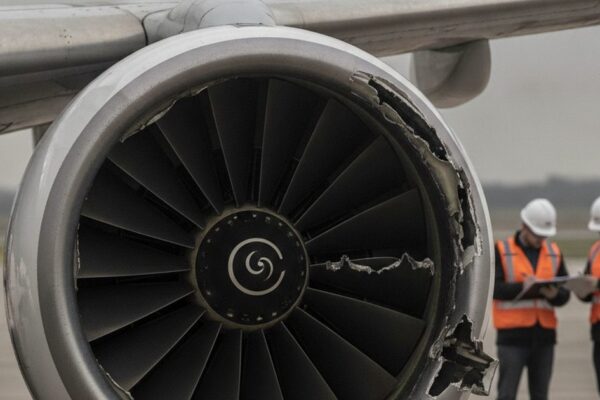
Shredded tire carcass material — rubber fragments, cord, and potentially wheel-rim debris — was distributed along the rejected-takeoff path. That material, deposited on an active runway, is precisely the foreign object debris (FOD) threat airfield safety teams are trained to address: a single equipment failure generating hazardous surface contamination in the departure and arrival corridor used by following aircraft.
Runway operations at Denver International Airport were suspended until crews completed an inspection and FOD sweep. Only after the surface was cleared could Runway 8 return to service.
The scenario echoes a pattern FODNews has tracked at airports worldwide. A Singapore Airlines 737 MAX double tire burst on landing at Kuala Lumpur in June closed Runway 14R/32L for nearly six hours — not because of structural damage, but because the debris-contaminated surface required methodical inspection before the next aircraft could roll. At Tokyo’s Haneda Airport last month, an exposed metal plate in a deteriorated runway expansion joint triggered back-to-back tire blowouts on a Skymark 737 and a JAL 767 within four days — a compounding sequence that eventually diverted traffic to Narita. In each case, the debris consequence extended well beyond the aircraft that suffered the original failure.
The WestJet event adds a takeoff-abort dimension to that pattern. In a rejected takeoff, tire material is shed at high speed and distributed over a longer stretch of pavement than in a landing incident. Fragments can be flung laterally beyond the runway edges, where they may later be ingested by jet engines or strike other aircraft taxiing or holding nearby.
Cause Not Established
WestJet has not publicly identified what caused both left-main-gear tires to fail simultaneously during the takeoff roll. Canadian aviation authorities had not announced a formal investigation as of publication. In comparable incidents, investigators examine tire service history, runway surface condition, and brake and wheel data from flight recorders to determine whether a maintenance factor, manufacturing defect, ground FOD, or a combination of conditions contributed.
A comparable case that originated at Denver International Airport in May — a United Airlines A321neo that received a blown-tire indication departing Denver and subsequently showed flap impact damage attributed to tire FOD shed over Chantilly, Virginia, on its three-hour flight to Washington Dulles — illustrated how tire events can simultaneously contaminate the originating airfield and deposit debris along a flight path miles away. WS1571’s debris, confined to Runway 8 at Denver, carried no such extended tail — but the surface hazard it created for following traffic at a major international hub was immediate.
WestJet did not respond to a request for additional comment. Denver International Airport has not released a statement on the duration of the runway closure.
Subscribe to FODNews for independent coverage of runway safety, FOD incidents, and airfield operations worldwide.