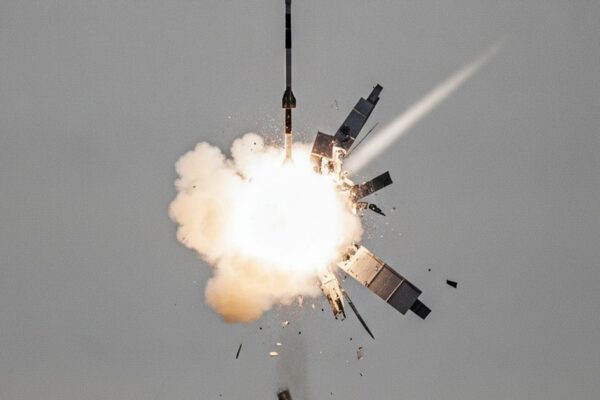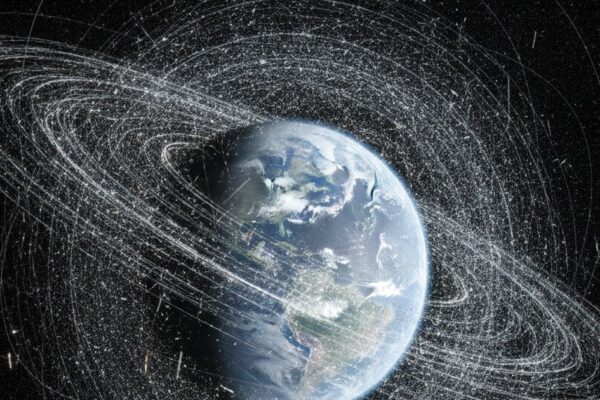
The foreign object debris problem doesn’t stop at the runway. A new partnership announced July 15 is targeting passive orbital debris removal in low Earth orbit. Hundreds of millions of untracked fragments travel there at roughly 7,000 miles per hour — fast enough to destroy a satellite on contact. Remarkably, the approach requires no propulsion at all.
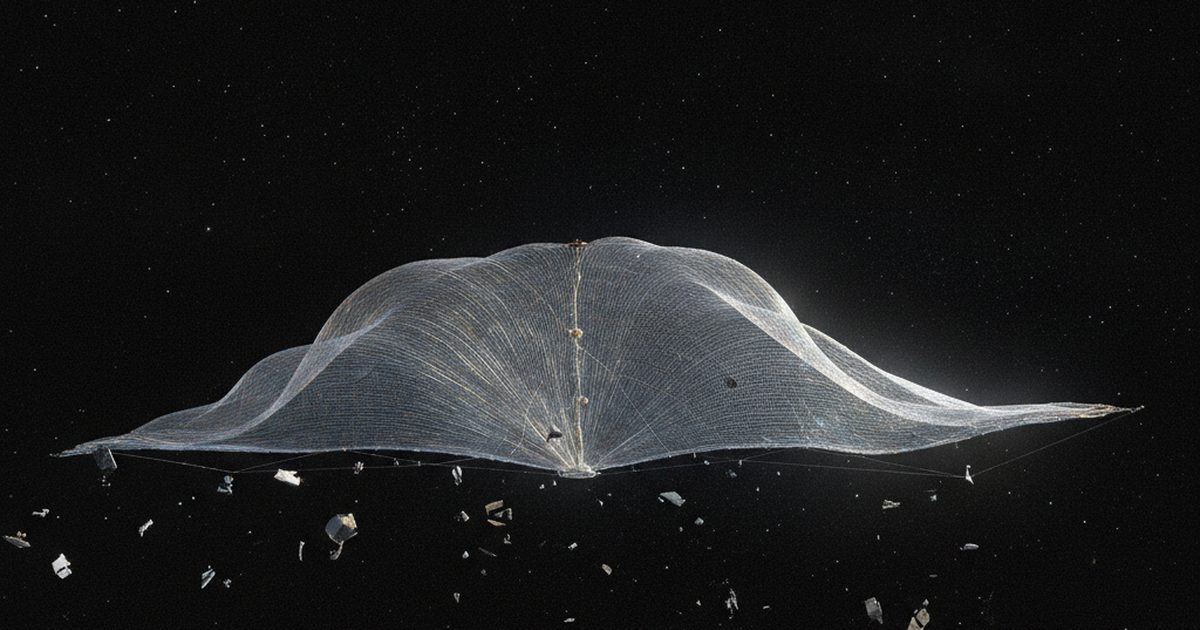
Florida startup Satellite Orbital Access and Removal (SOAR) and the University of Texas at El Paso (UTEP) unveiled a joint effort to develop the Passive Orbital Debris Removal System — PODRS. The spacecraft targets debris measuring 10 centimeters or less. It intercepts those fragments without a single thruster firing. Its rotating, multi-panel structure sweeps through a debris-dense orbital band.
A Debris Class No One Is Tracking Well
Sub-10-centimeter fragments occupy an uncomfortable middle ground. They are too small for ground-based radar and optical networks to catalog reliably. Yet they are large enough to cause catastrophic damage on impact. The European Space Agency estimates more than 140 million objects in orbit fall below that tracking threshold.
“The consequences of even small objects hitting a satellite can be catastrophic when they’re going 7,000 miles per hour or more,” said Eric Felt, retired U.S. Space Force colonel and director of UTEP’s National Security Institute. “We need to mature the technology to mitigate the impact of small debris before it becomes a crisis.”
How PODRS Works
Rather than chasing individual pieces of junk, PODRS orbits in a debris-dense region and lets fragments come to it. The spacecraft uses a rotating, multi-panel structure with layered Whipple-style shielding. That design is already deployed on the International Space Station to survive micrometeorite impacts. Onboard sensors log each strike’s frequency and momentum transfer. They simultaneously characterize the debris environment and validate the system’s removal effect.
The passive design eliminates the propulsion demands of active debris removal (ADR) missions. FODNews has previously covered active-capture concepts such as soft-robotic grippers targeting large derelicts. PODRS addresses a different problem at a fundamentally different size class.
The Team Behind the System
SOAR was founded in 2025 by Christopher Lee Jones, a retired firefighter and science-fiction author. Jones authored the novel Mars Mission I: Surviving the Kessler Effect. Through that work, he connected with astrophysicist Donald Kessler. Kessler’s 1978 prediction of cascading orbital collisions now bears his name. He serves as a SOAR advisor.
UTEP’s National Security Institute serves as lead designer for PODRS. Felt, its director, previously led the U.S. Air Force Research Laboratory’s Space Vehicles Directorate. He now serves as an aerospace and mechanical engineering professor of practice at UTEP.
Still in the Architecture Phase
The July 15 announcement was a partnership unveiling, not a hardware reveal. No launch date, funding total, or TRL milestone was disclosed. The coming months will focus on two core questions. First: which orbital bands to target. Second: how many panels and satellites would constitute a meaningful debris-reduction system.
“You’re certainly not going to clean up all of the small debris in LEO,” Felt said. “What you’re going to want to do is focus on specific orbits that are of high consequence and interest.”
On funding, Felt pointed toward the Department of Defense as the most plausible early customer. DoD’s growing dependence on LEO creates a national security imperative. The threat of debris-generating anti-satellite weapons only sharpens it. That framing aligns with broader industry momentum. Signatories of the ISOS orbital debris removal declaration at the Berlin Airshow have similarly argued that government demand must anchor the economics of debris removal.
Why Passive Removal Deserves Attention
The dominant ADR narrative centers on large objects — spent rocket stages and dead satellites. Those can be individually captured and deorbited. However, even aggressive large-object removal leaves the sub-10-centimeter population essentially untouched. A passive intercept architecture that occupies a high-risk orbital lane is one of the few approaches that could address that population at scale.
Whether PODRS delivers on that concept depends on architecture work that has not yet begun in earnest. The gap between a compelling concept and an operational LEO system is wide. Moreover, the debris removal industry has seen no shortage of ideas that didn’t survive that gap. Still, attaching Kessler’s name and Felt’s institutional credentials signals that SOAR intends to pursue this with more than a press release.
Subscribe to FODNews for continued coverage of the LEO debris landscape.