
Two commercial jets suffered tire blowouts on takeoff from the same runway at Tokyo’s Haneda Airport within four days in May 2026. Investigators found the source of the problem not on the aircraft — but in the runway itself.
The First Incident: Skymark Airlines Flight BC19
On May 25, a Skymark Airlines Boeing 737-800 (registration JA737T) departed Haneda’s Runway 05 at approximately 3:22 p.m. local time on a scheduled domestic service to Fukuoka. During the takeoff roll, one of the outer tires on the left main landing gear burst.
Flight BC19 did not immediately turn back. The aircraft, carrying 162 passengers and seven crew, continued toward Fukuoka before declaring an emergency at 5:05 p.m. and diverting back to Haneda, landing safely on Runway 34R.
MLIT confirmed the tire rupture. No injuries were reported. Tire fragments found on Runway 05 by a subsequent aircraft triggered an inspection and temporary runway closure.
The Second Incident: Japan Airlines Flight JL645
Four days later, on May 29, a Japan Airlines Boeing 767-346ER (JA615J) departed Runway 05 for Kagoshima. At 10:22 a.m. local time, a tire exploded on takeoff roll. The 767 was carrying 218 passengers and eight crew.
The crew turned back, conducting a low-pass inspection over Runway 34R before diverting to Narita International Airport, where JL645 landed safely at 11:53 a.m. The 767 came to rest on Narita’s Runway 34L with the right forward tire of the left main landing gear deflated. No injuries were reported.
Runway 34L at Narita was closed for about two hours. Back at Haneda, Runway 05 was shut after debris and surface damage were found, reopening at approximately 1:45 p.m.
The Root Cause: Infrastructure, Not Aircraft
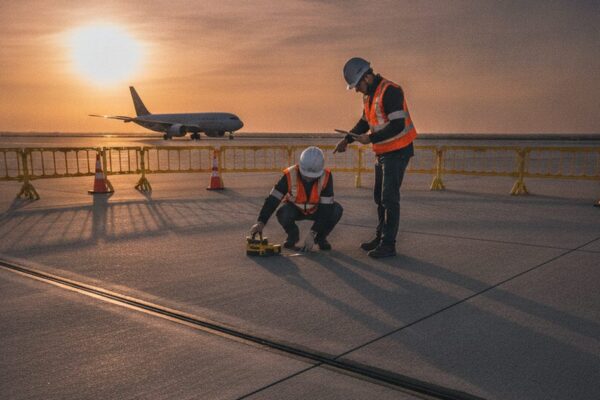
The connection between the two events became clear during post-incident inspection of Runway 05. Investigators found that rubber filler at a runway expansion joint had deteriorated and peeled away, leaving a metal plate protruding several centimeters above the surrounding pavement surface.
That raised metal edge was the foreign object. During high-speed takeoff roll, main-gear tires striking a protruding joint component face a sudden, concentrated impact load — the kind that can rupture even a properly inflated, airworthy tire.
MLIT opened an investigation to formally establish the causal link. Emergency repairs were completed and Runway 05 returned to service, but authorities indicated more extensive rehabilitation may be required.
The runway-as-FOD-source pattern is a recognized hazard. As a March 2026 incident at Reagan National demonstrated, even small pavement defects can produce high-energy debris that damages aircraft at takeoff speeds.
Haneda Runway Tire Blowouts: A Systemic Maintenance Gap
The four-day gap between incidents raises hard questions. If the joint defect was present during the Skymark burst on May 25, it remained in place — and in service — through four more days of commercial operations on Runway 05 before the JAL event forced a shutdown.
Expansion joints are a standard feature of concrete runways, allowing pavement to flex without cracking. The rubber filler material is subject to UV degradation, traffic wear, and thermal cycling. When it fails, metal hardware beneath can become exposed and elevated above the surface.
The Aviation Safety Network classified both events under ICAO category SCF-NP — System/Component Failure or Malfunction (Non-Powerplant) — the category covering landing gear and wheel failures. In this case, the failing component was the runway joint itself.
Haneda Context
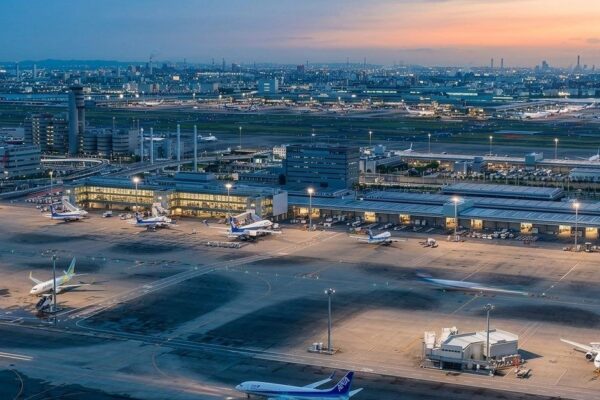
Tokyo Haneda is one of Asia’s busiest airports. Runway 05/23 runs a dense domestic schedule, and two closures within four days on the same pavement strip — even temporary ones — represent significant disruption.
Both aircraft returned safely, but tire explosions on takeoff roll can shed high-velocity fragments across the runway, threatening subsequent aircraft and triggering cascading delays. The JAL 767 low-pass before diverting to Narita added over 90 minutes to crew workload and kept Narita’s Runway 34L closed for two hours. The operational cost of deferred pavement maintenance is rarely invisible — it surfaces eventually, and sometimes dramatically.
Sources
- Aviation Safety Network — JAL Boeing 767-346ER JA615J, 29 May 2026
- Aviation Safety Network — Skymark Boeing 737-8Q8 JA737T, 25 May 2026
- AviationA2Z — Japan Airlines 767 Makes Emergency Landing After Tire Burst During Takeoff
- Japan Today / Kyodo News — Skymark jet makes emergency landing at Haneda airport
- The Traveler — Japan Airlines JL645 Returns to Haneda After Suspected Tyre Burst