A sinkhole discovered beneath the main commercial runway at Tri-Cities Airport (TRI) in Blountville, Tennessee, forced a multi-day shutdown of the airport’s primary airline operations last week, canceling nearly all flights as crews assessed and repaired the damage before the runway returned to service.
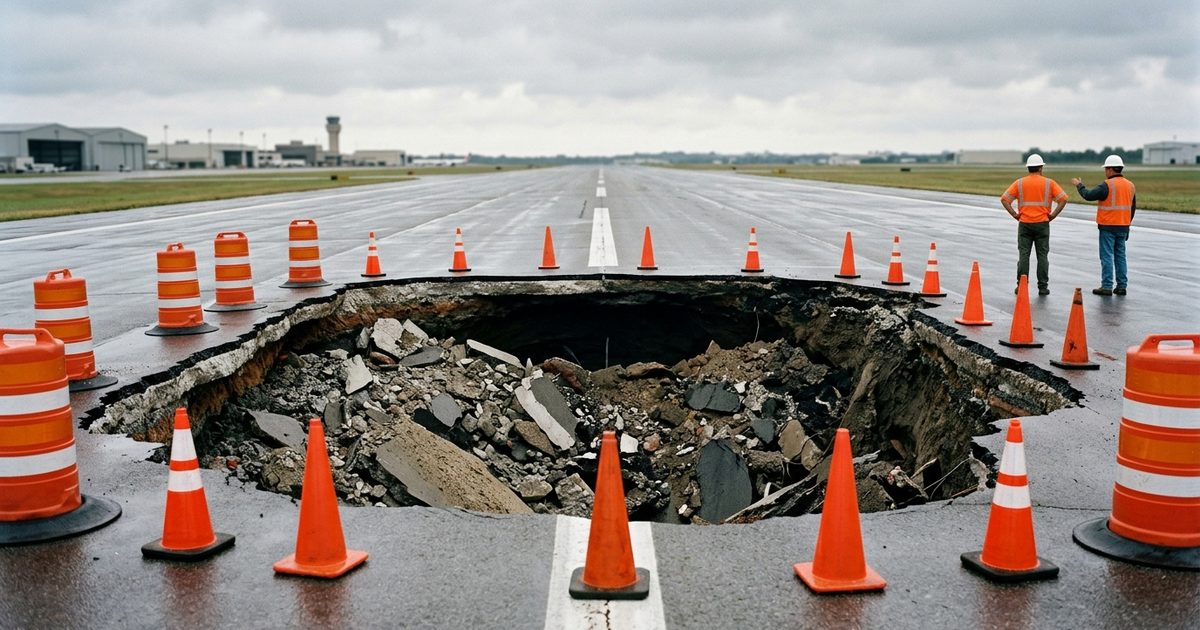
Airport officials identified the void beneath Runway 5/23 on the night of June 9, describing it initially as a “condition requiring evaluation and repair” before confirming it was a large sinkhole below the runway surface. The cavity measured roughly 20 feet wide and between 17 and 20 feet deep.
Days of cancellations
Because Runway 5/23 is the long runway that commercial airlines depend on at TRI, its closure left carriers unable to operate scheduled service. By Wednesday, June 10, nearly all arrivals and departures had been canceled.
“Airline flights will be unable to operate as normal until the runway reopens,” the airport said in a statement during the closure, adding that “decisions regarding delays or cancellations are made by the individual airlines.”
The shorter Runway 9/27 remained open, allowing some limited operations, but it could not support the commercial traffic that relies on the main strip. A Federal Aviation Administration NOTAM indicated Runway 5/23 was expected to remain closed into the early hours of Thursday, June 11, while repairs were completed and inspected.
A curing-concrete bottleneck
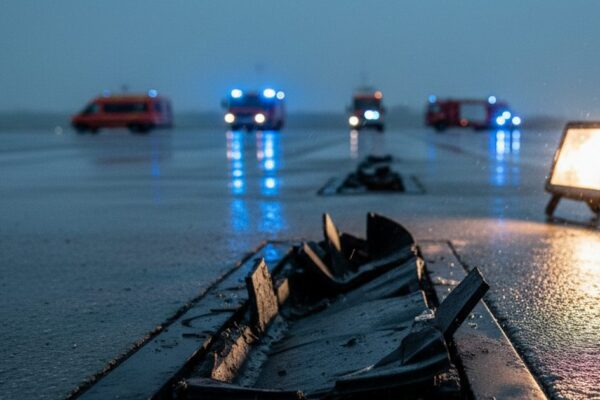
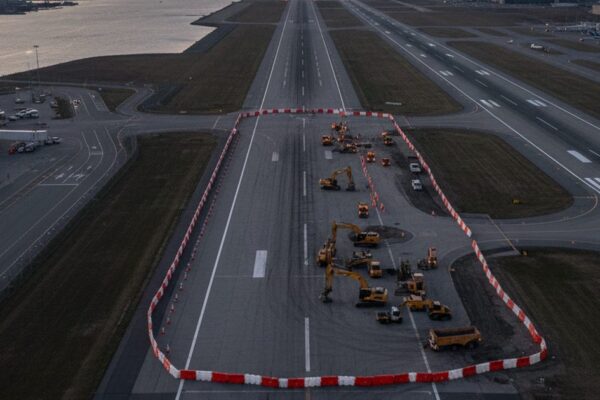
Crews poured concrete into the affected area as part of the repair, then paused work to let the material cure before further evaluation and testing could continue. The airport emphasized that Runway 5/23 would remain closed until repairs met regulatory safety standards and the surface was cleared to return to service — meaning the disruption was driven as much by curing and inspection timelines as by the excavation itself.
The main runway reopened Thursday morning, June 11, after the repair cured and the airport completed required inspections, safety evaluations, and pavement scanning. TRI has since returned to normal operations, though airlines continued to adjust individual flight schedules in the days that followed.
Subsurface failure and FOD risk
Sinkholes and subsurface voids are a recurring hazard at airports built over karst geology or aging pavement, and they carry consequences beyond the immediate operational shutdown. As pavement degrades or collapses, it can spall and shed loose concrete and aggregate — foreign object debris (FOD) that threatens aircraft tires and engines on active surfaces. A void detected before a collapse is a near-miss avoided; one that opens under load can be catastrophic.
The Tri-Cities event followed a similar scare the previous month, when a sinkhole found during a FOD inspection closed a runway at New York’s LaGuardia Airport ahead of the Memorial Day travel rush. It also landed amid a broader national push to address deteriorating airfield infrastructure: the FAA in June announced $523 million in airport infrastructure grants, a significant share of it earmarked for runway rehabilitation.
For passengers, the practical guidance during the closure was simple but frustrating: check directly with the airline. For airport operators, the episode is another reminder that what lies beneath the pavement can ground an entire airport just as effectively as anything on top of it.
Stay informed — subscribe to FODNews for daily coverage of FOD incidents and prevention worldwide.