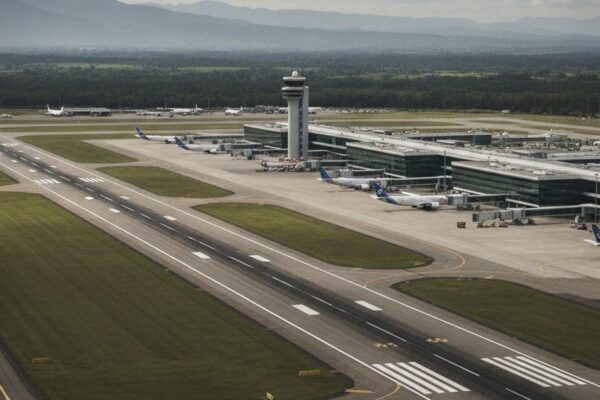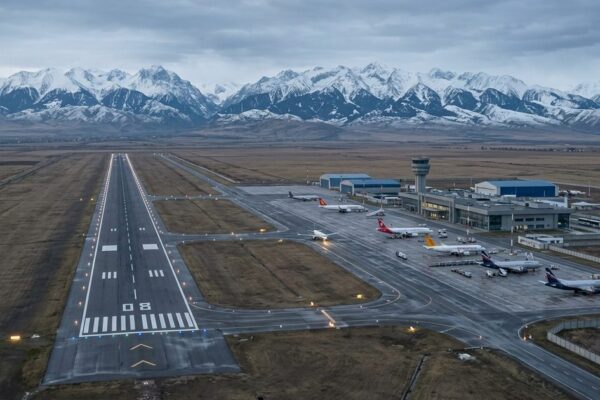
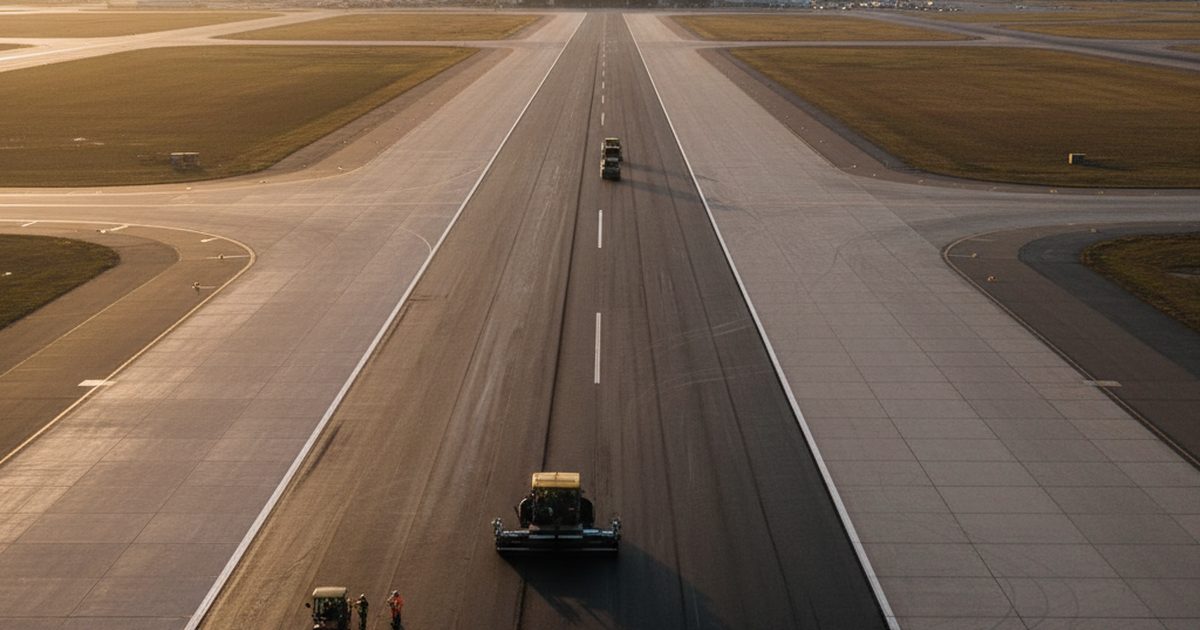
The FAA last week announced 332 airport infrastructure grants totaling more than $523 million across 43 states, directing the largest single award — $70 million — to Dallas-Fort Worth International Airport for runway rehabilitation. The funding flows through the Airport Infrastructure Grants (AIG) program, representing the fifth and final installment of $2.89 billion in fiscal year 2026 AIG funding for U.S. airports.
Top Airport Infrastructure Grants: Runway, Apron, and Terminal Work
The late-May package reaches airports at every level of the national system. Following Dallas-Fort Worth, Charlotte Douglas International Airport received $46.9 million for apron expansion and Miami International Airport received $41.9 million for terminal reconstruction and fuel farm expansion.
Other notable awards include $18.7 million to Syracuse Hancock International Airport for deicing pad reconstruction, $18.6 million to Fort Lauderdale-Hollywood International for new taxi lane construction, and $18 million to Philadelphia International for taxiway pavement reconstruction.
FAA Administrator Bryan Bedford called the pace of delivery significant. “The FAA is moving at record speed to deliver these investments to airports nationwide,” Bedford said. “These projects will improve reliability across the aviation system while helping airports meet growing demand.”
Aging Pavement and the FOD Connection
The infrastructure investment arrives as the aviation safety community is paying renewed attention to what deteriorating runway surfaces produce: debris.
Cracked apron panels, failed pavement joints, and dislodged edge lighting fixtures all generate foreign object debris (FOD) on airfield movement areas. The FAA’s Advisory Circular AC 150/5210-24A classifies runway pavement rehabilitation as a primary FOD prevention measure — ranking it alongside daily airfield inspections and dedicated debris-removal equipment.
When pavement deteriorates unchecked, loose aggregate, concrete fragments, and hardware from failed joint assemblies migrate onto active surfaces where they become impact hazards for tires, engines, and landing gear.
Haneda Puts a Face on the Risk
The late-May grant announcement came just days after a dramatic illustration of what deteriorating pavement joints can do. A runway joint failure at Tokyo Haneda Airport triggered back-to-back tire blowouts on two separate jets — one operated by Skymark Airlines, one by Japan Airlines — within a short window on the same runway. Investigators traced the events to a failed metal plate at a runway joint seam: a textbook case of deferred pavement maintenance producing a live FOD event.
The Haneda episode puts real stakes behind grant line-items that might otherwise read as routine capital spending.
DFW: Pairing Pavement Rehabilitation With Autonomous Detection
Dallas-Fort Worth’s $70 million runway rehabilitation award arrives in parallel with a separate technology initiative at the airport. DFW has been running a pilot program for autonomous FOD-detection and removal robots designed to continuously sweep airfield surfaces between scheduled inspection cycles.
The two programs target opposite ends of the same problem: rehabilitation eliminates the pavement degradation that generates debris, while autonomous detection provides a continuous safety net against whatever does reach the movement area. Together they represent the layered approach that FOD-prevention frameworks call for.
Program Background
Congress established the AIG program under the Infrastructure Investment and Jobs Act, signed in 2021, authorizing $14.5 billion over five years beginning in fiscal year 2022. Eligible uses span runway and taxiway rehabilitation, apron improvements, terminal upgrades, sustainability projects, and other safety-related airfield investments.
With the FY2026 tranche now distributed, the program has deployed its full five-year authorization.
Stay current on airfield safety and FOD prevention — subscribe to the FODNews newsletter.