An automated space situational awareness system flagged what looked like an extreme-risk satellite servicing conjunction over geostationary orbit on June 15, 2026 — but the two spacecraft at the center of the alert have been physically latched together for more than five years.
Independent SSA monitor Orbital Radar reported a predicted minimum separation of approximately 0.00 km between INTELSAT 1002 (NORAD ID 28358) and MEV-2 (NORAD ID 46113) at 10:17 UTC on June 15. Under standard conjunction screening protocols, zero separation is classified as an extreme-risk event. No collision occurred. No collision was ever going to occur.
MEV-2 docked with Intelsat 10-02 on April 12, 2021. The two spacecraft have been flying as a single mated stack in the active geostationary belt ever since.
What MEV-2 Actually Does — and Why It’s Still Two Catalog Objects
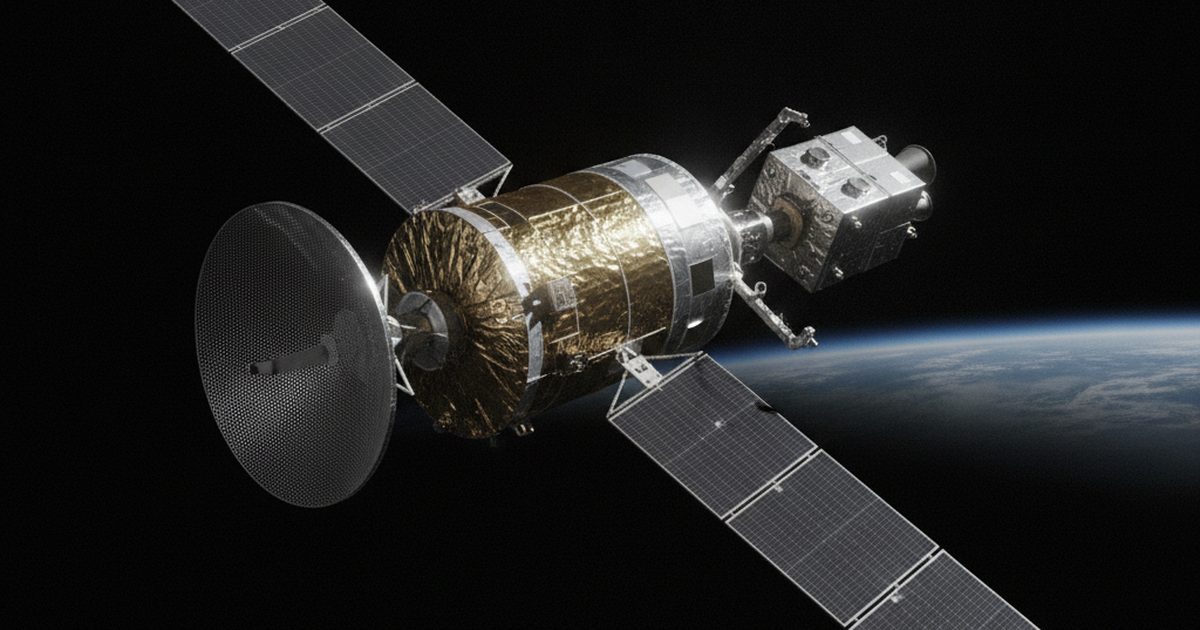
SpaceLogistics LLC, a Northrop Grumman subsidiary, operates MEV-2. The vehicle rendezvouses with aging geostationary satellites running low on station-keeping fuel and docks to the satellite’s apogee motor interface. It then serves as a replacement propulsion and attitude-control module — effectively an external engine and fuel tank that can extend an otherwise end-of-life asset by years of additional service.
When MEV-2 completed its docking with Intelsat 10-02 directly in the active GEO belt on April 12, 2021, it marked the first time a commercial life-extension vehicle had docked with an actively operating commercial satellite in geostationary orbit without interrupting service. An earlier mission, MEV-1, had proved the concept with a different Intelsat satellite but conducted the initial docking in the safer GEO graveyard belt above the operational arc.
Originally contracted for five years of service, Intelsat and Northrop Grumman renewed the agreement in 2025, extending the MEV-2 mission by an additional four years. The mated stack is expected to remain docked well into the next decade.
Despite being a single physical object, the pair retains two separate entries in the North American Aerospace Defense Command (NORAD) space object catalog. This is by design: catalog rules require continuity for each launched body, and MEV-2 is built to serve multiple clients sequentially — it will eventually undock from Intelsat 10-02 and rendezvous with another satellite. Retiring or merging catalog IDs prematurely would complicate tracking accountability and future mission planning.
Satellite Servicing Conjunctions and the SSA Screening Gap
The practical consequence of maintaining two catalog entries for one physical object is straightforward: automated conjunction screening tools that do not account for docked servicing pairs will generate collision warnings for them indefinitely. Every future screening pass that compares NORAD 28358 and NORAD 46113 will return a zero-kilometer miss distance. Every one of those results is a false alarm in terms of actual collision risk — but each is technically correct under the rules the screening software applies.
The June 15 alert from Orbital Radar is an illustration of that gap, not an error by the monitoring platform. The underlying data is accurate. The interpretation requires context that automated systems are not yet universally equipped to apply.
As satellite servicing expands — and multiple companies are now developing second-generation autonomous servicing vehicles capable of inspecting, refueling, and repositioning satellites across GEO and low Earth orbit — the catalog will accumulate more mated pairs. Each one will present the same screening problem unless SSA tools evolve to flag known docked configurations as internal-to-stack and route them out of standard conjunction pipelines.
That evolution is underway but uneven. ESA’s Space Debris Office and several commercial SSA operators have begun developing protocols for annotating servicing relationships in catalog databases, but no binding international standard exists yet. Operators currently rely on direct coordination between satellite owners and servicers to suppress self-conjunction false alarms on their own systems.
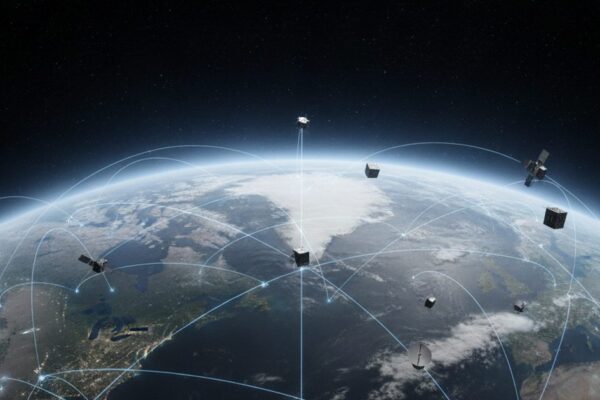
The broader congestion picture makes the gap harder to dismiss. As of late June 2026, there are 17,929 active satellites in orbit and 8,614 tracked debris objects. The volume of conjunction alerts globally is already straining operator attention: UK satellite operators alone received 1,847 conjunction alerts in March 2026. Flooding that already-stretched pipeline with avoidable false positives from mated servicing pairs compounds a problem the industry is still learning to manage.
There is a deeper irony in the MEV-2 case. The spacecraft exists specifically to prevent satellites from running out of fuel and becoming uncontrolled debris. Its presence on Intelsat 10-02 means the mated stack can maneuver to avoid genuine conjunction threats — unlike the derelict satellites that make up a growing fraction of the objects in GEO. And yet, because SSA systems see two catalog entries where one physical object now exists, the vehicle designed to reduce debris risk is itself a recurring source of automated collision warnings.
The June 15 Orbital Radar alert will not be the last time a servicing vehicle is flagged for a conjunction with its own client. How SSA operators handle that reality — whether through catalog annotation, operator-coordination protocols, or updated screening logic — will matter more as the servicing sector grows.
France’s recent activation of its sovereign space debris radar data service for CNES, aimed at reducing dependence on U.S. tracking data, reflects the broader push to build independent, higher-fidelity SSA capability. Whether those new data streams will carry servicing-relationship metadata from the start remains an open question.
Northrop Grumman, SpaceLogistics, and Intelsat have issued no official statements regarding the June 15 conjunction alert.
Subscribe to FODNews for ongoing coverage of space debris, orbital congestion, and the evolving challenge of operating in an increasingly crowded GEO belt.