New Peer-Reviewed Study Puts CRASH Clock LEO Collision Risk at 2.5 Days
A peer-reviewed study published July 12, 2026, in Acta Astronautica has quantified the CRASH Clock LEO collision risk interval at 2.5 days as of May 2026 — a measurable tightening from the 2.8-day figure reported in April and a dramatic compression from 164 days just eight years ago.
The CRASH Clock — short for Collision Realization And Significant Harm Clock — estimates how quickly a major satellite collision would occur in LEO if all spacecraft lost the ability to maneuver. A shorter interval signals greater systemic fragility.
The clock has now ticked down to 2.5 days, meaning the entire LEO ecosystem is operating with a razor-thin margin of error.
What the New Research Found
The paper, published in Acta Astronautica (DOI: 10.1016/j.actaastro.2026.06.023), tracks how the CRASH Clock has evolved since megaconstellations began launching in earnest. The trajectory is steep.
Reference values from the study’s underlying dataset tell the story: the CRASH Clock stood at 164 days in January 2018. By January 2021, it had fallen to 62 days. By January 2023, it was 11 days. As of May 4, 2026 — the latest data point — it sat at 2.5 days.
The authors caution that collision timing can vary widely: a crash could occur within hours of a control outage or take days or weeks. The 2.5-day figure represents the expected value, not a hard deadline. Their direct simulations align with probabilistic calculations.
Why the Margin Is Shrinking
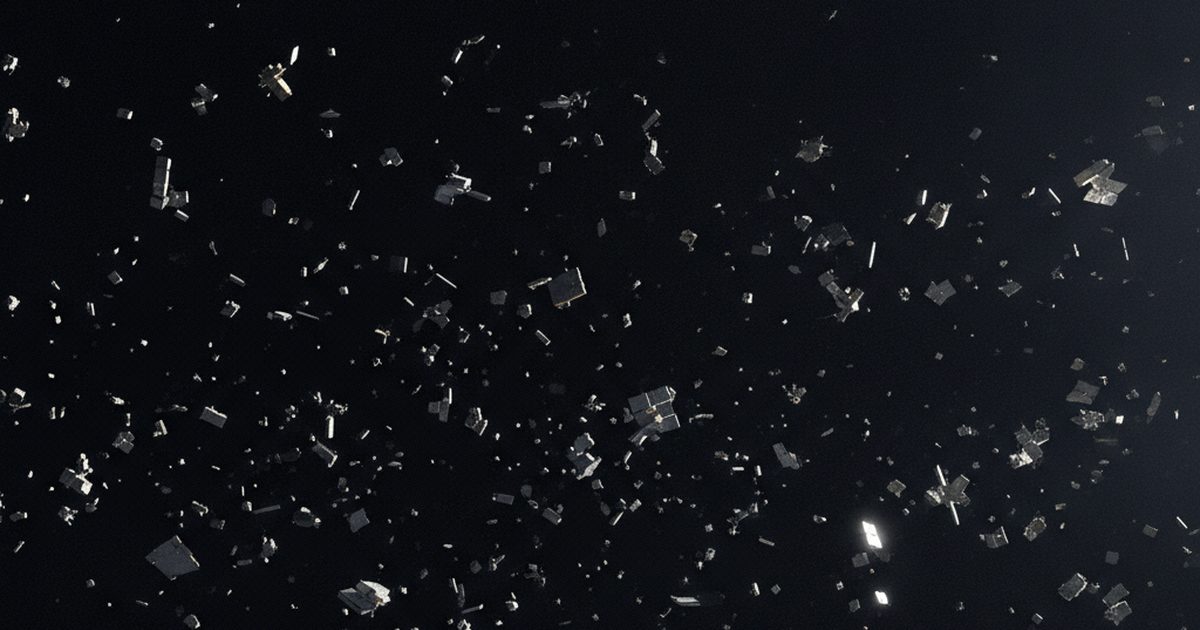
The primary driver is density. More than 10,000 SpaceX Starlink satellites now occupy LEO, concentrated near 550 kilometers altitude. A 2025 ESA Space Environment Report estimated more than 1 million pieces of potentially lethal debris smaller than 10 centimeters orbit Earth — too small to track but large enough to destroy a satellite on impact.
Starlink satellites alone executed roughly 300,000 collision-avoidance maneuvers in 2025 — about one every two minutes. The rate is growing as more satellites enter orbit.
A recent analysis by space debris researchers Hugh Lewis and Donald Kessler found that the dense band near 550 kilometers is already above the collisional runaway threshold. A collision there could generate debris that triggers further collisions — the hallmark of Kessler Syndrome onset.
Breakup Events Adding to the Pressure
A series of upper-stage fragmentation events has accelerated debris accumulation in recent years. The August 2024 breakup of a Long March 6A upper stage deposited as many as 900 trackable fragments at roughly 810 kilometers — an altitude with minimal atmospheric drag, where debris can persist for decades. The Zhuque-2E upper-stage fragmentation later that year added approximately 100 to 150 tracked pieces near 335 to 425 kilometers, overlapping heavily with Starlink and ISS orbital corridors.
In March 2026, a Starlink satellite (34343) fragmented, sending dozens of new pieces into expanding debris rings that other operators had to avoid within minutes of the event.
The Clock Is Not a Kessler Countdown — but Context Matters
The study’s authors are careful about framing. The CRASH Clock is not a countdown to Kessler Syndrome — the self-sustaining cascade of collisions that could render certain orbits permanently unusable. Most models suggest that outcome would unfold over decades.
What the CRASH Clock measures is something more immediate: the reaction time available to recover from a widespread disruption to satellite control. A severe solar storm, a large-scale cyberattack or a cascading software failure could simultaneously disable thousands of satellites’ avoidance systems.
“The CRASH Clock shows how dependent we are on collision avoidance systems continuing to work perfectly, every moment of every day, indefinitely,” the authors write.
Operators are currently launching approximately 100 satellites per week. As the fleet grows, the clock continues to compress.
What Comes Next
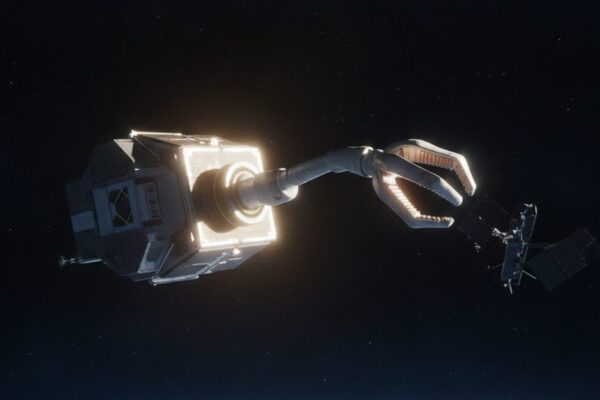
The study arrives as policymakers and operators face growing pressure to act on orbital sustainability. Active debris removal, mandatory passivation of upper stages and binding post-mission disposal requirements are all under discussion at international forums.
A 2026 Frontiers in Space Technologies analysis found that removing roughly 60 large objects from LEO per year could tip the debris growth rate from positive to negative. No current removal program is on pace to meet that threshold.
For now, the entire architecture of global communications, navigation and Earth observation depends on a system with a 2.5-day margin for error.
Sources
- Acta Astronautica — CRASH Clock peer-reviewed study (July 12, 2026)
- Outer Space Institute — CRASH Clock project page
- Phys.org / The Conversation — “A new CRASH clock measures the chance of satellite collisions, and it’s ticking down fast” (July 2026)
- ESA Space Environment Report 2025
- arXiv preprint — “An Orbital House of Cards: Frequent Megaconstellation Close Conjunctions” (2512.09643)
- Frontiers in Space Technologies — Active debris removal threshold study (2026)
- Lewis & Kessler — Collisional runaway threshold analysis (ESA SDC9)