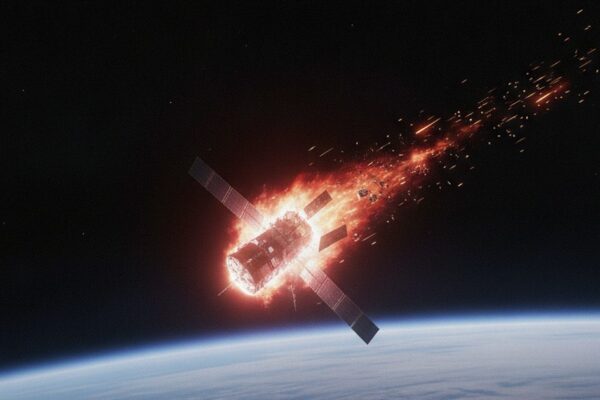
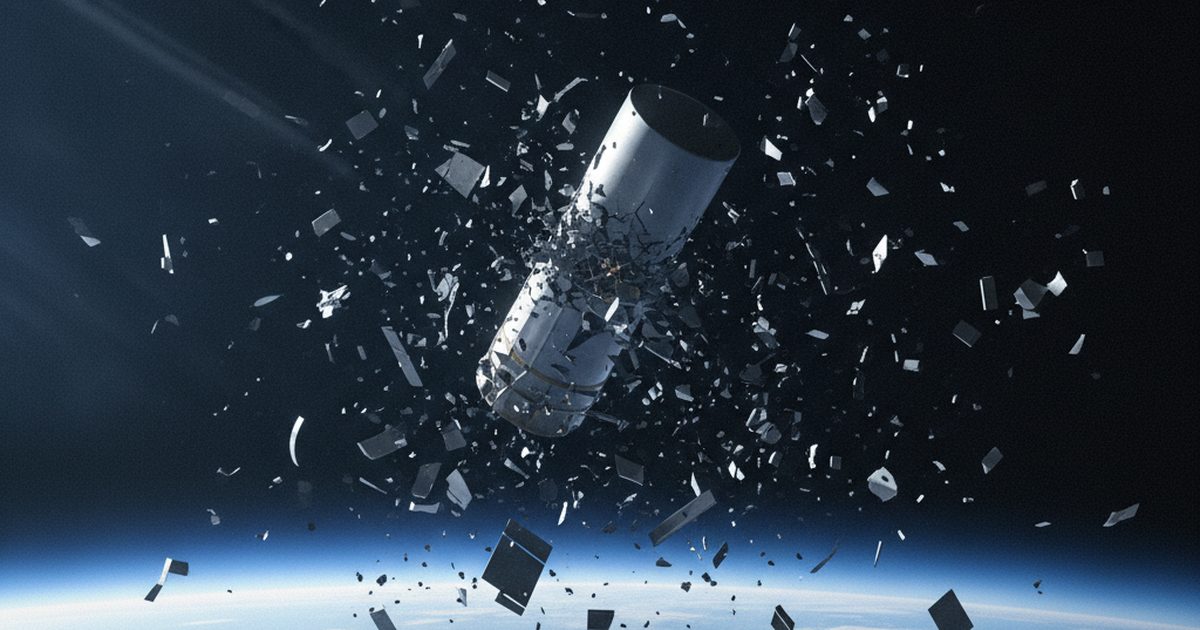
A Chinese Long March 6A rocket upper stage broke apart in low Earth orbit on July 4, 2026, following the successful deployment of 18 satellites for China’s Qianfan — or “Thousand Sails” — broadband mega-constellation. U.S. Space Command confirmed tracking more than 300 Long March 6A debris objects from the breakup, the latest in a documented pattern of upper-stage fragmentation events tied to this rocket family.
What Happened
The Long March 6A lifted off from the Taiyuan Satellite Launch Center carrying 18 Qianfan satellites, designated the G60 Polar Group 13 mission. The rocket placed its payload into polar orbit as part of China’s ambition to build a LEO broadband constellation — separate from and unrelated to SpaceX’s Starlink — that could eventually reach 15,000 satellites operated by Shanghai Spacecom Satellite Technology.
After separating from the payload, the upper stage broke apart, generating a rapidly expanding cloud of debris. Payload Space reported that U.S. Space Command identified more than 300 trackable pieces — a figure that is likely conservative, as tracking catalogs from prior Long March 6A breakups continued to grow for months after initial detection.
Commercial space situational awareness firm Slingshot Aerospace spotted bright, unexpected objects moving along the same trajectory as the rocket body in the hours following launch.
The Long March 6A debris is concentrated in the 800- to 900-kilometer altitude band — a densely occupied orbital regime where aerodynamic drag is minimal and objects can remain in orbit for decades or longer. Long-lived debris at this altitude poses persistent collision risk to operational satellites, including those in other broadband constellations and scientific spacecraft.
A Documented Problem With This Rocket Stage
The July 4 breakup is not an isolated incident. Long March 6A upper stages have now fragmented multiple times since the rocket entered service.
A November 2022 Long March 6A launch left behind 533 or more detectable pieces of debris, according to NASA‘s Orbital Debris Program Office, along with hundreds of thousands of millimeter-scale fragments too small to track individually — a separate, prior event. Further fragmentations followed launches in 2024. Analysis by LeoLabs, a commercial radar tracking company, found that a 2024 Long March 6A debris cloud near 830 km altitude elevated local collision probability by roughly 9 percent at the cloud’s center — a meaningful increase in a region already crowded with active satellites.
The root cause of the recurring breakups remains uncertain. Analysts have pointed to possible passivation failures — a standard end-of-life procedure in which residual propellants and pressurants are vented to reduce explosion risk — or to insulation issues on the upper stage. China has not publicly disclosed findings from any investigation.
Long-Term Risk in a Crowded Orbit
The European Space Agency estimates more than 22,000 objects are currently cataloged in Earth orbit, with the true population of centimeter-scale and smaller debris orders of magnitude higher. The 800- to 900-kilometer band is among the most heavily trafficked regions, hosting commercial constellations, Earth observation platforms, and research spacecraft from dozens of countries and operators.
At that altitude, orbital decay is slow. Without active deorbit, new debris added to this shell can remain a conjunction hazard for 50 to 100 years or more, depending on solar activity levels. Each additional fragmentation event raises the statistical floor for collision risk across the entire region — not just for satellites in the immediate vicinity of the debris cloud.
The risk is compounded by the scale of the Qianfan program. If future Long March 6A launches continue to generate comparable debris clouds, the cumulative effect on the 800-to-900-km environment could become severe. As Audrey Schaffer, Slingshot Aerospace’s vice president of strategy and policy, put it: “If even a fraction of the launches required to field this Chinese mega-constellation generate as much debris as this first launch, the result would be an untenable addition to the space debris population in LEO.”
U.S. Space Command Response and Ongoing Monitoring
U.S. Space Command said it sees no immediate threats to other spacecraft at this time but is conducting routine conjunction assessments as the debris cloud disperses and its precise orbital parameters are refined. The agency publishes close-approach notifications to satellite operators through Space-Track, a public catalog service maintained by the 18th Space Defense Squadron.
The July 4 event follows a pattern that space safety advocates say demands stronger international action. China’s Zhuque-2E rocket produced a similar upper-stage breakup that generated debris threatening Starlink satellites and requiring collision avoidance maneuvers near the International Space Station. LEO collision risk has grown steadily as the number of operational satellites accelerates and the debris population accumulates.
Existing international debris mitigation guidelines, including those from the Inter-Agency Space Debris Coordination Committee, call for deorbiting rocket upper stages within 25 years of mission completion and for passivation at end of life. The Long March 6A record suggests those guidelines are either not being followed or are proving insufficient for this rocket’s upper-stage design.