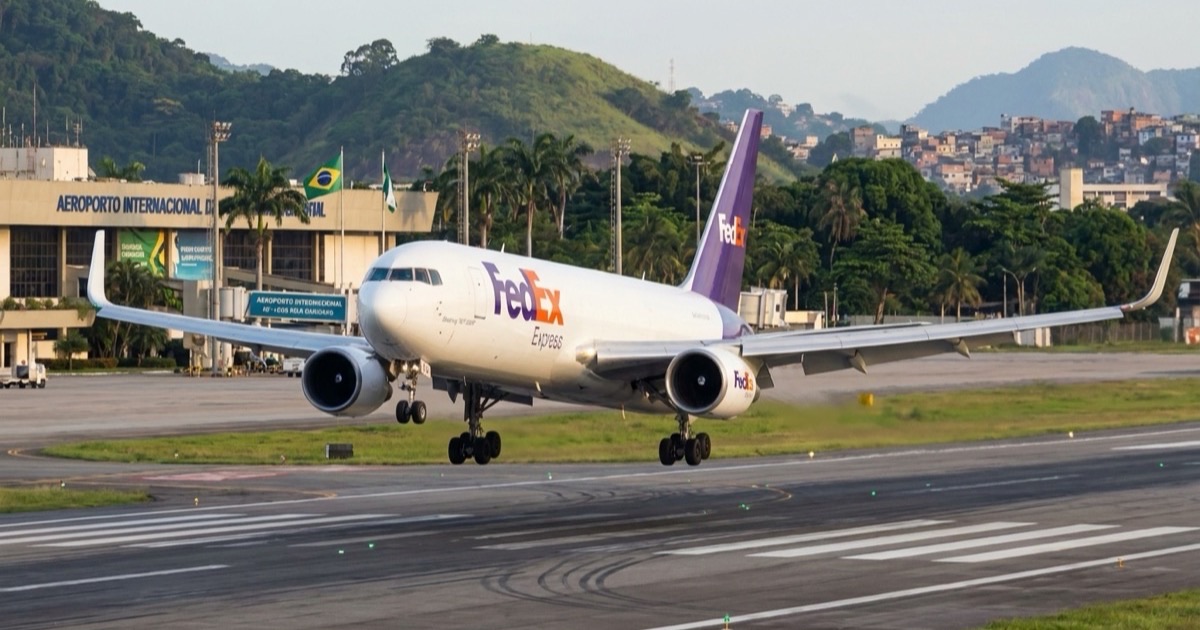
A FedEx 767 bird strike forced a cargo jet into a two-hour holding pattern over the Brazilian countryside Thursday. The pilot had radioed the tower moments after takeoff, reporting an abnormal engine indication.
FedEx flight FDX41, a Boeing 767-300F freighter, departed Viracopos International Airport in Campinas at 4:03 p.m. local time Sept. 24. It was bound for Memphis, Tennessee. The aircraft struck one or more birds shortly after liftoff.
Cockpit-to-tower audio published by Brazilian outlet G1/Globo captures the exchange. The pilot told Viracopos air traffic control the plane had hit a bird and was showing an abnormal engine reading. Rather than continue toward Memphis, the crew turned back.
Two Hours Circling to Burn Fuel
The 767 spent roughly two hours maneuvering over the Holambra and Jaguariuna area east of Campinas, flight-tracking data showed. The holding pattern let the crew burn down fuel and reduce the aircraft’s weight before attempting a return landing.
The freighter landed safely back at Viracopos at 5:57 p.m., about two hours after it had first departed. Still, no injuries were reported. Meanwhile, airport operator Aeroportos Brasil Viracopos said all emergency protocols were activated as a precaution. The operator confirmed the occurrence was formally logged at 5:32 p.m.
FedEx Confirms the Bird Strike, Assesses Damage
FedEx confirmed the cause directly. “FedEx confirms that flight FDX41 returned to Viracopos International Airport after a bird strike collision,” the company said in a statement. “The aircraft landed safely and there was no incident during the return.”
The carrier said it is assessing damage and working to minimize any delivery-schedule impact from the diverted cargo run. However, FedEx did not specify which engine was affected or detail the extent of the damage.
FedEx 767 Bird Strike Fits a Recurring Pattern for Cargo Freighters
Bird strikes on takeoff remain one of the most common causes of engine damage tracked in the FAA’s National Wildlife Strike Database. Yet cargo freighters are not immune. They simply carry no passengers to notice. A DHL cargo 737 caught fire on landing at LAX after blowing four tires earlier this year. That incident showed how fast a routine freight run can turn into an emergency.
The FedEx incident also echoes a string of bird-strike engine failures this year. Among them: a Volaris A321neo whose engine burst into flames after a bird strike, forcing an emergency return to Las Vegas. In both cases, crews caught the failure early and turned back rather than pressing on.
The FDX41 crew’s decision to hold and burn fuel, instead of landing immediately at a heavier weight, is standard procedure. It follows an engine-affecting bird strike. The extra time also gives maintenance crews a fuller picture once the jet is back on the ground.
Subscribe to FODNews for continuing coverage of FOD incidents and prevention worldwide.