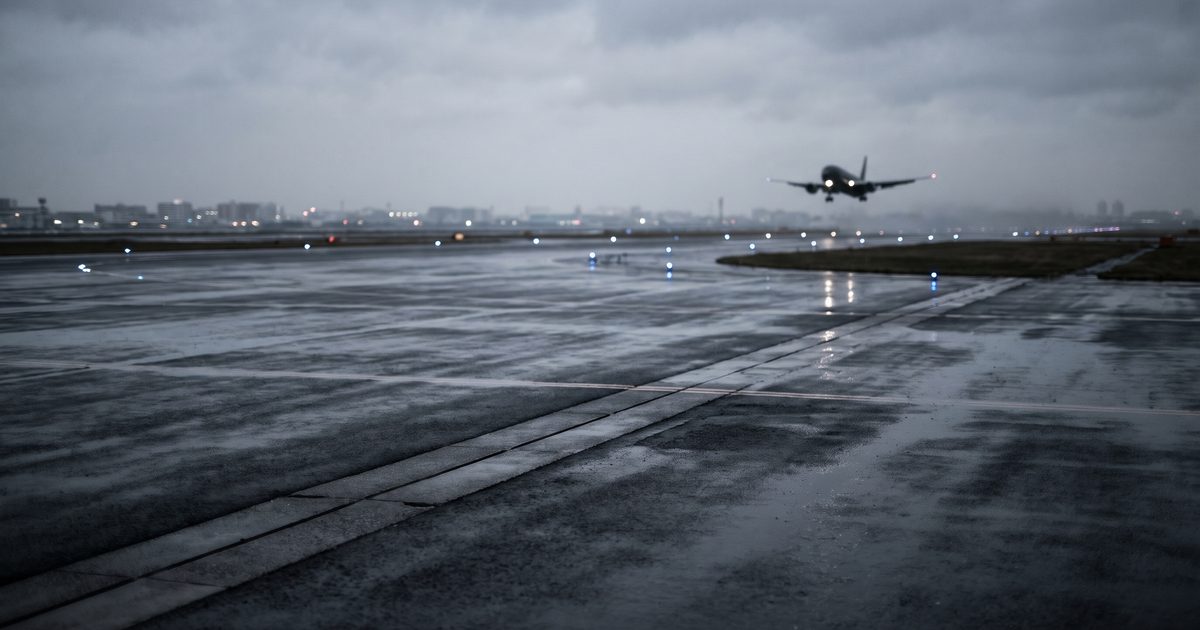
TOKYO — Two airliners lifted off Haneda Airport’s D Runway in late May and came back with damaged tires. Japan’s Ministry of Land, Infrastructure, Transport and Tourism found damage in a rubber pavement joint that same week, with its metal pushed upward. On Nov. 6, a ministry expert committee said it still cannot link that metal to the Haneda runway tire burst cases. It wants the joints replaced anyway.
The first flight was Skymark Flight SKY19, a Boeing 737-800. Its tire burst after takeoff from the D Runway on May 25, and the jet turned back to Haneda. Four days later, Japan Airlines Flight JAL645, a Boeing 767, suffered tire damage and diverted to Narita.
No one was hurt, according to the ministry’s overview. Still, a metal edge standing out of the pavement is the kind of hazard a tire meets at full takeoff speed, and the runway serves one of the world’s busiest airports.
What the Nov. 6 committee concluded
The committee could not establish a causal link between the raised joint metal and the May tire bursts, Sankei Shimbun reported. The damage to the tires was consistent with a cut from a sharp object. However, the panel could not say what that object was or when the damage happened.
That gap did not change the panel’s view on repairs. Members said the parts still need to be replaced and steps taken to prevent a repeat. A final report is due later in November, and the ministry has posted the committee’s meeting materials online.
Damage turned up in the rubber joint on May 29, the same day as the JAL diversion. Media reports put the rise in the metal at up to about 8 centimeters.
Why a Haneda runway tire burst is a pavement FOD problem
Most foreign object debris arrives from somewhere else: a dropped tool, a loose panel, a scrap blown onto the field. In this case, the suspect was part of the runway itself.
According to Sankei, the committee believes sunlight and heat wore down the joint’s surface rubber while corrosion worked on it from inside. Over time, tire friction then broke the weakened joint apart. Nobody dropped the hazard. It slowly built up out of the pavement.
The D Runway also has an unusual design. It sits on a pier structure, and no other runway in Japan uses these joints that way. As a result, other Japanese airports offer little experience to borrow from. Earlier coverage looked at the planned overhaul of the D Runway expansion joints after the May incidents.
Resin joint replacements and tougher checks
The fix starts with the joints themselves. The rubber joints will be replaced with a resin repair material and sealed, according to broadcast coverage of the ministry’s briefing.
Inspections are getting stricter as well. Crews will add hands-on checks, touching the joints and tapping them with hammers to find weak spots that a visual sweep could miss. Officials are also considering AI-assisted inspections.
Work will run overnight, from 11:30 p.m. to 5:30 a.m., starting next month. That schedule keeps the runway open for daytime traffic.
For airport operators, the lesson reaches past Haneda. The cause of the May bursts may never be proved. Even so, investigators found a joint that weather and wear had weakened until tires could tear it open. In the end, routine pavement checks are part of debris prevention too.
Subscribe to FODNews for continuing coverage of FOD incidents and prevention worldwide.