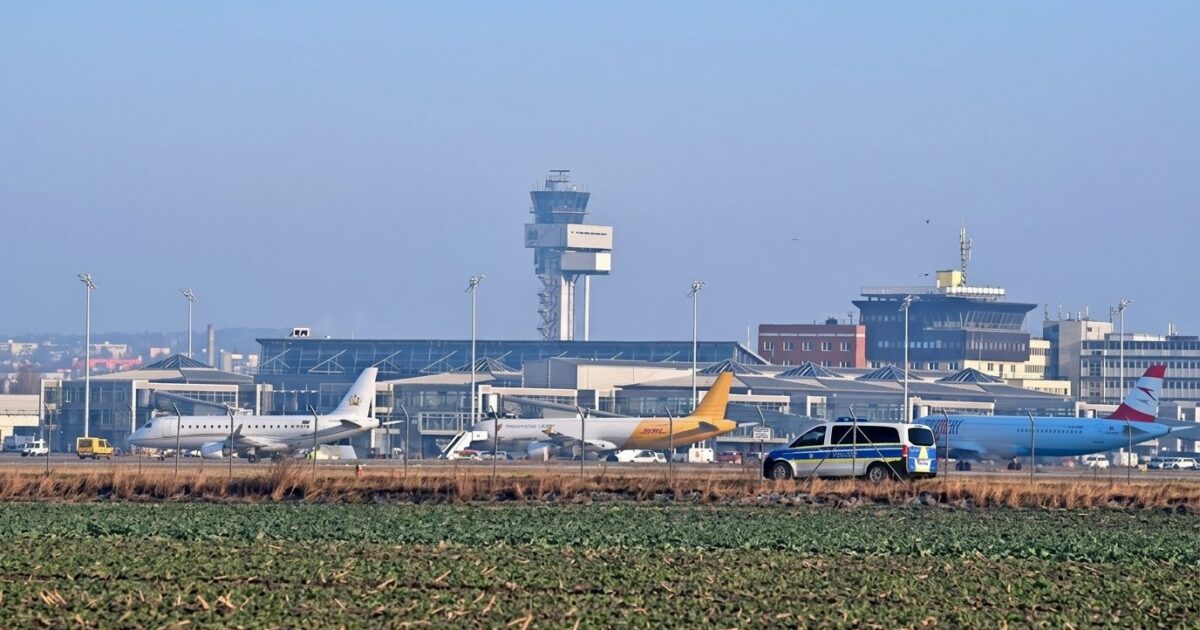
LEIPZIG, Germany — A bomb-disposal robot defused an explosive drone found near a Ukrainian freighter on the tarmac at Leipzig/Halle Airport (LEJ) overnight. Separately, a DHL-operated cargo aircraft struck an unidentified airborne object on approach and diverted with nose-section damage. The double Leipzig airport drone strike and tarmac bomb find grounded traffic at one of Europe’s busiest cargo hubs and triggered a federal counterterrorism investigation.
The events unfolded between approximately 23:40 local time on Aug. 4 and the early hours of Aug. 5, 2026, prompting German federal authorities to open a counterterrorism investigation.
The Leipzig Airport Drone Strike: A Freighter Hit Mid-Approach
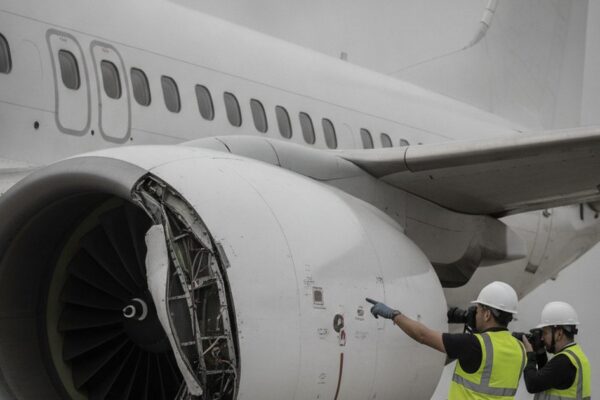
The aviation-safety dimension of the Leipzig airport drone strike emerged on approach to LEJ. A cargo aircraft collided with an unknown object roughly six kilometers out, at approximately 400 meters altitude. The aircraft — an Airbus A300 freighter on flight BCS7JG from Madrid — sustained minor nose damage and diverted safely to Hanover Airport. No injuries were reported.
Flightradar24 tracking data reviewed by Aerotime suggests the aircraft was EAT Leipzig A300, registration D-AZML. German authorities had not officially confirmed the tail number as of early Aug. 5.
The incident highlights a growing concern in aviation safety: rogue or weaponized drones near major airports create a direct FOD hazard to aircraft on approach. A runway debris strike occurs at low speed on the ground. An airborne collision at 400 meters, however, subjects the airframe to far greater closing-speed forces. Nose damage at that altitude is consistent with a rigid drone body rather than a bird or balloon.
The Ground Find: Explosive Device Near an An-124 Freighter
Airport security workers also discovered a suspicious object on the southern runway apron. The object lay near a parked Ukrainian Antonov Airlines An-124-100 freighter painted with the caption “Be Brave Like Kherson.”
Federal police (Bundespolizei) deployed a bomb-disposal robot. X-ray imaging confirmed a four-rotor consumer drone modified to carry an improvised explosive. Der Spiegel described it as a nitrate-based incendiary device reportedly producible from fertilizer and gasoline. The detonator was defective and had failed to fire. The robot removed the detonator and neutralized the device. A NATO spokesperson confirmed the drone had been positioned near the Antonov aircraft.
An unidentified flying object had been sighted near the airport shortly before midnight, prompting diversions for several aircraft. Marabu Airlines flight DI6777, an A320neo arriving from Palma de Mallorca, was among those redirected to Nuremberg.
Operational Impact and Investigation
The southern runway remained closed through the remainder of the night. Flights resumed on the northern runway at approximately 01:55 local time on Aug. 5, according to reporting by Reuters.
Leipzig/Halle is DHL’s primary European hub and an Antonov Airlines base for heavy-lift cargo operations. Overnight disruption at LEJ carries significant ripple effects for European freight networks.
German prosecutors from the ZESA extremism unit and Saxony’s counter-terror division opened an investigation. Lower Saxony classified the incident as a state-security offense. Sabotage has not been ruled out. DHL CEO Tobias Meyer said the company was studying the event. German media have linked recent drone incursions near European airports and military infrastructure to suspected Russian hybrid-warfare activity. No attribution to any state actor has been confirmed.
Drones as an Emerging FOD Vector
The Leipzig incident is not the first such encounter near a major airport. A JetBlue A320 strike near JFK documented last month demonstrated that even unintentional drone contacts produce measurable airframe damage. If the object that struck the A300 was deliberately deployed alongside the tarmac device, it represents a scenario where an improvised aerial weapon struck a commercial freighter in controlled airspace.
Counter-drone detection in the final approach corridor — where aircraft are low and slow — remains an area where aerodrome FOD management frameworks offer limited guidance. The investigation remains active. Authorities have made no arrests and confirmed no attribution as of publication time.
Stay informed — subscribe to FODNews for daily coverage of FOD incidents and prevention worldwide.
Sources
- BBC News — “Germany terror probe after explosive drone found at Leipzig airport” (Aug. 5, 2026)
- Reuters via TimesLIVE — “Germany opens terrorism probe after explosive drone found at airport” (Aug. 5, 2026)
- Aerotime — “Leipzig/Halle Airport: explosive drone found, cargo aircraft collides with object” (Aug. 5, 2026)
- Euronews — “Flights at Germany’s Leipzig/Halle Airport disrupted after suspicious objects sighted” (Aug. 5, 2026)
- The Straits Times — “Security-related incident diverts flights to German airport” (Aug. 5, 2026)