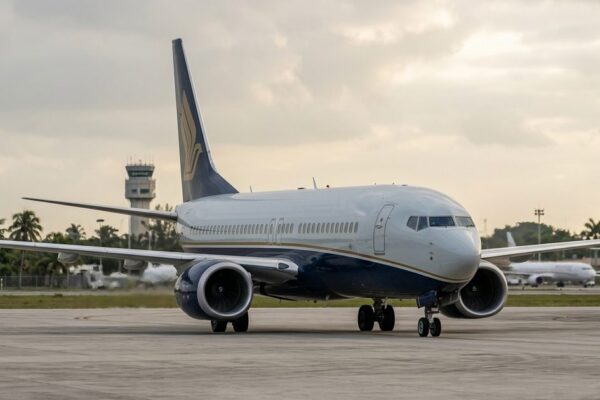
A Beechcraft B200GT Super King Air plunged from 28,000 feet into a Louisiana swamp March 22 at a vertical descent rate of up to 45,000 feet per minute — killing its sole occupant — and both engines remain unrecovered after search teams excavated 30 feet into the swamp floor, according to a preliminary report released April 14 by the National Transportation Safety Board.
The aircraft, registration N886DS, departed Fort Lauderdale Executive Airport (FXE) at 12:49 p.m. EDT on a Part 91 personal flight to Dallas Executive Airport (RBD). The flight proceeded without incident until 2:17 p.m. CDT, when the pilot requested a routine 60-second frequency change from Houston Center air traffic controllers.
Autopilot Disconnect, Then Silence
Six seconds after that request, the cockpit voice recorder captured “clicks and rustling” sounds. An autopilot disconnect alert followed immediately.
Within about two seconds of the disconnect, the aircraft entered a steep right turn and began descending from Flight Level 280. The CVR recorded a cascade of automated warnings — excessive bank angle alerts and a landing gear warning horn — as the airplane accelerated through extreme airspeeds.
At 2:18 p.m. CDT, ATC attempted to re-establish contact. There was no response. The CVR stopped recording at 1418:51 CDT.
Calculations based on FAA ADS-B and radar data indicate the aircraft reached a vertical descent rate of up to 45,000 feet per minute — more than 500 mph straight down — before striking the ground on the southwestern shore of Lake Rodemacher near Sharp, Louisiana, at a steep nose-down pitch angle.
Impact So Severe Engines Vanished Into the Earth
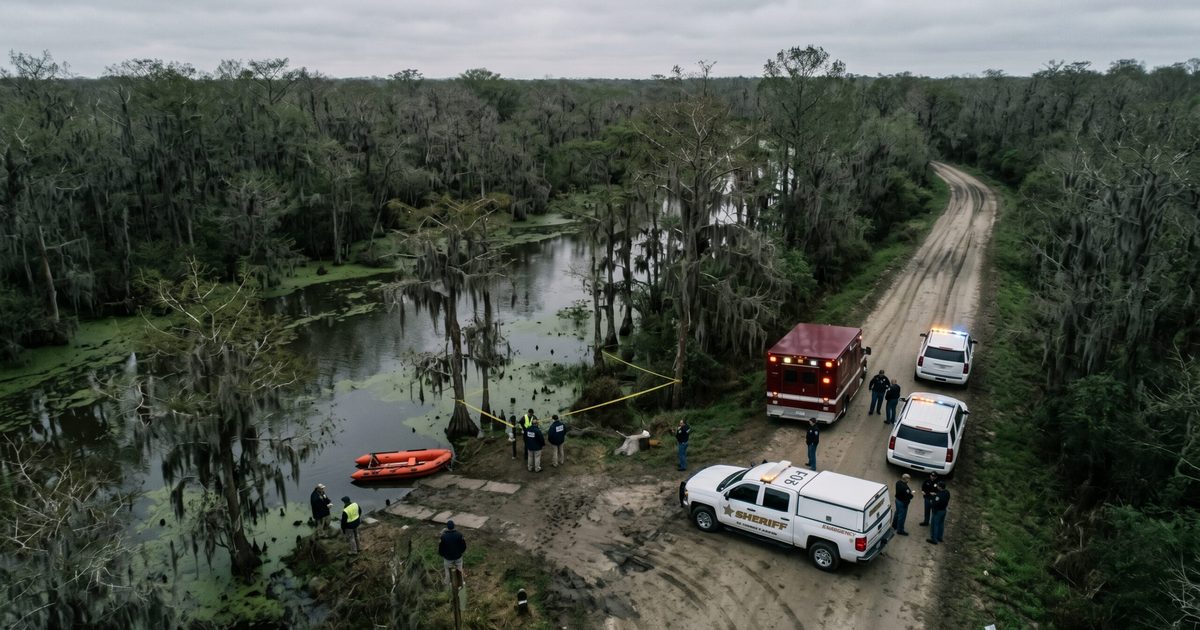
The force of impact drove the wreckage into the swampy terrain, creating a crater about 15 feet deep with three distinct penetration holes. Debris was scattered across a roughly 400-foot fan-shaped field.
Investigators from the NTSB and FAA, joined by representatives from the manufacturer, used a swamp excavator to search the impact site. Recovery teams worked through densely vegetated, waterlogged terrain and ultimately excavated to a depth of 30 feet.
The engines were not found.
Fragmented portions of the wings, cabin, tail section, propeller bases and composite material were recovered and transported to a secure facility for further examination. Investigators noted a strong Jet-A fuel odor at the scene but no evidence of post-impact fire or explosion.
Cause Remains Undetermined
The NTSB has not identified a probable cause. The investigation is ongoing, and the preliminary report makes clear that findings are subject to change as analysis continues.
A full summary of the cockpit voice recorder’s contents has not yet been released. The CVR recording, combined with recovered wreckage examination and radar data, is expected to guide the investigation’s next phase.
The accident is catalogued under NTSB case number CEN26FA142. Local first responders — including the Rapides Parish Sheriff’s Office and multiple regional fire departments — initially searched near Cotile Lake based on early position reports before the wreckage site was located around 5 p.m. on the day of the crash.
The accident is among a series of recent single-occupant general aviation fatalities under federal investigation. FODNews earlier this year reported on a Piper Saratoga runway excursion and fire at Marana, Arizona, which also involved a sole-occupant aircraft.
The Beechcraft B200GT Super King Air is a twin-turboprop aircraft widely used in charter, cargo and executive aviation. No injuries were reported on the ground.
Subscribe to FODNews for the latest aviation safety and incident reporting delivered to your inbox.