INDIANAPOLIS — A single spin in Turn 2 at Indianapolis Motor Speedway became a textbook Indy 500 debris chain Monday, scattering fragments across the racing line at more than 220 mph. Three other IndyCar entries were collected in seconds. The wreck — four days before the 110th Indianapolis 500 — sent Alexander Rossi to the hospital and four race teams scrambling to assess damage before Sunday’s race.
What Happened in Turn 2
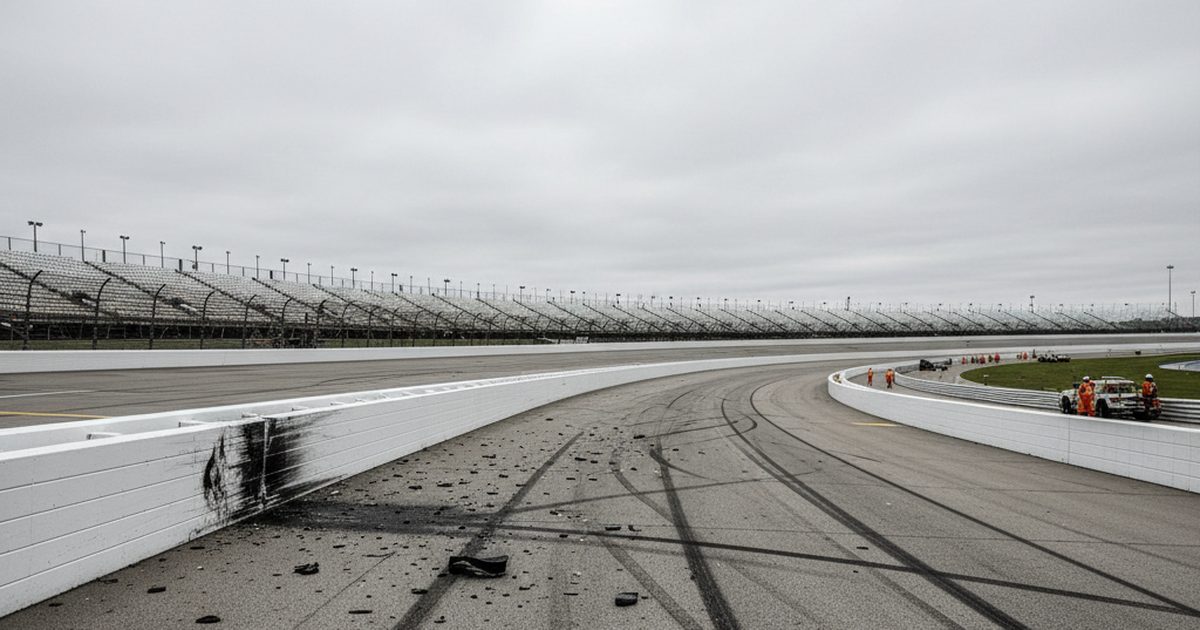
The incident occurred during Practice 7, the final scheduled session before the race. Rossi’s No. 20 Java House Chevrolet (Ed Carpenter Racing) entered Turn 2 late in a run. The car snapped loose, crossed the track backward, and struck the outside SAFER Barrier with significant force. The rear of the car briefly rode over the top of the wall. It came back down onto the racing surface — a stationary obstacle in the preferred groove.
Pato O’Ward (No. 5 Arrow McLaren) was running close behind. He hit the brakes and tried to steer clear. But at oval speeds, braking mid-corner in a high-downforce car destabilizes the chassis. O’Ward spun and drove into Rossi’s left side. It was a second jarring impact on the same structure that had already absorbed the wall hit.
“I saw Rossi spinning, and it’s really tough to stop these cars, especially in the middle of a corner when you smash the brake,” O’Ward told WRTV.
Romain Grosjean (Dale Coyne Racing), running farther back, got loose checking up and also collected the outside wall. A small fire ignited at the rear of Grosjean’s car near the left-rear tire before it was quickly extinguished. Both O’Ward and Grosjean were evaluated at the infield medical center and released.
Conor Daly (Dreyer & Reinbold Racing), approaching the scene in traffic, nearly threaded clean through the wreckage. He did not. A large front-wing fragment from the pileup struck his right-front. The hit took out the wing and inflicted significant underwing damage not immediately visible to the broadcast. His crew discovered the full extent on teardown.
Why an Indy 500 Debris Chain Is So Dangerous
IMS Turn 2 banks at approximately nine degrees — similar to Turns 1 and 3. Cars carry full qualifying-style attitude through the corner with most downforce directed toward the apron. When a primary impact scatters components across that groove, the debris doesn’t settle in one place. Aerodynamic forces, banking, and 220+ mph traffic push fragments unpredictably across the full width of the racing line.
For drivers arriving seconds behind, the scenario resembles FOD on an active runway. High-speed travel, limited reaction distance, debris that may be invisible until it’s directly ahead. Daly’s front-wing fragment strike is the clearest illustration — he avoided the primary crash entirely but could not avoid what the crash left on the surface.
Race Week Implications
The medical picture for Rossi cleared by Monday evening. IndyCar medical director Dr. Julia Vaizer confirmed Rossi was transported to a local hospital for further evaluation. He subsequently underwent outpatient procedures for a finger injury on his left hand and a right ankle injury. No additional injuries were found. Rossi’s stated intent is to return for Carb Day practice and start Sunday’s race, pending ongoing evaluation.
The car situation is more complicated. ECR will deploy a backup chassis for Rossi. The primary No. 20 took the wall hit plus O’Ward’s secondary side contact, exhausting both stages of its left-side crash structure. Rossi had qualified second — the front row’s inside position. His team now faces a tighter setup turnaround on unfamiliar equipment before Sunday.
O’Ward and Grosjean both sustained significant chassis damage. Daly’s team faces underwing repairs on a car he had rated highly in qualifying trim; he had started eighth. At time of writing, IndyCar had not issued any grid-penalty changes related to the Practice 7 incident.
Worsening rain ended the session before additional running could help teams validate their rebuilt setups. The next on-track opportunity is Carb Day, the final practice before the race.
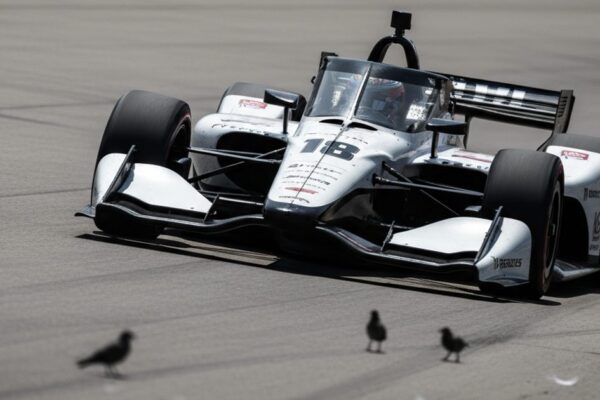
Grosjean, it should be noted, has now been involved in notable debris events at IMS in consecutive appearances. In the open test earlier this month, his car absorbed a bird strike during running at the Speedway. It was a different category of debris — but another reminder that hazard at IMS does not wait for race day.
Subscribe to FODNews for continuing coverage of the Indianapolis 500 and motorsport safety.
Sources
- WRTV — “3 drivers, including Pato O’Ward, crash during Indy 500 practice” (May 18, 2026)
- WRTV — “ECR provides update on Alexander Rossi following Indy 500 practice crash” (May 18, 2026)
- RacingNews.co — “Alexander Rossi hospitalized after Indy 500 practice crash” (May 18, 2026)
- IndyCar — Official medical update on Alexander Rossi (May 18, 2026)