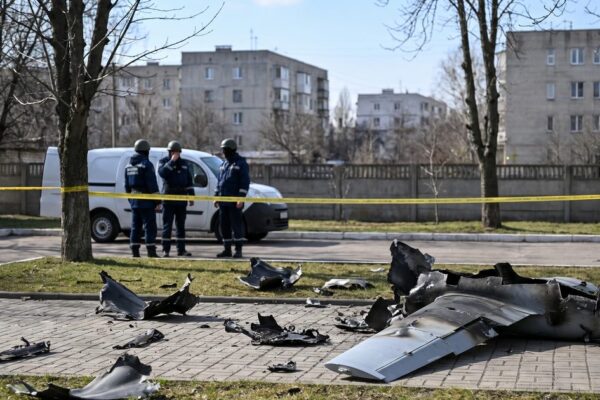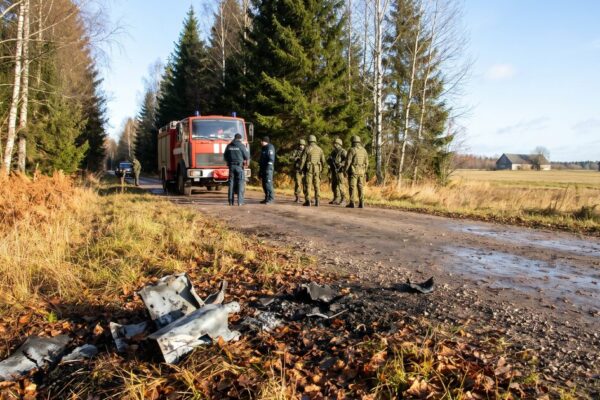
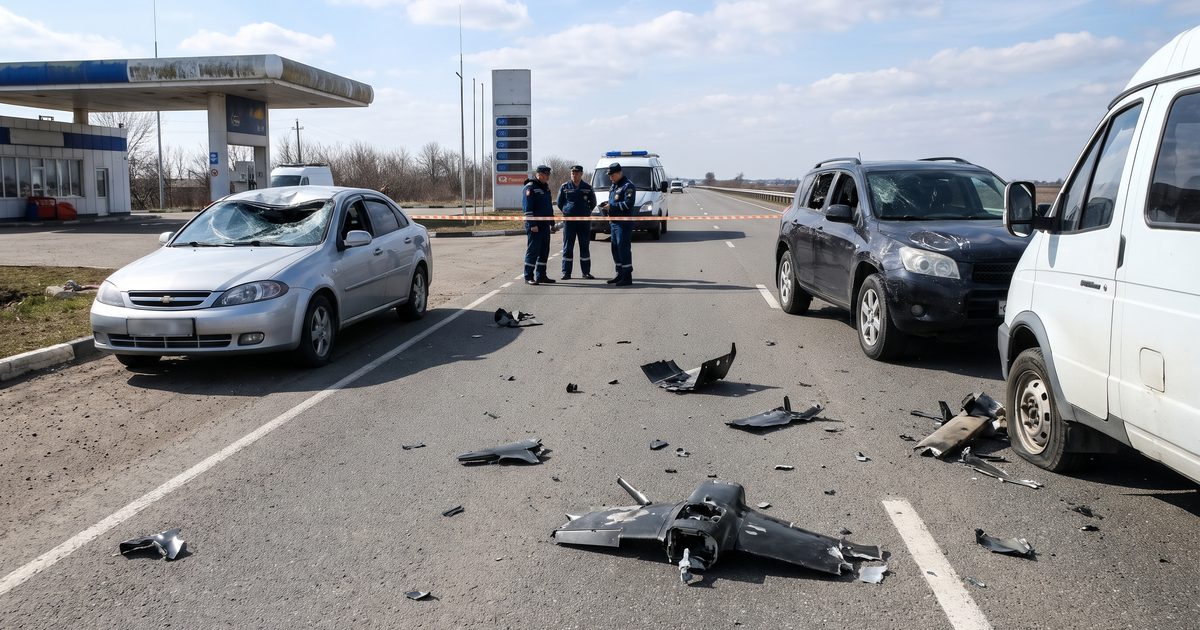
ROSTOV-ON-DON, Russia — A highway. A gas station. Overnight Nov. 15, drone wreckage fell on both, striking vehicles and injuring four people, the region’s governor said. The Rostov drone debris hurt three men and a woman, according to an English-language RIA Novosti report carried by NAMPA.
All four went to the hospital. Governor Yury Slyusar said they were receiving the medical care they needed.
Few places are more ordinary than a road and a fuel stop. People pull in, fill up and drive on. That night, by the governor’s account, debris from the sky found them in their cars.
What the governor reported
Slyusar’s account, as carried in English, is brief and direct. “Four people — three men and a woman — sustained injuries after drone debris fell onto their vehicles on a highway and at a gas station,” he said, according to NAMPA and RIA Novosti.
The Kyiv Independent, also citing the governor, described the same four injuries. Its report used the singular, saying debris fell on their vehicle, while the NAMPA and RIA Novosti item says vehicles.
Both reports rest on the governor’s account. And both agree on the core of it: three men and a woman, hurt when debris hit in two everyday places.
Rostov drone debris was one part of a long night
The injuries came during a wider overnight attack on Russia’s Rostov Oblast, the Kyiv Independent reported. The toll went beyond the four people hurt on the road.
The chief engineer of an electrical substation in Taganrog was killed, the governor said. Two substations in the city were damaged. A fire also broke out at a substation in the Shubin district.
Then there was the bridge. The R-280 highway bridge in Neklinovsky district was struck, and traffic was closed. Diversions were put in place.
In all, five vehicles were damaged, the outlet reported: four near the bridge and one at a gas station. The governor’s account treats the bridge strike and the falling debris as events of the same night.
Air defenses destroyed about 50 drones overnight, Slyusar said. That work stretched across Taganrog, Rostov-on-Don and seven districts. At the time of the Kyiv Independent’s report, Ukraine had not publicly claimed responsibility.
Why a highway and a gas station raise the stakes
Drivers on a highway at night watch the road ahead, not the sky. A person at a gas station is thinking about fuel and the miles left to go. Neither is braced for wreckage from above.
A gas station adds its own risk. Fuel is stored and pumped there, and people stand close to it. Debris that lands at such a site lands in one of the worst spots a road network has to offer.
This time, the reported harm was four people injured and vehicles damaged. All four reached a hospital, by the governor’s account.
FODNews has reported on NATO missile debris that fell in Birzai, Lithuania, after a drone intercept and on drone debris that landed on the tarmac at Moscow’s Sheremetyevo and other airports. Those were separate events, but the pattern is the same: debris from the fight overhead reaches the ground where people live and travel.
What comes down must land somewhere
The numbers from that night tell two stories. One is about 50 drones destroyed. The other is four people in the hospital.
A destroyed drone does not vanish. It breaks up, and the pieces fall. Where they land is not up to anyone on the ground.
That is the hard lesson in the governor’s account. Even when air defenses bring drones down, the wreckage can still land on people who were simply on the road. For three men and a woman in the Rostov region, an ordinary night on the road ended in a hospital.
Subscribe to FODNews for continuing coverage of FOD incidents and prevention worldwide.