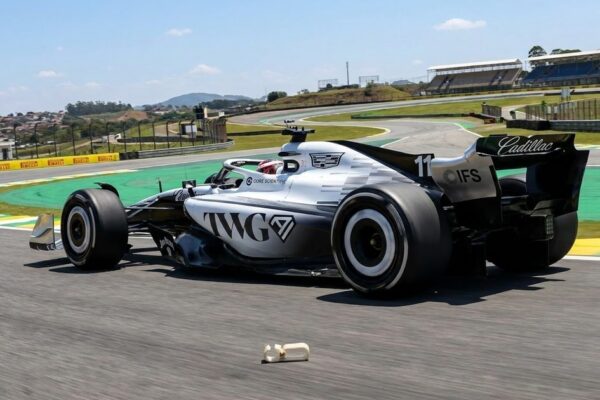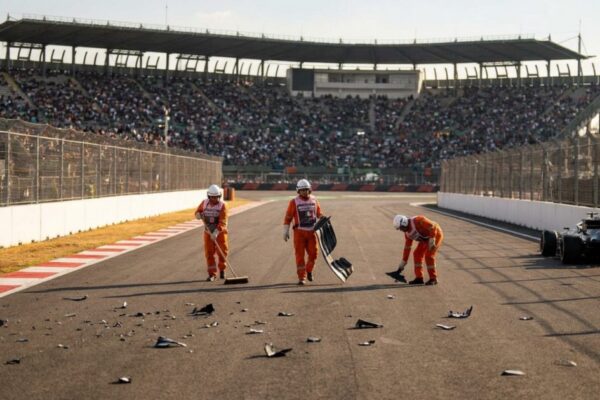
A chunk of track surface turned into a high-speed projectile at the relocated Bahrain Grand Prix, when loose Sepang track debris shattered the onboard camera on Carlos Sainz’s Williams at more than 200 km/h, inches from his helmet. The incident, during Saturday qualifying at Sepang International Circuit in Malaysia, capped a weekend in which multiple drivers, including Ferrari’s Charles Leclerc, had already flagged a rapidly deteriorating asphalt surface.
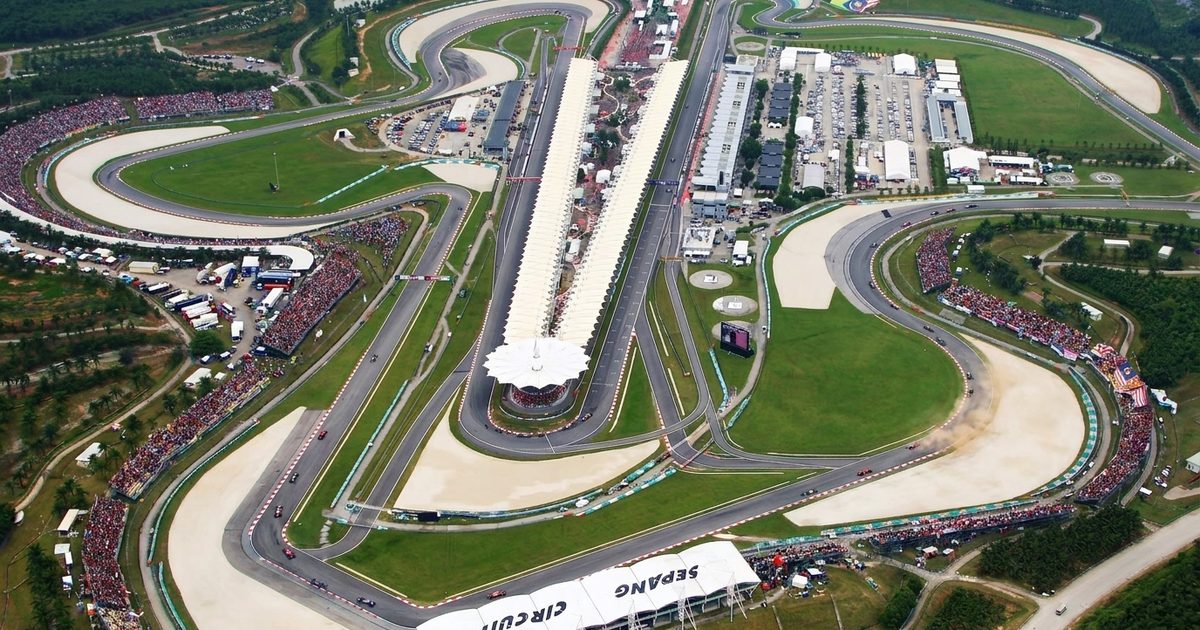
The 2026 Bahrain Grand Prix was moved from its usual home at the Bahrain International Circuit to the Sepang International Circuit near Kuala Lumpur, Malaysia, a shift reported to stem from the ongoing Middle East conflict. The relocation marked Formula 1‘s first competitive visit to Sepang in nine years, with the circuit having last hosted the Malaysian Grand Prix in 2017.
Sepang track debris strikes Sainz’s Williams in qualifying
The incident happened as Sainz, driving for the Williams team, ran down the back straight leading into the final corner during Saturday’s qualifying session. A stone kicked up by another car ahead struck the roll-hoop-mounted onboard television camera — known in the paddock as the T-cam — positioned above the air intake on his Williams FW48, cracking the lens casing just centimeters from the cockpit and his helmet.
Sainz went on to qualify 13th for Sunday’s race. Speaking to reporters afterward, he defended the circuit, saying the rough surface added character to the stand-in venue and that 13th was “as good as it gets” for Williams on a difficult weekend. He conceded, however, that the aging tarmac is “starting to get to the limit” of what modern F1 standards tolerate.
Drivers’ helmets include a reinforced Zylon strip across the top of the visor, a safeguard added after a 2009 testing-session accident left a Ferrari driver with a skull fracture from a loose spring. The material absorbs roughly a quarter of an impact’s force and is rated to withstand a 225-gram projectile striking a driver’s head at 250 km/h — a safety margin that proved important given how close the stone came to hitting Sainz directly rather than his car’s camera mount.
Leclerc and others flag a crumbling surface
Charles Leclerc, who drives for Ferrari and set the fastest time in Friday practice, said conditions at Sepang International Circuit were “very, very, very poor” early in the weekend. “It was very slippery,” Leclerc said. “We need to be good at anticipating what it will feel like tomorrow once the track is in better condition.”
Reporting from the paddock described large stones visible embedded in tires as drivers completed practice starts down the pit lane, with debris buildup evident across the field rather than confined to a single corner. The Sepang asphalt has not been fully replaced since F1’s 2017 visit; teams and organizers instead resurfaced patches at several key corners ahead of this year’s race, while the circuit sat largely unused for roughly three months beforehand, allowing grime and loose material to build up on the track.
Other drivers echoed the concern in less specific terms, describing the tarmac as unusually rough and comparing the grip characteristics to Bahrain’s own abrasive circuit. The surface issues follow a pattern seen elsewhere in the 2026 season, with asphalt degradation contributing to a race-ending crash in Monaco and a gravel excursion at Monza’s Rettifilo chicane.
For a circuit returning to top-level international racing after nearly a decade away, the Sepang weekend illustrated how quickly modern Formula 1 cars can expose weaknesses in an aging surface — and how mid-weekend inspection and track maintenance have become as central to race preparation as car setup. Consequently, the episode adds to a broader trend of degrading circuit surfaces generating fast-moving debris across motorsport, a hazard FODNews has also tracked in MotoGP engine-failure debris at Motegi and a winglet strike in Austria.
Subscribe to FODNews for continuing coverage of FOD incidents and prevention worldwide.
Sources
- PlanetF1 — “Charles Leclerc leads complaints over hidden Bahrain GP hazard” (Oct. 2, 2026)
- PlanetF1 — “Untelevised Carlos Sainz footage emerges after Bahrain GP near miss” (Oct. 3, 2026)
- Autosport — “F1 Bahrain GP in Malaysia: Verstappen dominates for pole” (Oct. 3, 2026)
- Marca — “La pedrada sobre Carlos Sainz, a más de 200 km/h” (Oct. 3, 2026)
- Fanpage.it — “Sainz a oltre 200 km/h: a Sepang un pezzo d’asfalto colpisce la telecamera a pochi centimetri dal casco” (Oct. 3, 2026)
- Infobae — “Un proyectil destrozó la cámara a bordo de un piloto de Fórmula 1 cuando iba a 200 km/h” (Oct. 3, 2026)