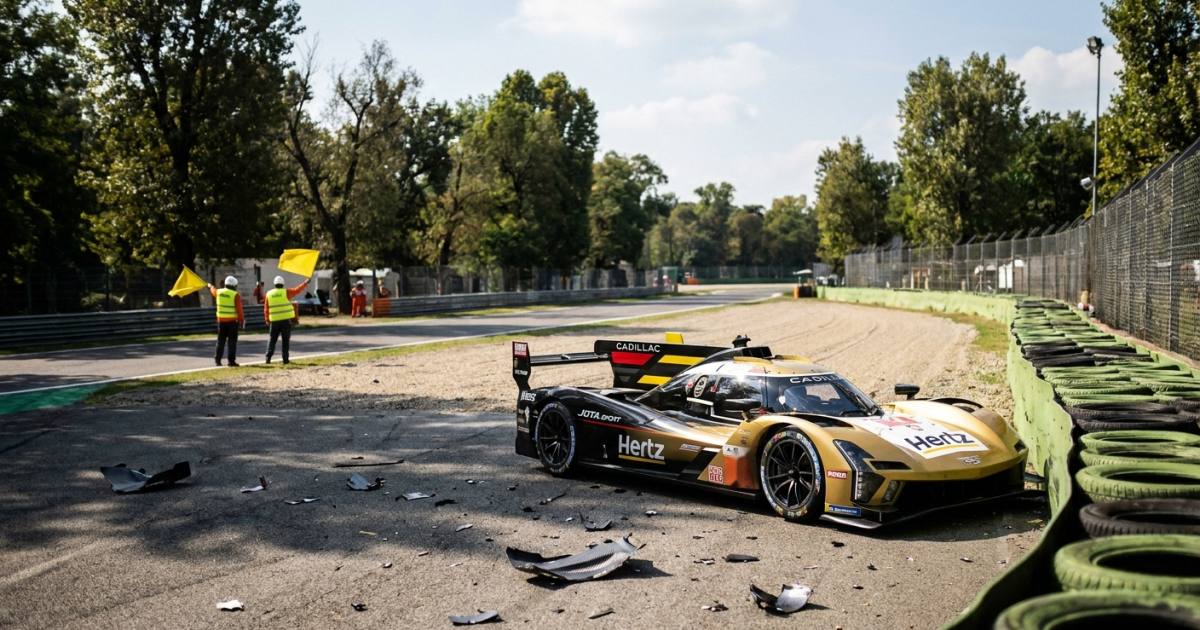
MONZA, Italy — With two minutes left in the FIA World Endurance Championship season, Alex Lynn’s #12 Cadillac V-Series.R slammed into the barriers at the exit of the second chicane, scattering debris down the run to Lesmo 1. Race control waved double yellow flags rather than calling a full-course yellow, and the 6 Hours of Monza ran to the checkered flag on Nov. 8 with the wreckage still in place.
Lynn sat in the stranded Cadillac until he was instructed to climb over the barriers. Behind him, hypercars and GT3 cars kept coming through the double-yellow zone at the Autodromo Nazionale Monza. Some drivers rolled over the debris, and some saw a driver walking along the edge of the track.
Several drivers said afterward that the scene deserved a neutralization. Their complaint closes a season in which the championship’s handling of safety cars and caution periods has drawn repeated criticism from the paddock.
Two minutes left, and a Cadillac in the wall
The crash came out of a fight over fifth place. Lynn, driving for JOTA Sport, had lost the position to Malthe Jakobsen’s #94 Peugeot 9X8 at Turn 1 and went straight back at him under braking for the Variante della Roggia, Motorsport.com reported.
Lynn seemed to retake the place, but he locked up, ran too deep into the corner and then veered right on the exit to cover Jakobsen. The two cars touched. The Cadillac snapped into the barriers, and debris spread across the high-speed run toward Lesmo 1.
Jakobsen’s teammate at Peugeot Sport, Loic Duval, played down the contact. “For Malthe, he was going straight, Alex changed the line and it was just a small kiss,” Duval told DailySportsCar. “When you lose the rear at high speed and hit the wall it looks massive, but the Peugeot took no damage at all.”
He was more concerned about the driver. “The outcome is impressive; we were just hoping Alex was fine, which he is,” Duval said, adding that “the FIA, ACO and all the guys will take their decisions and fix it.”
Up front, the race finished almost undisturbed. The #38 Jota Cadillac shared by Sebastien Bourdais, Jack Aitken and Earl Bamber won in 6h1m33.199s over 191 laps, giving Cadillac Racing “the US manufacturer’s first World Endurance Championship victory of the season,” according to Autosport. Bourdais, in his last race with Cadillac, held off Victor Martins in the #36 Alpine A424 at the finish.
Why drivers wanted a full-course yellow at Monza
Tom Gamble, who drove the #007 Valkyrie for Aston Martin, came through the scene soon after the crash. “I thought it would have gone to at least FCY for the incident that came there, but they obviously left it,” he told reporters including Motorsport.com.
“When I first went through [that section of the track], I definitely drove over a lot [of debris] and it wasn’t even that,” Gamble said. “As I drove past it, I could see the driver walking down the track and I’m like, ‘yeah, it’s a little bit questionable.”
Gamble was careful not to attack the officials. “But the race directors do a good job and that was a decision they made,” he said. “Obviously, nothing further happened, so it was all good. But, yeah, it definitely would have been better for us to have an FCY.”
Eduardo Barrichello was blunter. Barrichello drives the #23 Aston Martin Vantage GT3 for Heart of Racing, and he was chasing Richard Lietz’s #92 Manthey Porsche 911 GT3 R for the LMGT3 win when Lynn’s heavily damaged Cadillac came to a stop. “I wish we would have gotten a safety car, a full course yellow or something. It was very dangerous as well. In my opinion, that wasn’t very nice,” he said.
Motorsport.com reported that several other drivers from both classes also privately expressed frustration over the decision.
Duval took a different view. Asked by Motorsport.com whether he was surprised, he paused before answering: “Yes and no. I think if this would have happened earlier in the race, you would have had something from the race control, but it was the end of the race.”
For Duval, the double yellow did its job. “They put a double yellow flag, which means that you really have to slow down and you have to be capable of stopping the car,” he said. “Luckily, we can trust the drivers, and nobody was pushing in that double yellow section.” He told DailySportsCar the same thing more briefly: “I think the race director did what was needed.”
Monza also reopened an argument that had run all year. Motorsport.com noted that some in the paddock have questioned whether the championship puts too much emphasis on entertainment when it decides how to respond to incidents.
Toyota’s Sebastien Buemi raised the issue after the Fuji 6 Hours in September, well before the Monza finale. “There are a lot of full course yellows and virtual safety cars and safety cars, and it is difficult to understand why the race director decides a virtual safety car and not a full course yellow,” Buemi said at the time.
Gamble echoed him at Monza. “Obviously, you see a piece of debris on the track sometimes and we get a VSC, and then you see a car half in the track with no wheels on it and it’s just stayed double yellow,” he said.
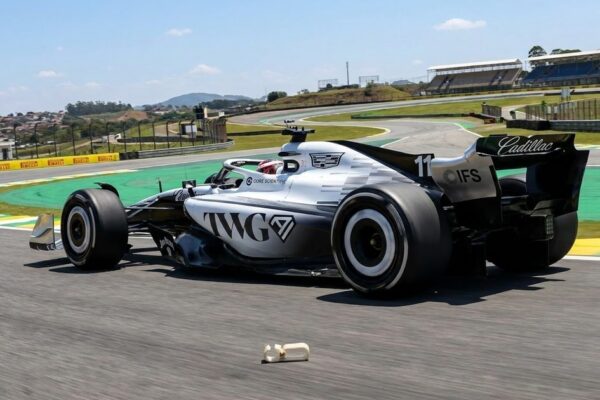
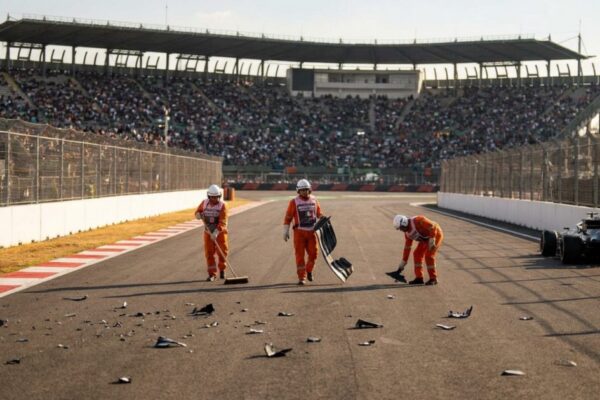
Other series have faced the same debris questions this year. FODNews has reported how debris led to a red flag at the Mexico City Grand Prix, and how Cadillac was formally warned after Sergio Perez tossed a loose cockpit part onto the Interlagos track. In each case, officials had to decide how much risk the loose material posed to the cars still running.
The Aston Martin gamble and the yellow that never came
For Gamble the call cost more than peace of mind. Heart of Racing, Aston Martin’s factory team, had gambled late in the race. With hypercars forced into heavy fuel and energy saving, Gamble ignored the saving targets in the hope of a late full-course yellow or safety car, according to a second Motorsport.com report.
He climbed from ninth to third in the final stint and crossed the line third in the #007 he shared with Harry Tincknell. “It was crazy that there wasn’t at least a Full Course Yellow,” Gamble told Autosport. “If that had happened we would have been okay on the fuel.”
The debris slowed lap times over the final two laps, but not enough to stop a 191st lap from being triggered. The gamble fell short by about three seconds. “Our decision meant we were not going to make it unless the race would have been one lap shorter,” Gamble said.
The #007 received a 145-second penalty for exceeding its maximum usable energy per stint, on top of a separate 20-second tyre-pressure penalty. Together they dropped the car from third to 12th. Motorsport.com noted that even if the energy had lasted to the flag, the tyre-pressure penalty alone would still have cost Aston Martin the podium.
What a late debris field says about FOD on track
Every racing debris field leaves officials balancing two things: the risk from loose material on a fast section of track and the cost of neutralizing a race that is nearly over. At Monza the debris landed on the run to Lesmo 1 with two minutes left, a damaged car sat in the runoff, and a driver still had to get out and over the barriers.
Duval’s argument rests on drivers obeying the flags. A double yellow means slow down and be ready to stop, and he said nobody pushed. Gamble and Barrichello saw the same scene from the cockpit and found it hard to square with a season of caution periods called for single pieces of debris.
Neither side disputes that debris was on the racing line while cars were still racing to the flag. The question Monza leaves open is whether a local yellow is enough in that moment. Some drivers believe the answer should not depend on how much time is left on the clock.
Subscribe to FODNews for continuing coverage of FOD incidents and prevention worldwide.
Sources
- Motorsport.com — “WEC drivers question lack of full-course yellow after heavy Monza crash” (Nov. 9, 2026)
- Motorsport.com — “How Aston Martin’s fuel gamble in Monza WEC fell short by just three seconds” (Nov. 9, 2026)
- Autosport — “How Cadillac triumphed in the WEC Monza 6 Hours without the fastest car” (Nov. 9, 2026)
- DailySportsCar — “6H Monza: Post-Race Notes” (Nov. 9, 2026)