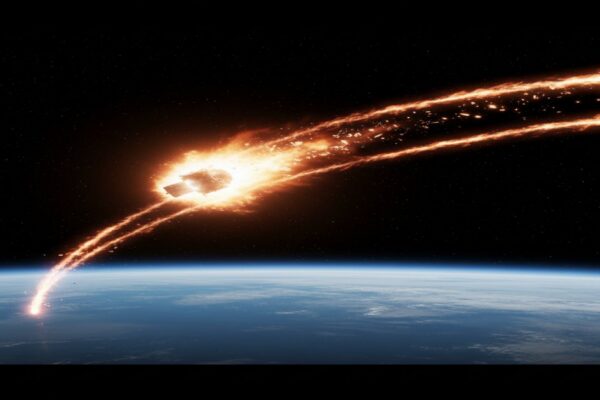
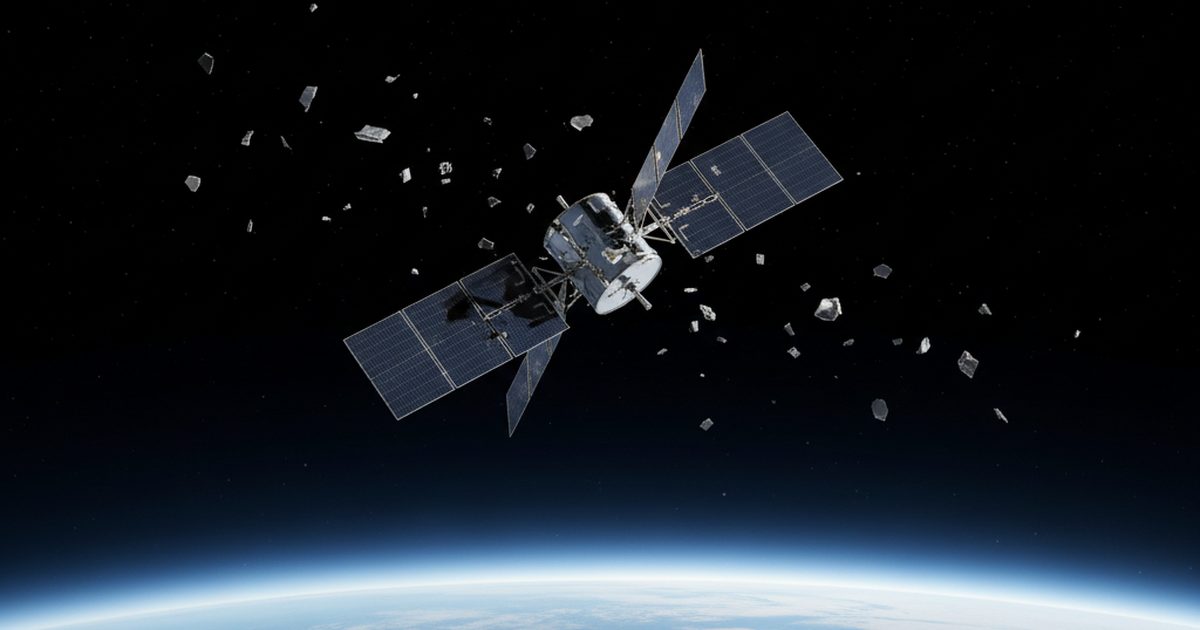
A SpaceX Starlink satellite broke apart in low Earth orbit on March 29, 2026, generating a field of trackable debris at 560 kilometers altitude — the second such fragmentation event for the constellation in four months.
Satellite 34343, part of SpaceX’s V2 Mini Optimized series, suffered what tracking firm LeoLabs described as a “fragment creation event,” with radar immediately detecting tens of objects in the vicinity of the spacecraft. SpaceX confirmed it lost communications with the satellite and attributed the breakup to an on-orbit anomaly consistent with an internal energetic source — not a collision with existing debris.
Higher Orbit, Longer Persistence
The 560 km altitude of this fragmentation event distinguishes it from its predecessor. When Starlink satellite 35956 broke apart in December 2025 at 418 km, the denser atmospheric drag at lower altitude meant debris was expected to reenter within weeks. At 560 km, atmospheric drag is significantly thinner, and the new debris cloud could persist for several months before naturally deorbiting and burning up.
That extended residence time raises the probability of conjunction events with other operational satellites. As ESA’s 2026 space environment report documented, the 500–600 km shell is already among the most congested regions of LEO, where debris density directly correlates with collision probability for all resident spacecraft.
Astronomer Jonathan McDowell, who monitors orbital objects independently, estimated the fragmentation produced a short-lived increase of roughly 10 percent in debris risk to nearby spacecraft. He characterized SpaceX’s “no new risk” statement as misleading while acknowledging the overall impact remains small in absolute terms.
Second Fragmentation in Four Months
The recurrence is drawing attention from the debris tracking community. Two Starlink fragmentations within a 90-day window is a statistical outlier for a constellation that has otherwise maintained a strong deorbit compliance record.
LeoLabs assessed the March event as internally caused, similar to the December 2025 incident, which was attributed to suspected propulsion tank venting. Both events generated “tens” of trackable objects — pieces large enough to damage operational satellites on impact but small enough to challenge precise orbital determination.
The incidents follow months of elevated conjunction tracking for the Starlink constellation more broadly. FODNews reported in March that Starlink satellites logged nine separate conjunction threat notifications in a single two-week period, a figure that reflects both the sheer scale of the constellation and the increasingly congested state of the orbital environment.
SpaceX Response and Constellation Adjustments
SpaceX is investigating the root cause of both fragmentations and has pledged corrective measures. The company has also begun reconfiguring approximately 4,400 satellites from 550 km to 480 km operational shells — a move intended to accelerate natural deorbit timelines if additional anomalies occur.
The company stated the March 29 event poses no new risk to the International Space Station, its crew, or NASA’s Artemis II mission, which launched successfully on April 9, 2026. The Transporter-16 rideshare mission, whose payloads operate at different altitudes, is also unaffected.
HEO Robotics, which captured an image of satellite 34343 intact on February 14, 2026, is now attempting to image the debris field to assist tracking efforts. The U.S. Space Force Space Surveillance Network and LeoLabs are both monitoring the debris cluster as it evolves and spreads.
Context: A Constellation Under Scrutiny
With more than 10,000 Starlink satellites now in orbit, the constellation represents the largest single contribution to LEO satellite count in history. That scale amplifies both the statistical likelihood of anomalies and the downstream effects when they occur.
The fragmentation of satellite 34343 arrives as regulatory attention on LEO debris is intensifying globally. Commercial active debris removal missions are moving from concept to flight operations, but those services cannot address freshly created debris clouds in the near term. For now, tracking and avoidance maneuvering remain the primary tools available to operators sharing the 560 km shell.
LeoLabs continues to update its catalog as the debris field disperses. Operators in the affected altitude band have been advised to monitor conjunction screening outputs for elevated close-approach notifications over the coming weeks.
Stay informed — subscribe to FODNews for daily coverage of FOD incidents and prevention worldwide.
Sources
- SatNews: SpaceX Loses Contact with Starlink Satellite (March 30, 2026)
- EarthSky: Starlink Satellite Breaks Up — Debris and Artemis Risk (March 2026)
- Space.com: SpaceX Starlink Spacecraft Breaks Apart in Space (April 2026)
- Tom’s Hardware: Starlink Satellite 34343 — Fragment Creation Event (March 2026)
- Data Center Dynamics: Starlink Satellite Suffers Incident (March 2026)
- U.S. Space Force — Space-Track.org orbital debris catalog