FAA Kills Proposed Rule Requiring Rocket Upper Stages to Deorbit Within 25 Years, Citing Industry Pressure
By FODNews Staff | March 12, 2026
WASHINGTON, D.C. — The Federal Aviation Administration has officially withdrawn a proposed orbital debris rule that would have required commercial launch providers to remove spent rocket upper stages from Earth’s orbit within 25 years — backing down after fierce opposition from SpaceX and other industry players, and simultaneously issuing safety warnings to airline pilots about the growing threat of falling space debris.
The withdrawal, published in the Federal Register, ends a rulemaking process that began in 2023 under the Biden administration. The FAA said it needs more time to study the economics of orbital debris mitigation and to review whether it even has the legal authority to mandate such requirements.
“FAA has determined that this regulatory course of action requires further study,” the agency said in its withdrawal notice. “FAA is withdrawing the NPRM to further consider the 40 comments received during the NPRM comment period.”
Space sustainability experts say the move sends a dangerous signal at precisely the wrong moment — as the number of abandoned rocket stages in orbit climbs and the risk to commercial aviation grows.
What the FAA Orbital Debris Rule Would Have Required
The 2023 Notice of Proposed Rulemaking (NPRM) would have mandated that launch companies submit a debris disposal plan before launch and ensure that any spent upper stages — the final rocket sections that carry payloads into space — be removed from orbit within 25 years.
Acceptable disposal methods under the proposal included controlled reentry into Earth’s atmosphere, a “broad ocean area” splashdown, or transfer to a higher graveyard orbit where they would pose less collision risk.
The FAA said at the time that uncontrolled upper stages “pose a significant risk to people on the ground due to their mass and the uncertainty of where they will land.” The agency cited the example of a SpaceX Falcon 9 rocket that reentered over the Pacific Northwest in March 2021, creating streaks of light across the night sky and dropping a pressure vessel on a farm in Washington state.
The rule also aimed to bring commercial space launch in line with NASA practices and international debris mitigation guidelines — standards that the commercial sector has increasingly sidestepped as launch rates accelerate.
Industry Pushed Back — Hard
Of the 40 public comments the FAA received on the proposal, six focused on costs and seven challenged whether the agency had legal authority to mandate debris disposal at all.
SpaceX, the world’s most prolific commercial launch provider, said the proposal “grossly underestimates the costs and impacts of the proposed rule and overstates the benefits.” United Launch Alliance (ULA), a joint venture of Lockheed Martin and Boeing, also weighed in.
The FAA’s withdrawal notice acknowledged those concerns directly. The agency said it “intends to review FAA’s authority as it relates to further regulating orbital debris mitigation” and will also “review the space launch industry cost inputs and expectations with respect to debris mitigation activities.”
The withdrawal follows a broader pattern. The Trump administration has rolled back multiple regulations governing rocket launch safety and environmental protections since taking office. The administration has broadly framed space deregulation as essential to cementing American dominance in the sector — while critics argue safety obligations are being quietly transferred from industry to the public.
The White House did not respond to press inquiries about the debris rule withdrawal.
The Numbers Tell a Different Story
While the FAA reviewed — and ultimately shelved — its proposed rule, the problem it was designed to address kept growing.
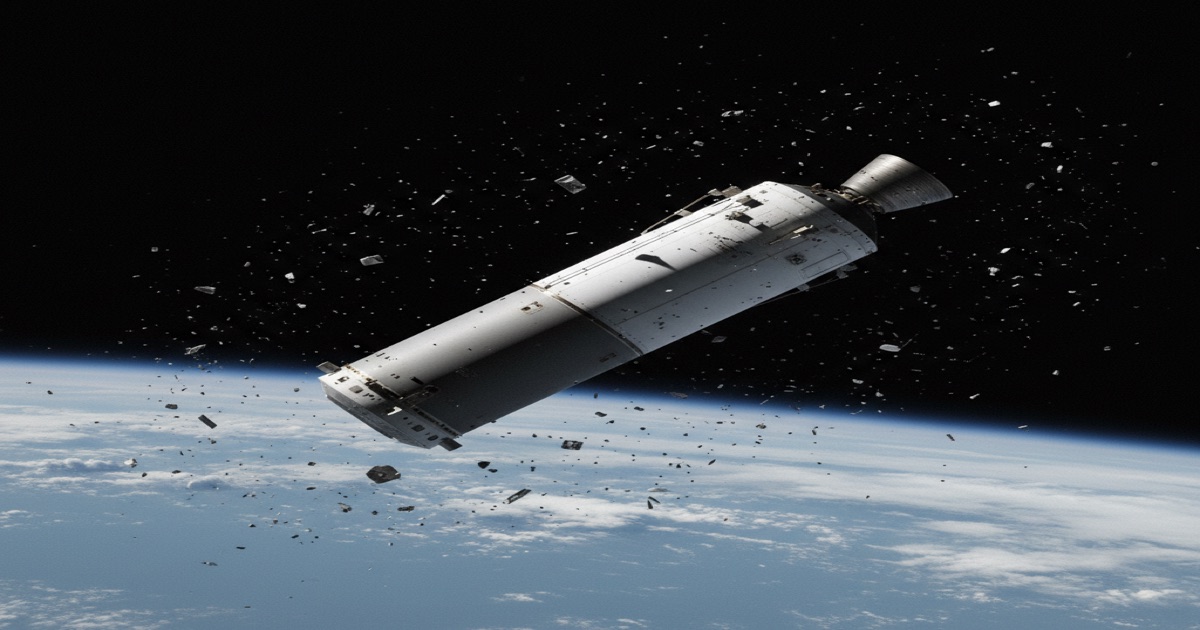
In the past three years, U.S. rocket companies including SpaceX and ULA have abandoned 41 upper stage rockets in orbit, according to Ewan Wright, a Ph.D. candidate at the University of British Columbia and junior fellow at the Outer Space Institute, a nonprofit organization. Thirty-three of those stages remain in orbit today.
“Abandoning truck-sized upper stages in orbit is an irresponsible act,” Wright said. “Instead of requiring companies to responsibly dispose of these upper stages, the U.S. has decided to roll the dice on a person or a plane getting hit by falling debris.”
Wright’s research, published in the peer-reviewed journal Acta Astronautica, found a 20% to 29% probability that debris from a reentering rocket body will kill at least one person somewhere in the world within the next decade.
The FAA itself noted, when it introduced the proposed rule in 2023, that on average one piece of space debris has fallen to Earth every single day for the past 50 years.
That toll is already visible. An 1,100-pound metallic ring from a rocket fell on a remote Kenyan village in January 2025. Falcon 9 upper stage fragments turned up across four locations in Poland. In 2024, a piece of metal from the International Space Station crashed through the roof of a home in Naples, Florida.
No one has been killed by falling space debris yet. But documented injuries include a boy in China whose toe was broken and a woman struck on the shoulder in Tulsa, Oklahoma.
A Glaring Contradiction: Warning Airlines While Withdrawing the Rule
The timing of the FAA’s withdrawal has drawn sharp criticism from safety advocates. The agency rescinded the debris rule at the same time it was warning commercial airline pilots about the growing hazard of falling space hardware.
Following two SpaceX Starship test explosions that scattered debris over the Caribbean in 2025, the FAA issued SAFO 26001 — a Safety Alert for Operators — warning that rocket launches could “significantly reduce safety” for commercial aviation and that pilots should prepare for the possibility of “catastrophic failures” creating dangerous debris fields.
The alerts described falling space debris as an “extreme safety risk” to aircraft operating in affected airspace. Yet within months, the same agency withdrew the only regulatory mechanism that would have required launch companies to prevent their hardware from becoming that debris in the first place.
As ProPublica’s Heather Vogell reported, critics say the government is shifting the burden of debris avoidance away from the companies that create it and onto the airlines and pilots who must avoid it.
The Bigger Threat: Kessler Syndrome
Beyond individual debris strikes, experts warn that the unchecked accumulation of orbital junk poses a systemic risk to the entire space environment — one that could eventually become irreversible.
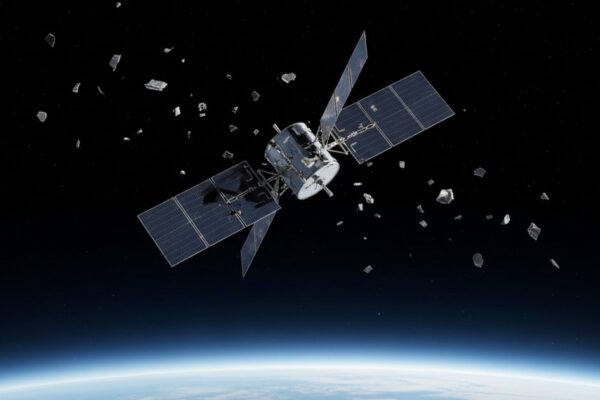
The phenomenon, known as Kessler syndrome, describes a cascade scenario: enough debris collides with enough objects to create exponentially more debris, eventually rendering entire orbital bands unusable. Once started, the chain reaction cannot be stopped.
A 2009 collision between a U.S. communications satellite and a defunct Russian military satellite over northern Siberia produced more than 2,300 trackable debris fragments. That event remains the largest debris-generating collision in history.
The FAA’s own 2023 assessment warned that a congested debris field could threaten orbits used for human spaceflight and damage satellites supporting communications, weather forecasting, and GPS systems — infrastructure that commercial aviation, among many other sectors, depends on daily.
In January 2026, the New Scientist reported that SpaceX’s own Starlink satellites performed approximately 300,000 debris-avoidance maneuvers during 2025 alone — a metric that underscores both the scale of the problem and the operational burden debris avoidance already places on the industry that lobbied against the rule.
SpaceX and ULA Say They’re Cleaning Up Their Act
Both SpaceX and ULA pushed back on characterizations that they are indifferent to the debris problem.
SpaceX, in a statement on its website, said it has been working to reduce — and ultimately eliminate — spent stages left in orbit. In 2024, the company said 13 out of 134 Falcon 9 upper stages remained on-orbit after payload deployment. In 2025, that number dropped to three out of 165 total launches.
“We’re committed to responsible space operations,” the company said, while maintaining that the proposed rule’s cost estimates were deeply flawed.
ULA said it already disposes of its upper stages safely — either by placing them in a graveyard orbit or conducting controlled reentries designed to burn up most of the stage over remote ocean areas.
However, those voluntary improvements are not legally binding. Without a regulatory requirement, nothing prevents either company — or any future entrant to the launch market — from abandoning that practice if the economics change.
What Happens Next
The FAA has not said when, or whether, it will propose a revised debris rule. The agency said it will conduct further study of industry cost projections and its own legal authority before deciding how to proceed.
For space sustainability advocates, the open-ended timeline is itself the problem. Upper stages already in orbit will remain there for decades — and in some cases centuries — before natural orbital decay brings them down.
Wright framed the decision in blunt terms: the United States has chosen to externalize the risks of a growing commercial space industry onto the public, onto commercial aviation, and onto the long-term viability of Earth’s orbital environment.
“This was an opportunity to get ahead of the problem,” Wright said. “That opportunity has now been passed.”
Whether the FAA revisits the question — or whether the accumulating weight of falling debris eventually forces it to — remains to be seen.
Sources
- ProPublica: Amid Crowded Skies, FAA Kills Rule Aimed at Regulating Space Junk — Heather Vogell
- SatNews: FAA Rescinds Proposed Orbital Debris Rule Amid Industry Pressure and Regulatory Reassessment
- Parabolic Arc (Douglas Messier): FAA Tanks Rule on Upper Stage Disposal
- FAA: Proposed Rule Would Reduce Growth of Debris from Commercial Space Vehicles (2023)
- Acta Astronautica: Probability of Casualty from Reentering Rocket Bodies (Wright et al.)
- Radio Free: Amid Crowded Skies, FAA Kills Rule Aimed at Regulating Space Junk
Stay current on space debris, aviation safety, and FOD hazards worldwide. Subscribe to FODNews for weekly coverage delivered to your inbox.