FAA Report: 150+ U.S. Airports Are Runway Incursion Hot Spots as Safety Risks Climb in 2026
A fatal collision at LaGuardia has reignited scrutiny of surface detection systems, vehicle transponder requirements, and staffing gaps that leave some of the nation’s busiest runways dangerously reliant on human error-prevention.
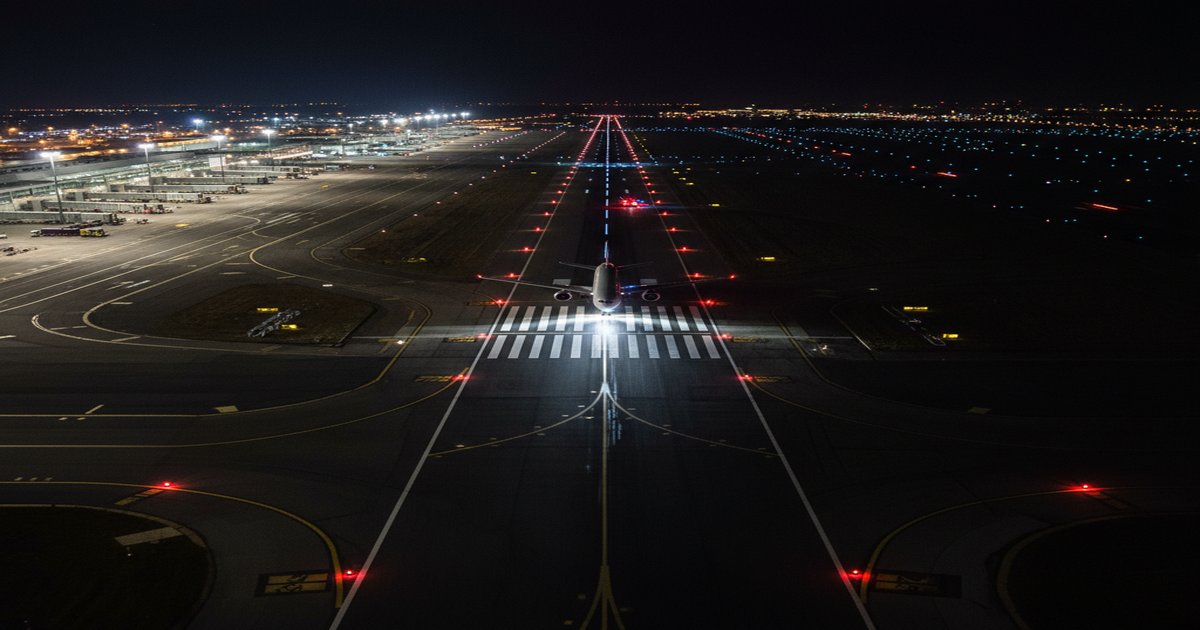
The Federal Aviation Administration has identified more than 150 U.S. airports as runway incursion hot spots. These are locations where collision risk is elevated due to complex layouts, confusing signage, or operational hazards. The agency’s March 2026 update lists 453 individual hot spots across those facilities. The list spans major hubs like LaGuardia, O’Hare, and San Francisco International. It also includes smaller regional airports where geometry alone creates dangerous ambiguity. In total, the scope underscores just how widespread documented surface risk has become.
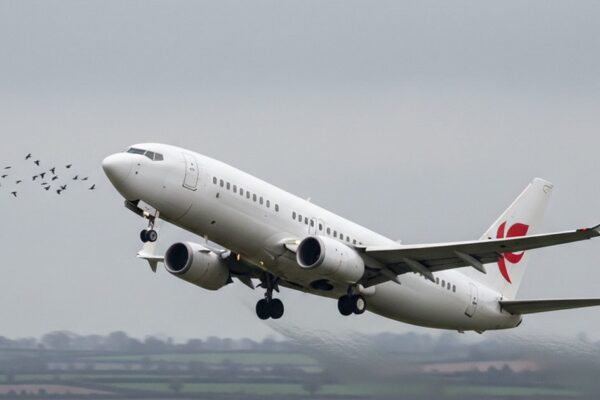
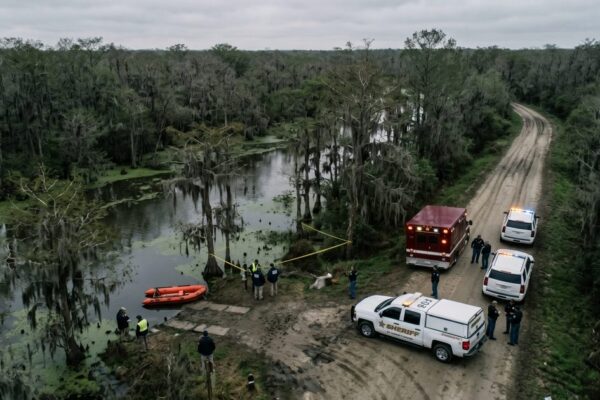
The report arrives at a precarious moment. On March 22, 2026, an Air Canada Express CRJ-900 collided with a Port Authority fire truck on Runway 4 at LaGuardia Airport. Both pilots were killed, and dozens of passengers and firefighters were injured. The crash delivered a grim reminder: the gap between a “hot spot” designation and a fatal outcome can close in seconds.
What the FAA Counts as a Runway Incursion Hot Spot
The FAA defines a hot spot as a location on an airport’s movement area where a known or potential collision risk exists. These areas appear as open circles — labeled HS 1, HS 2, and so on — on official airport diagrams. Each designation includes brief operational notes for pilots and drivers.
Importantly, they are not abstract risk scores. Instead, they reflect documented incidents, near-misses, and design flaws that the agency and airport operators have catalogued over years of operations. Specifically, a hot spot stays on the chart until the underlying hazard is corrected.
The March 2026 update, published through FAA Aeronautical Navigation Products, covers airports in every region of the country. California alone accounts for 34 airports with more than 80 designated hot spots. The New York metro area includes flagged locations at JFK, Newark Liberty, and LaGuardia. Notably, several LaGuardia runway-taxiway intersections have carried incursion risk designations for years.
LaGuardia: What Went Wrong
At approximately 11:45 p.m. on March 22, Air Canada Express Flight AC8646 was cleared to land on Runway 4 at LaGuardia. Simultaneously, fire trucks were responding to a separate emergency on the other side of the airfield.
Truck 1, leading the convoy, requested and received clearance to cross Runway 4 at Taxiway Delta. That clearance came approximately 12 seconds before the CRJ-900 touched down. The tower controller recognized the conflict and issued a stop command. However, the command came too late. Closed-circuit footage showed the fire truck entering the runway about three seconds before impact.
Two factors have dominated the NTSB’s preliminary analysis. First, LaGuardia’s surface detection system failed to alert controllers. Second, the fire trucks were not equipped with transponder technology.
LaGuardia’s ASDE-X system is designed to flag imminent collision threats on the airport surface. It draws from multiple data sources, including radar and ADS-B transponder feeds. However, as NTSB Chair Jennifer Homendy explained in a March 24 briefing, the system generated no alert. The reason: fire trucks were not equipped with vehicle movement area transponders, or VMATs.
“ASDE-X did not generate an alert due to the close proximity of vehicles merging and unmerging near the runway, resulting in the inability to create a track of high confidence,” Homendy said, citing FAA analysis of the ASDE-X data from the accident.
Without VMAT data, the emergency vehicles appeared on the display as what Homendy called “two blobs” on Taxiway D. Neither showed as moving onto the active runway. Consequently, the system detected something — it simply couldn’t determine what, or where it was heading.
The Transponder Gap — A Known Problem With No Mandate
The absence of VMATs on airport rescue and firefighting vehicles is not a new finding. For years, the FAA has encouraged airports to equip ground vehicles with the technology. This guidance applies particularly at facilities running Surface Awareness Initiative systems like ASDE-X.
A 2025 FAA CertAlert advisory stated it plainly: “At airports equipped with SAI systems, aircraft with ADS-B and vehicles with VMATs are shown on surface displays in the ATC tower. Ground vehicles without VMATs are not displayed.”
In other words: if your vehicle lacks a transponder, the collision-prevention system can’t see it.
Despite this, VMATs remain optional. The FAA “encourages” them at ASDE-X airports — but has not made them mandatory. The NTSB has indicated it will examine whether that should change as part of its investigation, assigned case number DCA26MA161.
Runway entrance lights at the Taxiway D-Runway 4/22 intersection were operational at the time of the crash. Those lights illuminate red when a runway should not be crossed. Per FAA guidance, they “take priority over any ATC instructions.” Consequently, whether the fire truck crew saw or heeded those lights is central to the investigation.
Incursion Rates: Context Behind the Numbers
Runway incursions span a wide severity spectrum. The FAA classifies them from Category A (the most serious, involving a near-miss or collision) through Category D (little immediate safety consequence). The vast majority fall into the lower categories. Nevertheless, even lower-severity incidents reflect vulnerabilities that, under different conditions, can escalate.
According to FAA runway safety statistics, 97 incursions were reported in January 2026 alone. That figure is down slightly from 133 in January 2025 and 118 in January 2024. Even so, safety analysts caution against reading a single month as a trend line.
Of the 97 January 2026 incidents, 56 were attributed to pilot deviations. Another 22 involved vehicle or pedestrian deviations. The remaining 17 were operational errors. In those cases, a controller issued an improper clearance or failed to prevent unauthorized runway entry.
That breakdown matters for context. More than a fifth of January’s incursions involved a vehicle or pedestrian in an unauthorized location — exactly the scenario at LaGuardia. Furthermore, nearly one in five involved a controller error, feeding directly into the FAA’s ongoing staffing crisis.
The Staffing Problem Behind the Statistics
Air traffic controller shortages have become one of aviation’s most persistent safety concerns. As of late 2024, more than 118 of the FAA’s 290 terminal facilities were operating below 85% of staffing targets — a significant gap by any measure. The National Air Traffic Controllers Association estimated a shortfall of roughly 3,800 certified controllers.
The FAA’s workforce plan projects hiring 2,200 new controllers in fiscal year 2026. However, training pipelines take two to three years to complete. Therefore, more than 40% of certified controllers were still logging six-day weeks on 10-hour shifts. Safety researchers consistently link that workload to increased error rates.
The NTSB’s preliminary review noted that investigators questioned whether a single controller had managed both local and ground control positions during the emergency. Ultimately, Homendy clarified that at least two controllers were present. Even so, the broader question remains: are controllers routinely asked to manage more simultaneous complexity than any individual can safely absorb?
“We’re highly, highly dependent upon humans here,” aviation industry analyst Mike Boyd told Fox Business after the crash. “We’re dependent upon the people in the cockpit, the people in the towers, and sometimes things can fall through.”
The Bigger Picture: Hot Spots Are a Symptom
The FAA’s hot spot program was designed as a safety net — a way to flag persistent risks and push operators toward corrective action. However, critics argue the program has limitations that the 2026 landscape is beginning to expose.
Specifically, hot spots are typically identified after incidents occur, not before. They rely on pilots and vehicle operators reading airport diagrams and internalizing risks before every surface movement. Moreover, they address layout and signage issues — but not the systemic factors behind the most serious recent events. Understaffed towers, uninstrumented vehicles, and detection systems that lose track of fast-moving equipment all fall outside the hot spot framework.
LaGuardia had documented hot spots at runway-taxiway intersections well before March 22. The runway entrance lights were working. The clearance protocol existed. And still, two people died.
The NTSB investigation is expected to produce a preliminary factual report within 30 days of the accident. A final report — including probable cause findings and safety recommendations — will follow within 12 to 24 months. Those recommendations could reshape requirements for vehicle transponders, ASDE-X coverage, and controller workload management at high-traffic airports nationwide.
Until then, more than 150 airports are operating with known runway incursion hot spots on their diagrams. They’re asking pilots and drivers to navigate carefully — and hoping the humans in the loop don’t have too much on their plates.
Subscribe to FODNews for independent coverage of aviation safety, runway incidents, and airfield operations worldwide.
Sources
- FAA Aeronautical Navigation Products — All Hot Spots, Effective March 19, 2026
- FAA — Runway Safety Statistics (FY2026 through January)
- FAA — Airport Diagrams and Hot Spot Designations
- Aviation Week — “LaGuardia Collision Spotlights Runway Safety System Challenges” (March 2026)
- NTSB — Investigation DCA26MA161 (LaGuardia Airport, March 22, 2026)
- Fox Business — “Fatal LaGuardia Collision Renews Focus on Runway Incursion Risks” (March 2026)
- Aviation A2Z — “FAA Report Reveals 150+ US Airports Face Runway Safety Risks” (March 26, 2026)
- FAA — Controller Workforce Plan