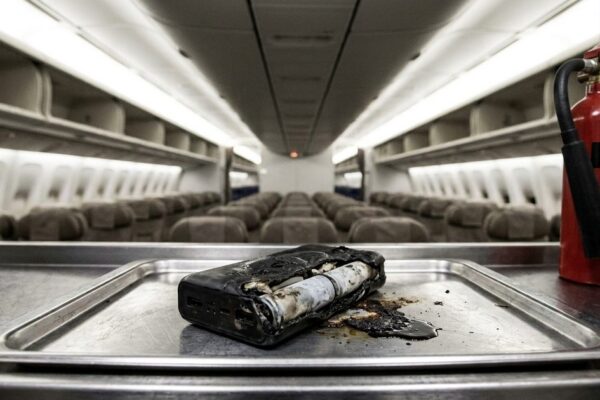

An Air Europa Boeing 737-800 veered off runway 06L at Palma de Mallorca Airport on May 8, 2026. A bird strike had damaged its nose landing gear and steering mechanism, the Aviation Safety Network reported.
Flight UX6079, registration EC-OBP, was operating the Madrid-Barajas–to–Palma sector when the bird strike occurred. The aircraft touched down normally. However, as it decelerated, the aircraft drifted right. It exited onto a high-speed turnoff at approximately 55 knots and came to a stop at the runway edge.
Ground crews evacuated passengers onto the apron. No injuries occurred. The runway closed for less than an hour. Maintenance crews then towed the aircraft to Air Europa’s Palma base for inspection.
Air Europa Bird Strike: Deferred Damage, Deferred Risk
According to AeroTime, the bird strike occurred during the aircraft’s departure from Madrid. Post-incident photographs circulated on social media confirmed visible damage to the nose landing gear. The left-hand nose tire was found damaged. So was the steering mechanism, which governs directional control during ground rollout.
Critically, the aircraft’s flight performance was unaffected. Pilots assessed the aircraft as airworthy and elected to continue to Palma rather than return to Madrid. Air Europa operates its maintenance base there. Furthermore, the structural damage only became operationally significant at the moment of the next landing.
That gap is a distinct category of wildlife hazard risk. A strike occurs at departure; consequences emerge at the next landing. Engine ingestion typically demands an immediate response. Gear and airframe damage may not. In a comparable case last month, a Jet2 737-800 that struck birds on departure from Leeds Bradford diverted to Manchester for inspection rather than continuing to its destination.
Airport Exposure
The bird strike itself occurred during departure from Madrid-Barajas (MAD), not at Palma. MAD sits on a high inland plateau roughly 600 metres above sea level, surrounded by open agricultural land and undulating Mesa terrain. It is one of Europe’s busiest hubs and consistently appears in EASA wildlife-strike reporting for both raptor and small-bird activity, particularly during spring and autumn migration windows.
Palma de Mallorca (PMI), by contrast, is the airport that absorbed the operational consequences. Its coastal geography on the Bay of Palma exposes it to gulls, terns, and other shorebird activity, and the airport handles heavy leisure traffic through the Balearic summer season. Runway closures and groundings at PMI are therefore disproportionately disruptive to the wider European schedule network, even when the originating incident occurred elsewhere.
Spain’s State Agency for Aviation Safety (AESA) oversees wildlife hazard management and safety investigations at both airports. Additionally, European operators are subject to EASA requirements for wildlife strike reporting and mandatory airport wildlife hazard assessments.
ICAO Doc 9137, Part 3, establishes international standards for airport wildlife control programs. These cover habitat management, bird deterrence, and strike reporting requirements. Importantly, no indication has emerged that wildlife management procedures at either Madrid or Palma failed in this case.
Recovery
The aircraft was grounded in Palma for approximately 20 hours while maintenance teams completed repairs. It subsequently returned to service. AESA had not announced a formal investigation as of publication.
The Aviation Safety Network wikibase logs the incident. EASA regulations require mandatory bird strike reporting for occurrences of this type.
Subscribe to FODNews for independent coverage of FOD incidents, wildlife hazard events, and runway safety worldwide.