NEW YORK — A Delta Air Lines Airbus A321neo arriving from San Juan landed at John F. Kennedy International Airport on Tuesday with tire damage, prompting the New York City Fire Department to deploy 46 units and 141 fire and EMS personnel in one of the larger standby responses JFK has seen for a single inbound aircraft. All 170 passengers and six crew members were uninjured. The Delta JFK tire incident ended without evacuation, injury, or significant disruption — but questions remain about what was known before takeoff.
FDNY Stages 46 Units Along the Runway
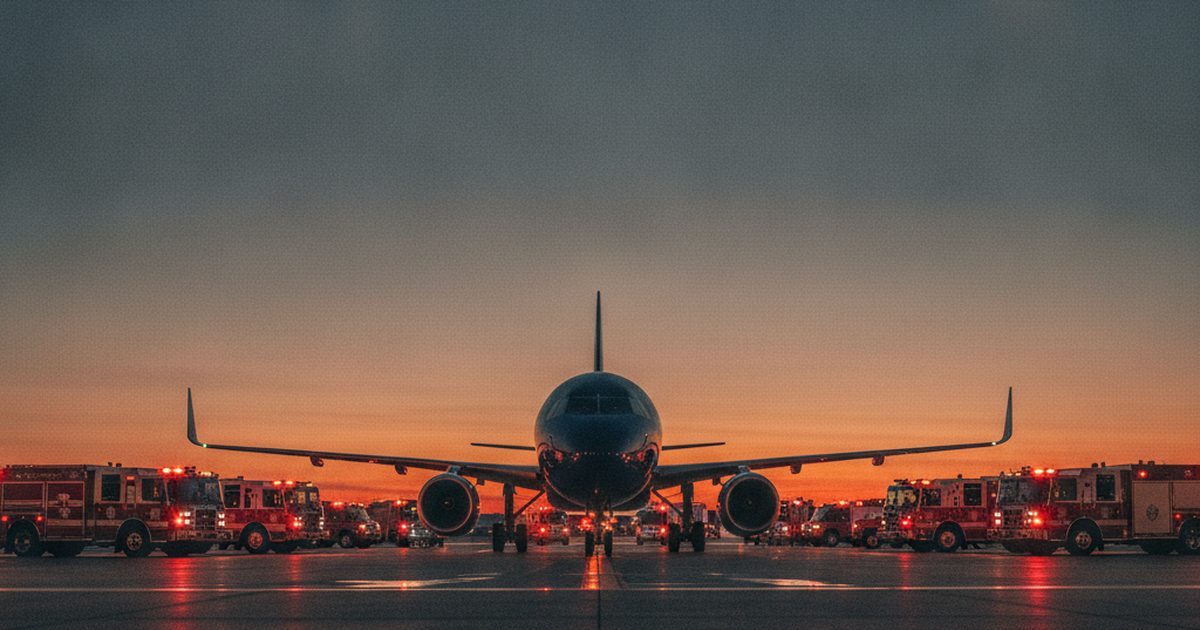
FDNY received the call at 4:45 p.m. on June 16: an inbound aircraft reporting what was initially described as two flat front tires. The department activated a “normal stand by second alarm,” positioning fire trucks, rescue units, and EMS teams along the runway before Delta Flight 1966 touched down.
According to ABC7/WABC, citing FDNY officials, 46 units and 141 fire and EMS personnel responded. The situation was declared under control shortly after 5 p.m.
Video from aerial news cameras showed the aircraft’s front tires appeared to still be inflated as the plane approached the runway — a detail that would later complicate the initial report of “two flat front tires.”
Delta JFK Tire Damage: One Tire, Tread Wear, Not a Blowout
After landing, Delta clarified the situation. A spokesperson confirmed there was “some damage to one tire,” describing it as tread wear rather than a blowout. Maintenance crews assessed the aircraft and determined it was suitable to taxi to Terminal 4, Gate A14, under its own power — rather than requiring an emergency tire change on the taxiway.
The airline later described the FDNY response as “far more precautionary than needed.”
Delta Flight 1966 carried 170 passengers, two pilots, and four flight attendants. No injuries were reported.
Cockpit Alert and Pre-Departure Questions
CBS News New York reported that pilots sometimes receive cockpit alerts indicating a possible landing-gear issue, and the standard protocol is to notify air traffic control so emergency crews can be positioned before landing. That sequence appears to have played out exactly here.
But reports suggest possible tire concerns were also flagged during preflight checks in San Juan — raising a harder question: what did the crew know before wheels-up, and what threshold governs a go/no-go call when a tire flag is raised on the ground?
That chain — from a preflight inspection finding, to a departure decision, to a destination airport mobilizing nearly 150 emergency personnel — has not been addressed in official statements from Delta, the FAA, or the Port Authority of New York and New Jersey. No NTSB investigation has been announced as of publication.
A Second A321neo Tire Event in Five Weeks
The JFK incident follows a similar event at Washington Dulles in May. A United Airlines A321neo landed with a blown-tire indication on May 11, with rubber debris that dented the left flap over Virginia. That incident similarly prompted questions about runway debris, tire integrity, and the adequacy of pre-landing inspection protocols for narrowbody Airbus jets operating on high-cycle routes.
Two A321neo tire events at major U.S. airports inside five weeks does not establish a pattern by itself, but safety analysts routinely flag clusters of similar incidents as worth monitoring — particularly when root causes remain unconfirmed.
What Comes Next
Delta has not released further technical detail on the tire damage or what, if anything, was noted during preflight inspection in San Juan. The Port Authority of New York and New Jersey, which operates JFK, has not commented publicly on whether runway FOD inspections were conducted following the aircraft’s landing.
FODNews will update this report when official statements are available.
Stay current on airport safety events worldwide. Subscribe to FODNews.
Sources
- CBS News New York — “Plane lands at JFK Airport after reporting 1 damaged tire” (June 16, 2026)
- ABC7 Eyewitness News (WABC) — “Emergency crews escort Delta plane at JFK Airport after reports of flat tires before landing” (June 16, 2026)
- Fox News Digital — “FDNY deploys 140+ personnel to JFK after Delta flight reported with flat tires on approach to landing” (June 16, 2026)
- 5 Towns Central — “Delta Flight Lands Safely at JFK After Tire Concern” (June 17, 2026)