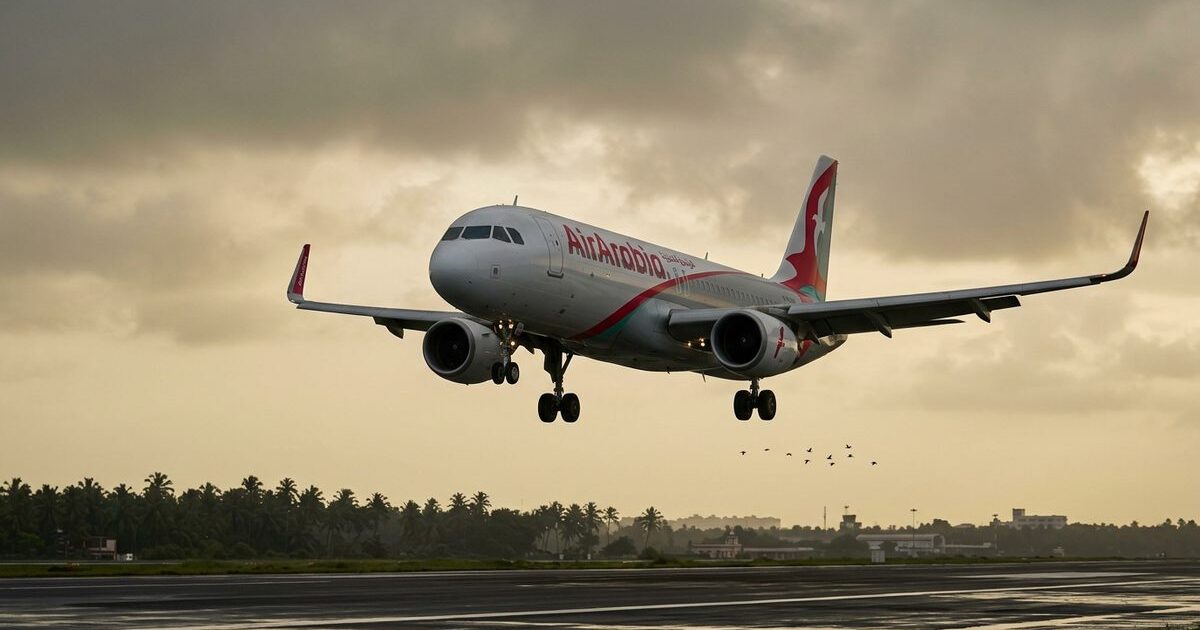
THIRUVANANTHAPURAM, India — An Air Arabia Airbus A320-200 bound for Sharjah was forced to return to Thiruvananthapuram International Airport on June 10 after a bird strike during climb out. A flock of birds struck the aircraft, damaging fan blades in a CFM56 engine and triggering a cockpit warning.
The aircraft, registration A6-ANL, departed Runway 32 at approximately 4:49 a.m. local time operating as flight G9-449 with 166 people aboard, including crew, according to Kerala Kaumudi. The crew halted the climb at 7,000 feet, declared an emergency, and landed safely on Runway 32 about 20 minutes after departure. No injuries were reported.
Airport authorities confirmed after inspection that the aircraft was not fit for continued operation. Passengers were transferred to hotels while the airline arranged repairs. Roughly 42 hours after the incident, the aircraft remained on the ground in India awaiting a technical team from Sharjah, according to AeroInside. The flight was cancelled.
Engine Damage and the CFM56
The CFM56 is one of the most widely deployed turbofan families in commercial aviation, powering A320-family aircraft as well as the Boeing 737 Classic and Next Generation series. Fan blades are the first component ingested material encounters in a high-bypass turbofan. Damage there — bent, cracked, or liberated blade sections — can propagate rearward through compressor stages and degrade thrust output.
Kerala Kaumudi’s reporting specifies damage to the fan blades of one engine. AeroInside, which publishes incident reports under license from the Aviation Herald, notes the crew advised air traffic control of a CFM56 engine issue after the strike. The precise scope of internal damage will be determined by borescope inspection and teardown assessment by the Sharjah technical team.
The climb phase carries elevated ingestion risk: aircraft are at high thrust, and bird flocking activity is often concentrated below 10,000 feet. The crew’s decision to stop the climb at 7,000 feet and return rather than continue toward cruise altitude reflects established emergency procedure and crew resource management principles.
Monsoon Season and Wildlife Pressure at South Asian Coastal Airports
The June 10 incident occurred at the onset of India’s southwest monsoon, which typically arrives in Kerala during late May or early June. Monsoon conditions are associated with elevated bird-strike risk at Indian airports: rapid airside grass growth accelerates insect breeding, drawing birds toward runway environments precisely when humidity and reduced visibility already complicate operations.
Thiruvananthapuram’s coastal geography and proximity to wetlands add further pressure. India’s Directorate General of Civil Aviation requires airport operators to maintain wildlife hazard management programs, including vegetation control within the airfield and coordination with local authorities within a 10-kilometer radius. Managing bird populations beyond the airport perimeter remains a persistent challenge across South Asian civil aviation.
ICAO workshop material on Thiruvananthapuram notes the airport contends with roughly 25 grass species on its airside margins, several of which grow rapidly during the monsoon and can attract wildlife if mowing schedules slip. Intelligent vegetation management — cutting before flowering and seed dispersal — is among the documented countermeasures at the airport.
The Thiruvananthapuram strike follows a series of high-profile wildlife ingestion events in recent weeks. In May, a Condor A320-212 ingested birds into both CFM56 engines simultaneously on final approach to Berlin Brandenburg Airport — one of the most demanding strike scenarios in commercial aviation. And as recently as June 5, EASA hosted a wildlife hazard management webinar as part of its Summer Safety 2026 campaign, urging airlines and airport operators to treat the June–September window as a period of heightened bird-strike risk requiring active management.
The G9-449 aircraft remains out of service at Thiruvananthapuram pending the arrival and assessment of Air Arabia’s technical team. Investigation or reporting of the incident to India’s aviation safety authorities — the Aircraft Accident Investigation Bureau — was not addressed in available reporting at the time of publication.
Subscribe to FODNews for weekly coverage of FOD incidents, wildlife hazards, and aviation safety developments worldwide.
Sources
- AeroInside — Arabia A320 at Thiruvananthapuram on Jun 10th 2026, bird strike
- Aviation Herald — Arabia A320 at Thiruvananthapuram on Jun 10th 2026, bird strike
- Kerala Kaumudi — Air Arabia plane carrying 166 people returns to Thiruvananthapuram airport after bird strike
- ICAO APAC — Wildlife Hazard Management Best Practices, Thiruvananthapuram International Airport