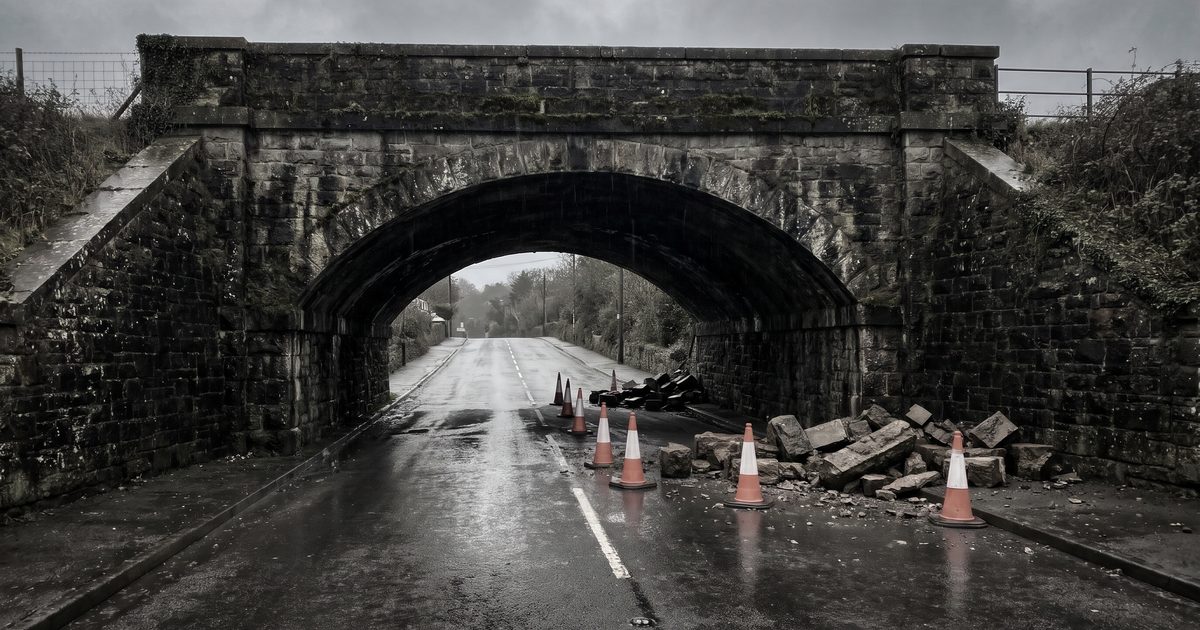
SAUNDERSFOOT, Wales — A road vehicle slammed into an overhead railway bridge on Wednesday, Nov. 4, shaking loose Saundersfoot railway bridge debris onto the road below and cutting the rail line overhead. Dyfed-Powys Police closed the road. Trains stopped running too.
One impact caused two problems. On the road, fallen masonry from the arch lay in a lane that drivers use every day. On the track above, the bridge could not safely carry trains until engineers had checked and repaired it.
For a corner of Pembrokeshire that relies on a single rail line, the strike meant more than a detour. Passengers between Carmarthen and Pembroke Dock spent more than a day on replacement buses.
A Nov. 4 strike closes the B4316
Police shut the B4316 between the Pentelpoir turn-off and Fan Road. Their reason was blunt. “The road is currently closed due fallen debris from a railway arch in the carriage way,” the force said, as reported by the Western Telegraph.
Officers held the scene through the afternoon. At about 5:30 p.m., Pembrokeshire County Council took over management of the site from police, according to the newspaper.
The National Rail disruption notice logged the incident at 3:05 p.m.
Why Saundersfoot railway bridge debris stops trains and cars
A railway overbridge does two jobs. Its deck carries the trains, and its arch sets a ceiling for the traffic underneath. A strike from below can damage both at once.
Transport for Wales explained the rail side plainly: “A road vehicle has hit a railway bridge at Saundersfoot, meaning trains cannot run over the bridge until the line is repaired. As a result, Network Rail have closed the line between Carmarthen and Pembroke Dock.”
The road side is just as serious. Loose material from a damaged arch is debris in the purest sense: hard, unexpected and sitting where tires and windscreens meet it at speed. A driver rounding a bend under the bridge has little time to react. Closing the road until crews could clear it took that risk off the table.
Debris from failing infrastructure is a recurring theme well beyond railways. Earlier incidents include a hole that opened in a Manchester Airport runway, where damaged pavement grounded traffic until repairs were made.
Buses, repairs and an all-clear on Nov. 5
Transport for Wales cancelled services in both directions between Carmarthen and Pembroke Dock and ran replacement buses. The disruption carried into Thursday, Nov. 5, the Western Telegraph reported.
Relief came late that afternoon. At 5:04 p.m. on Nov. 5, National Rail marked the incident cleared: “Following a road vehicle colliding with a bridge in the Saundersfoot area. Trains are now able to run as scheduled.”
That was roughly 26 hours from the first report to the all-clear. It shows how quickly one collision can ripple through a rural transport network. Within minutes the road was closed, and by evening a council team was managing the site. Rail engineers then had to clear the bridge before the first train could cross it again.
The lesson is a familiar one in foreign-object prevention. Damage to a structure becomes a hazard the moment pieces of it reach a travel surface. Closing the road, clearing the debris and inspecting the bridge before reopening is what kept the Saundersfoot strike from becoming something worse.
Subscribe to FODNews for continuing coverage of FOD incidents and prevention worldwide.